Loading...
Erna Solberg vs Sirimavo Bandaranaike
Erna Solberg leads by 2.2 pts · 2 figures compared
…

Erna Solberg
Politician · Modern
53.7Total
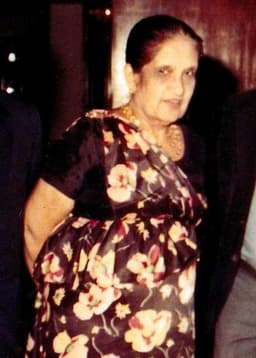
Sirimavo Bandaranaike
Politician · Modern
51.5Total
Basic Information
Born
1961
1916
Died
—
2000
Era
Modern
Modern
Nationality
Norway
Sri Lanka
Occupation
Politician
Politician
Civilization
Western
Indian
Score Comparison
Military (10%)
50.0
17.4
Political (20%)
57.4
45.0
Influence (20%)
54.9
56.7
Legacy (20%)
43.3
58.0
Leadership (15%)
75.1
66.0
Strategy (15%)
42.3
44.6
TOTAL
53.7
51.5
Erna Solberg — Complete Timeline
2013 AD
Became Prime Minister of NorwayPolitical Action
On October 16, 2013, Solberg became Prime Minister, leading a coalition government of the Conservative Party and the Progress Party, with support from the Liberal Party and Christian Democratic Party. This ended eight years of Labour rule.
Conservative PartyCoalitionPolitical Shift
Impact: national
2014 AD
Implemented Tax Cuts and DeregulationReform◆ Major
Solberg's government introduced tax cuts for businesses and high-income earners, along with deregulation of the housing market and labor laws. These policies aimed to boost economic growth but were criticized for increasing inequality.
Tax ReformDeregulationEconomic Policy
Impact: national
Managed the Oil Price CrashPolitical Action◆ Major
Solberg's government faced a sharp drop in oil prices in 2014, which reduced Norway's oil revenues. She implemented fiscal restraint and used the sovereign wealth fund to stabilize the economy, avoiding a recession but slowing growth.
Oil PriceEconomic ManagementSovereign Wealth Fund
Impact: national
2017 AD
Re-elected for a Second TermPolitical Action◆ Major
Solberg was re-elected in September 2017, continuing her coalition government. Her second term focused on climate policy, immigration reform, and further tax cuts, but she faced challenges from a resurgent Labour Party.
ElectionRe-electionCoalition
Impact: national
2019 AD
Expanded the Sovereign Wealth FundPolitical Action◆ Major
Solberg's government oversaw the expansion of the Government Pension Fund Global to over $1 trillion in assets. She also introduced ethical guidelines for the fund, including divestment from companies involved in coal and tobacco.
Sovereign Wealth FundEthical InvestmentOil Revenue
Impact: globalconstructive
2020 AD
COVID-19 Pandemic ResponsePolitical Action◆ Major
Solberg's government implemented strict lockdown measures and economic support packages during the COVID-19 pandemic. Norway had relatively low infection and death rates compared to many European countries, but the measures were criticized for their economic impact.
COVID-19LockdownEconomic Support
Impact: national
2021 AD
Lost the 2021 ElectionPolitical Action◆ Major
Solberg lost the general election in September 2021 to the Labour Party led by Jonas Gahr St
ElectionDefeatEnd of Tenure
Impact: national
Sirimavo Bandaranaike — Complete Timeline
1960 AD
Became the world's first female prime ministerPolitical Action
Sirimavo Bandaranaike was elected Prime Minister of Ceylon (now Sri Lanka) following the assassination of her husband, Solomon Bandaranaike. She became the first woman in the world to hold the office of prime minister, leading the Sri Lanka Freedom Party.
First female PMSri LankaWomen in politics
Impact: globalconstructive
1961 AD
Nationalized key industries and banksReform◆ Major
Bandaranaike's government implemented a socialist economic policy, nationalizing foreign-owned oil companies, banks, and insurance firms. This move aimed to reduce foreign influence and promote local control, but it also led to economic inefficiencies and strained relations with the West.
NationalizationSocialismEconomic policy
Impact: national
1962 AD
Declared a state of emergency after a coup attemptPolitical Action◆ Major
A group of military and police officers attempted a coup against Bandaranaike's government. The coup was foiled, and she declared a state of emergency, consolidating her power and cracking down on opposition. The event heightened political tensions in Sri Lanka.
Coup attemptState of emergencyPolitical crisis
Impact: national
1965 AD
Lost the 1965 general electionPolitical Action◆ Major
Bandaranaike's government was defeated in the general election by the United National Party led by Dudley Senanayake. She became the Leader of the Opposition, marking a temporary setback in her political career.
Election lossOppositionDemocracy
Impact: national
1970 AD
Returned to power and introduced a new constitutionPolitical Action◆ Major
Bandaranaike was re-elected as Prime Minister and oversaw the adoption of a new republican constitution in 1972, which changed the country's name from Ceylon to Sri Lanka and established it as a republic. The constitution also gave Buddhism a prominent role.
ConstitutionRepublicSri Lanka
Impact: nationalconstructive
Expert Analysis
Origins
Erna Solberg was born on February 24, 1961, in Bergen, Norway, into a middle-class family. Her father was a consultant and her mother a secretary. She studied sociology, political science, and economics at the University of Bergen, graduating in 1986. Her early involvement in the Conservative Party's youth wing shaped her political ambitions.
Sirimavo Bandaranaike was born on April 17, 1916, in Ratnapura, Ceylon (now Sri Lanka), into a wealthy Sinhalese family. Her father was a prominent lawyer and her mother a homemaker. She attended Catholic convent schools but did not pursue higher education. Her marriage to Solomon Bandaranaike, a leading politician, introduced her to politics.
Rise to Power
Solberg rose slowly through the Norwegian Conservative Party. She served as Minister of Local Government and Regional Development from 2001 to 2005 under Prime Minister Kjell Magne Bondevik. Her pragmatic, reformist stance earned her the nickname "Iron Erna." In 2013, she led the Conservative Party to victory, forming a coalition with the Progress Party, becoming Prime Minister on October 16, 2013.
Bandaranaike's rise was sudden and tragic. Her husband, Prime Minister Solomon Bandaranaike, was assassinated in 1959. The Sri Lanka Freedom Party drafted her as a unifying figure. In July 1960, she led the party to a landslide victory, becoming the world's first female prime minister on July 21, 1960. Her political score of 45.0 reflects her rapid ascent, while Solberg's 57.4 indicates a more gradual but sustained climb.
Leadership & Governance
Solberg's leadership style was consensus-driven and pragmatic. She implemented tax cuts for businesses and high-income earners, deregulated housing and labor markets, and maintained fiscal discipline. During the 2014 oil price crash, she used Norway's sovereign wealth fund to stabilize the economy, scoring 75.1 in leadership. Her governance focused on economic efficiency and gradual reform.
Bandaranaike was a socialist firebrand. She nationalized foreign-owned oil companies, banks, and insurance firms, aiming to reduce foreign influence. She declared a state of emergency after a 1962 coup attempt, showing authoritarian tendencies. Her leadership score of 66.0 is lower than Solberg's, partly due to economic mismanagement that led to a 1965 election loss. However, she returned to power in 1970 and introduced a new republican constitution in 1972, renaming the country Sri Lanka.
Triumph & Tragedy
Solberg's triumphs include managing the oil price crash without recession, expanding the sovereign wealth fund to over $1 trillion, and being re-elected in 2017. Her tragedy was the 2011 terrorist attacks in Norway, which occurred before her term, but she faced criticism for intelligence failures. Her legacy score of 43.3 reflects limited long-term structural change.
Bandaranaike's triumph was breaking the global political glass ceiling and implementing socialist policies that reduced foreign control. Her tragedy was economic decline; her nationalizations led to inefficiency and a 1965 electoral defeat. She also oversaw rising ethnic tensions, culminating in the 1971 Janatha Vimukthi Peramuna insurrection. Her legacy score of 58.0 is higher than Solberg's, as she fundamentally altered Sri Lanka's political and economic landscape.
Character & Destiny
Solberg was known for her calm, analytical demeanor. She made decisions based on data and consensus, avoiding dramatic shifts. Her character led to stable but incremental governance, with a strategy score of 42.3. She avoided major crises but also failed to inspire sweeping change.
Bandaranaike was resolute and ideological, driven by a vision of socialism and nationalism. Her character led to bold policies but also conflict and instability. Her strategy score of 44.6 is slightly higher, reflecting her ability to navigate complex political landscapes, though often with mixed results.
Legacy
Solberg's legacy is modernizing Norway's economy through tax reform and maintaining fiscal stability. Her leadership during the oil crisis preserved Norway's welfare state. However, her policies are seen as incremental rather than transformative. She scored 43.3 in legacy.
Bandaranaike's legacy is profound. She proved women could lead nations, inspired other female leaders, and permanently shifted Sri Lanka toward socialism and non-alignment. The 1972 constitution remains in effect. Her legacy score of 58.0 reflects this lasting impact, despite economic failures.
Conclusion
Erna Solberg, with a total score of 53.7, was a competent manager of Norway's economy, but her impact was limited to her tenure and gradual reforms. Sirimavo Bandaranaike, scoring 51.5, had a more transformative but turbulent influence, reshaping Sri Lanka's identity and pioneering female political leadership globally. While Solberg's governance was more effective in terms of stability, Bandaranaike's legacy endures more strongly due to her historic role and systemic changes. Therefore, Bandaranaike had a greater overall impact on history.
Rankings
🥇
Erna SolbergLeader
Mil: 50.0Pol: 57.4Inf: 54.9
53.7
🥈
Sirimavo Bandaranaike
Mil: 17.4Pol: 45.0Inf: 56.7
51.5
+2.2 behind
How This Comparison Works
Algorithm
Each figure is scored on 6 dimensions (0—100 scale) based on structured historical data: Military (10%), Political (20%), Influence (20%), Legacy (20%), Leadership (15%), Strategy (15%). The weighted total produces the final ranking.
Data Sources
Scores are computed from structured sub-indicators in the database. Scale factors adjust for era (Ancient ×0.85, Modern ×1.0) and civilization size (Eastern ×1.05, Other ×0.80) to account for differences in population and military scale.
Maximum 3 Figures
Comparisons are limited to 2—3 figures to ensure readability and statistical meaningfulness.
Error Margins
±5 points per dimension — Sub-scores are derived from historical records with inherent uncertainty. Two figures within 5 points on a dimension should be considered roughly equivalent in that area.
Total Score Accuracy
±3 points overall — The weighted combination of 6 dimensions produces a total score with approximately ±3 points of uncertainty. Differences of less than 3 points are not statistically significant— the figures are effectively tied.
Known Limitations
- Historical records are incomplete and uneven across civilizations
- Figures from oral-tradition societies may be underrepresented
- Occupation labels can misclassify multi-role figures
- Scores measure capability and impact, not moral character
- Quantitative scoring is a comparison tool, not absolute truth
Capability Radar
Military (10%) — Battles & Warfare
Battles
27
23
Win Rate
34
26
Expansion
33
27
Political (20%) — Governance & Reform
Reform
55
65
Diplomacy
60
60
Economy
58
55
Influence (20%) — Cultural & Global Reach
Cultural
30
60
Global
40
65
Legacy (20%) — Historical Impact
Historical
35
70
Longevity
25
55
Leadership (15%) — Power & Stability
Tenure
65
75
Stability
62
40
Strategy (15%) — Tactics & Innovation
Strategy
36
30
Tactics
42
32
Reform
44
37
Similar Comparisons
Comments & Discussion
No comments yet. Be the first to share your thoughts!