Loading...
This comparison has not been analyzed yet.
One-time AI generation (~1 minute). Scores and timeline are already available below.
Ernest Bai Koroma vs Ye Mingchen
Ernest Bai Koroma leads by 7.2 pts · 2 figures compared
…
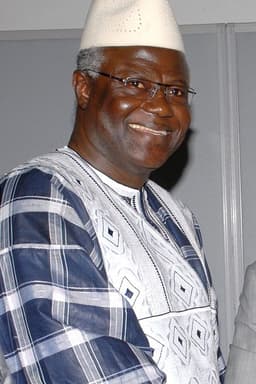
Ernest Bai Koroma
Politician · Modern
51.4Total

Ye Mingchen
Politician · Modern
44.2Total
Basic Information
Born
1953
1807
Died
—
1859
Era
Modern
Modern
Nationality
Sierra Leone
China
Occupation
Politician
Politician
Civilization
Other
Eastern
Score Comparison
Military (10%)
31.7
36.6
Political (20%)
68.0
29.3
Influence (20%)
52.5
49.4
Legacy (20%)
42.5
40.8
Leadership (15%)
68.0
55.3
Strategy (15%)
41.0
53.3
TOTAL
51.4
44.2
Ernest Bai Koroma — Complete Timeline
2007 AD
Elected President of Sierra LeonePolitical Action◆ Major
Koroma was elected President of Sierra Leone, defeating incumbent Vice President Solomon Berewa. His victory marked a peaceful transfer of power and a focus on post-war reconstruction.
ElectionSierra LeonePost-War
Impact: nationalconstructive
2008 AD
Launched Agenda for ChangeReform◆ Major
Koroma launched the Agenda for Change, a national development plan focusing on infrastructure, energy, and agriculture. The plan aimed to rebuild Sierra Leone's economy after the civil war.
DevelopmentSierra LeoneReconstruction
Impact: nationalconstructive
2012 AD
Re-elected PresidentPolitical Action◆ Major
Koroma was re-elected President of Sierra Leone with a landslide victory. His second term focused on consolidating peace and continuing economic reforms, though challenges remained.
ElectionSierra LeoneRe-election
Impact: nationalconstructive
2014 AD
Oversaw Ebola Outbreak ResponsePolitical Action◆ Major
Koroma's government led the response to the Ebola virus outbreak in Sierra Leone, which killed over 3,900 people. The crisis exposed weaknesses in the health system but also prompted international aid.
EbolaHealth CrisisSierra Leone
Impact: nationaltragic
Ye Mingchen — Complete Timeline
1852 AD
Appointed Viceroy of LiangguangPolitical Action◆ Major
Ye Mingchen was appointed Viceroy of Liangguang (Guangdong and Guangxi provinces), making him the highest Qing official in southern China. He was responsible for managing relations with foreign powers, particularly the British in Canton.
AppointmentGovernmentCanton
Impact: regional
1856 AD
Executed British PrisonersPolitical Action◆ Major
Ye Mingchen ordered the execution of British prisoners captured during the Arrow Incident, a dispute over a Chinese-owned ship flying the British flag. This act escalated tensions and contributed to the outbreak of the Second Opium War.
Arrow IncidentSecond Opium WarExecution
Impact: regionaldestructive
1858 AD
Captured by British ForcesWar◆ Major
During the Second Opium War, British forces captured Canton and took Ye Mingchen prisoner. He was held captive and later exiled to India, where he died in 1859. His capture symbolized Qing military weakness and the failure of his hardline anti-foreign policies.
Second Opium WarCaptureCanton
Impact: regionaltragic
This comparison has not been analyzed yet.
One-time AI generation (~1 minute). Scores and timeline are already available below.
Rankings
🥇
Ernest Bai KoromaLeader
Mil: 31.7Pol: 68.0Inf: 52.5
51.4
🥈
Ye Mingchen
Mil: 36.6Pol: 29.3Inf: 49.4
44.2
+7.2 behind
How This Comparison Works
Algorithm
Each figure is scored on 6 dimensions (0—100 scale) based on structured historical data: Military (10%), Political (20%), Influence (20%), Legacy (20%), Leadership (15%), Strategy (15%). The weighted total produces the final ranking.
Data Sources
Scores are computed from structured sub-indicators in the database. Scale factors adjust for era (Ancient ×0.85, Modern ×1.0) and civilization size (Eastern ×1.05, Other ×0.80) to account for differences in population and military scale.
Maximum 3 Figures
Comparisons are limited to 2—3 figures to ensure readability and statistical meaningfulness.
Error Margins
±5 points per dimension — Sub-scores are derived from historical records with inherent uncertainty. Two figures within 5 points on a dimension should be considered roughly equivalent in that area.
Total Score Accuracy
±3 points overall — The weighted combination of 6 dimensions produces a total score with approximately ±3 points of uncertainty. Differences of less than 3 points are not statistically significant— the figures are effectively tied.
Known Limitations
- Historical records are incomplete and uneven across civilizations
- Figures from oral-tradition societies may be underrepresented
- Occupation labels can misclassify multi-role figures
- Scores measure capability and impact, not moral character
- Quantitative scoring is a comparison tool, not absolute truth
Capability Radar
Military (10%) — Battles & Warfare
Battles
20
5
Win Rate
23
5
Expansion
28
5
Political (20%) — Governance & Reform
Reform
55
20
Diplomacy
55
15
Economy
50
20
Influence (20%) — Cultural & Global Reach
Cultural
30
15
Global
25
10
Legacy (20%) — Historical Impact
Historical
35
20
Longevity
20
15
Leadership (15%) — Power & Stability
Tenure
60
40
Stability
45
10
Strategy (15%) — Tactics & Innovation
Strategy
33
10
Tactics
33
10
Reform
38
5
Similar Comparisons
Comments & Discussion
No comments yet. Be the first to share your thoughts!