Loading...
Erwin Rommel vs Rodion Malinovsky
Erwin Rommel leads by 1.7 pts · 2 figures compared
…

Erwin Rommel
General · Modern
61.7Total
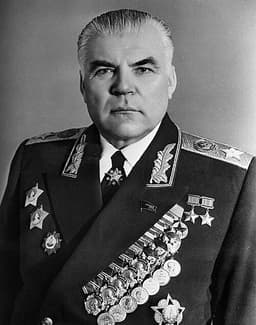
Rodion Malinovsky
General · Modern
60.0Total
Basic Information
Born
1891
1898
Died
1944
1967
Era
Modern
Modern
Nationality
Germany
USSR
Occupation
General
General
Civilization
Western
Western
Score Comparison
Military (10%)
74.7
72.0
Political (20%)
33.6
45.0
Influence (20%)
75.0
55.0
Legacy (20%)
72.0
58.0
Leadership (15%)
36.9
72.0
Strategy (15%)
69.1
69.6
TOTAL
61.7
60.0
Erwin Rommel — Complete Timeline
1940 AD
Battle of FranceWar◆ Major
Rommel commanded the 7th Panzer Division during the invasion of France. His division advanced rapidly, earning the nickname 'Ghost Division' for its speed and surprise attacks. The campaign resulted in the capture of French forces and the fall of France.
World War IIBlitzkriegPanzer Division
Impact: global
1941 AD
Siege of TobrukWar◆ Major
Rommel's Afrika Korps besieged the Australian and British garrison at Tobruk. Despite repeated assaults, the garrison held out for 240 days, tying down German forces and preventing Rommel from advancing into Egypt.
World War IINorth African CampaignSiege
Impact: regional
1942 AD
Battle of GazalaWar◆ Major
Rommel launched an offensive against British forces at Gazala, outflanking the British line and capturing Tobruk. The victory was Rommel's greatest, earning him promotion to Field Marshal, but it overextended his supply lines.
World War IINorth African CampaignDecisive Victory
Impact: regional
First Battle of El AlameinWar
Rommel's Afrika Korps attacked British defensive positions at El Alamein but failed to break through. The battle halted the German advance into Egypt and marked the beginning of the Axis retreat in North Africa.
World War IINorth African CampaignTurning Point
Impact: regional
1944 AD
Forced SuicidePolitical Action◆ Major
Rommel was implicated in the July 20 plot to assassinate Hitler. Given the choice between a public trial and suicide with a state funeral, Rommel chose suicide. He was forced to take cyanide, and his death was officially reported as a heart attack.
World War IINazi GermanyJuly 20 Plot
Impact: nationaltragic
Rodion Malinovsky — Complete Timeline
1939 AD
Battle of Khalkhin GolWar
Malinovsky served as a division commander during the Battle of Khalkhin Gol against Japan. The Soviet victory secured the eastern border and influenced Japan's decision not to attack the USSR in 1941.
Soviet-Japanese Border WarMongoliaVictory
Impact: regional
1942 AD
Battle of StalingradWar◆ Major
Malinovsky commanded the 2nd Guards Army during the Battle of Stalingrad. His forces played a key role in repelling the German relief attempt by Army Group Don, securing the encirclement of the 6th Army.
World War IIStalingradCounteroffensive
Impact: global
1944 AD
Jassy–Kishinev OffensiveWar◆ Major
Malinovsky commanded the 2nd Ukrainian Front in the Jassy
World War IIRomaniaOffensive
Impact: regional
1957 AD
Appointment as Minister of Defense of the USSRPolitical Action◆ Major
Malinovsky was appointed Minister of Defense of the USSR by Khrushchev. He oversaw the Soviet military during the Cold War, including the Cuban Missile Crisis and the buildup of nuclear forces.
Cold WarDefense MinisterNuclear
Impact: global
Expert Analysis
Origins
Erwin Rommel was born on November 15, 1891, in Heidenheim, Germany, into a middle-class family. His father was a schoolmaster, and his mother was the daughter of a senior civil servant. Rommel joined the German army in 1910 as an officer cadet, serving with distinction in World War I, where he was awarded the Pour le Mérite for his actions on the Italian front. His early career was marked by a focus on infantry tactics and a reputation for boldness.
Rodion Malinovsky was born on November 23, 1898, in Odessa, Russian Empire (now Ukraine), into a poor family. His father died when he was young, and his mother struggled financially. Malinovsky ran away from home at age 13 and later volunteered for the Russian army in 1914, fighting in World War I. He was wounded and awarded the Cross of St. George. After the Russian Revolution, he joined the Red Army, rising through the ranks during the Russian Civil War. His early experiences shaped his pragmatic and resilient approach.
Rise to Power
Rommel's rise to prominence came during World War II. He commanded the 7th Panzer Division in the 1940 Battle of France, where his rapid advance earned the division the nickname "Ghost Division." His success led to command of the Afrika Korps in 1941. Rommel's aggressive tactics and ability to outmaneuver British forces made him a national hero in Germany and a respected adversary among Allies. His greatest victory came at the Battle of Gazala in June 1942, where he captured Tobruk and advanced into Egypt, reaching El Alamein.
Malinovsky's rise was steadier and more political. He served as a division commander in the 1939 Battle of Khalkhin Gol against Japan, where Soviet forces secured the eastern border. His performance earned him command of the 2nd Guards Army during the Battle of Stalingrad in 1942-1943, where his forces repelled German relief attempts. After Stalingrad, he commanded the 2nd Ukrainian Front, leading the Jassy–Kishinev Offensive in August 1944, which destroyed German Army Group South Ukraine and forced Romania to switch sides. This victory cemented his reputation as a skilled operational commander.
Leadership & Governance
Rommel led from the front, often flying in a Fieseler Storch to personally reconnoiter terrain. His leadership style was charismatic and hands-on, but he sometimes overextended supply lines and underestimated logistics. In North Africa, he frequently ignored orders from higher command, relying on speed and surprise. His governance of occupied territories was minimal, as his focus was purely military. Rommel's political score of 33.6 reflects his lack of interest in politics and his eventual entanglement in the July 20 plot against Hitler.
Malinovsky was a more methodical commander, emphasizing combined arms and careful planning. He worked well within the Soviet command structure, cooperating with political officers and other generals. As Defense Minister from 1957 to 1967, he oversaw the modernization of the Soviet military, including the development of nuclear weapons and the response to the 1962 Cuban Missile Crisis. His leadership score of 72.0 reflects his ability to manage large organizations and navigate political pressures.
Triumph & Tragedy
Rommel's greatest triumph was the Battle of Gazala (May-June 1942), where his outnumbered Afrika Korps outflanked the British Eighth Army and captured Tobruk, earning him a field marshal's baton. His greatest failure was the First Battle of El Alamein (July 1942), where his exhausted forces failed to break through British defenses, halting the Axis advance into Egypt. The subsequent Second Battle of El Alamein (October-November 1942) saw his forces decisively defeated. Rommel's tragedy was his forced suicide in October 1944 after being implicated in the July 20 plot, choosing poison over a public trial to protect his family.
Malinovsky's triumph was the Jassy–Kishinev Offensive (August 1944), a model of Soviet operational art that destroyed an entire German army group and shifted the balance in the Balkans. His command at Stalingrad was also key to the Soviet victory. His failures include the initial setbacks in the 1941 Battle of Rostov and later political challenges as Defense Minister, such as the 1961 Berlin Crisis where Soviet threats did not deter NATO. Malinovsky's score of 72.0 in military reflects consistent success, but his influence score of 55.0 indicates limited global impact compared to Rommel's iconic status.
Character & Destiny
Rommel was bold, independent, and often reckless. He believed in leading from the front, which inspired his troops but also put him at risk. His decision-making was intuitive and aggressive, but he sometimes ignored strategic realities, such as the critical supply situation in North Africa. His character made him a legend but also contributed to his downfall, as his involvement in the anti-Hitler conspiracy was driven by a sense of duty rather than political ambition. Historians assess Rommel as a skilled tactical commander but a poor strategist, with his legacy shaped by the "clean Wehrmacht" myth.
Malinovsky was pragmatic, resilient, and politically astute. He learned from his experiences in World War I and the Civil War, developing a methodical approach to warfare. He was capable of adapting to changing circumstances, as seen in his successful offensives. His character allowed him to survive Stalin's purges and rise to the top of the Soviet military hierarchy. His destiny was to serve as a key builder of the postwar Soviet military, though his legacy is less celebrated in the West due to Cold War tensions.
Legacy
Rommel's legacy is complex. He is remembered as the "Desert Fox," a master of mobile warfare and a chivalrous opponent. His tactics in North Africa influenced post-war armored doctrine. However, his association with the Nazi regime and the myth of the "clean war" have been challenged by historians. His military score of 74.7 reflects his tactical brilliance, but his overall influence score of 75.0 is partly due to his iconic status. Rommel's name remains synonymous with desert warfare.
Malinovsky's legacy is tied to the Soviet Union's victory in World War II and its Cold War military posture. He is remembered as one of the top Soviet commanders, particularly for the Jassy–Kishinev Offensive. His reforms as Defense Minister shaped the Soviet military for decades. However, his influence outside the Soviet sphere is limited, as reflected in his influence score of 55.0. His legacy score of 58.0 indicates a solid but not transcendent impact.
Conclusion
While Rommel's tactical genius and charismatic leadership have made him a household name, Malinovsky's strategic successes and long-term impact on the Soviet military are more substantial. Rommel scored 74.7 in military and 75.0 in influence, but his political score of 33.6 and leadership score of 36.9 indicate significant flaws. Malinovsky scored 72.0 in military, 72.0 in leadership, and 45.0 in political, reflecting a more balanced record. Overall, Rommel's total score of 61.7 edges out Malinovsky's 60.0, but the gap is narrow. However, in terms of lasting impact on military history and governance, Malinovsky's role in defeating Nazi Germany and shaping the Cold War military gives him a greater claim to historical significance. Rommel was a brilliant tactician, but Malinovsky was a more effective leader and strategist over the long term.
Rankings
🥇
Erwin RommelLeader
Mil: 74.7Pol: 33.6Inf: 75.0
61.7
🥈
Rodion Malinovsky
Mil: 72.0Pol: 45.0Inf: 55.0
60.0
+1.7 behind
How This Comparison Works
Algorithm
Each figure is scored on 6 dimensions (0—100 scale) based on structured historical data: Military (10%), Political (20%), Influence (20%), Legacy (20%), Leadership (15%), Strategy (15%). The weighted total produces the final ranking.
Data Sources
Scores are computed from structured sub-indicators in the database. Scale factors adjust for era (Ancient ×0.85, Modern ×1.0) and civilization size (Eastern ×1.05, Other ×0.80) to account for differences in population and military scale.
Maximum 3 Figures
Comparisons are limited to 2—3 figures to ensure readability and statistical meaningfulness.
Error Margins
±5 points per dimension — Sub-scores are derived from historical records with inherent uncertainty. Two figures within 5 points on a dimension should be considered roughly equivalent in that area.
Total Score Accuracy
±3 points overall — The weighted combination of 6 dimensions produces a total score with approximately ±3 points of uncertainty. Differences of less than 3 points are not statistically significant— the figures are effectively tied.
Known Limitations
- Historical records are incomplete and uneven across civilizations
- Figures from oral-tradition societies may be underrepresented
- Occupation labels can misclassify multi-role figures
- Scores measure capability and impact, not moral character
- Quantitative scoring is a comparison tool, not absolute truth
Capability Radar
Military (10%) — Battles & Warfare
Battles
75
85
Win Rate
70
80
Expansion
65
75
Political (20%) — Governance & Reform
Reform
10
55
Diplomacy
30
60
Economy
15
50
Influence (20%) — Cultural & Global Reach
Cultural
65
45
Global
65
60
Legacy (20%) — Historical Impact
Historical
70
65
Longevity
60
50
Leadership (15%) — Power & Stability
Tenure
20
65
Stability
10
60
Strategy (15%) — Tactics & Innovation
Strategy
78
85
Tactics
92
78
Reform
60
70
Similar Comparisons
Comments & Discussion
No comments yet. Be the first to share your thoughts!