Loading...
Analysis will be generated on first visit.
Scores and timeline are available below. The page will refresh automatically when ready.
Fahd of Saudi Arabia vs Julius Caesar
Julius Caesar leads by 22.0 pts · 2 figures compared
…

Fahd of Saudi Arabia
Emperor · Modern
61.3Total
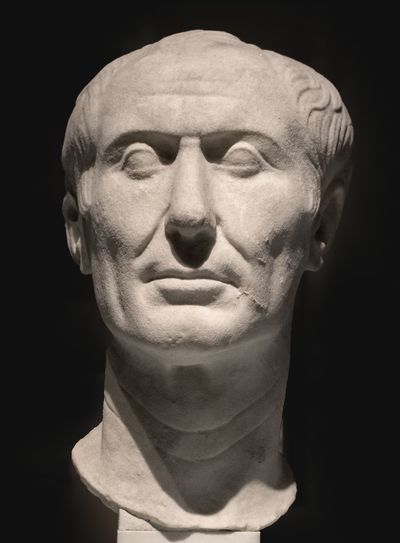
Julius Caesar
General · Ancient
83.3Total
Basic Information
Born
1921
-100
Died
—
-44
Era
Modern
Ancient
Nationality
Saudi Arabia
Roman Republic
Occupation
Emperor
General
Civilization
Middle Eastern
Western
Score Comparison
Military (10%)
14.6
88.0
Political (20%)
74.7
78.0
Influence (20%)
74.8
85.0
Legacy (20%)
57.9
82.0
Leadership (15%)
74.3
82.0
Strategy (15%)
47.8
88.0
TOTAL
61.3
83.3
Rankings
🥇
Julius CaesarLeader
Mil: 88.0Pol: 78.0Inf: 85.0
83.3
🥈
Fahd of Saudi Arabia
Mil: 14.6Pol: 74.7Inf: 74.8
61.3
+22.0 behind
How This Comparison Works
Algorithm
Each figure is scored on 6 dimensions (0—100 scale) based on structured historical data: Military (10%), Political (20%), Influence (20%), Legacy (20%), Leadership (15%), Strategy (15%). The weighted total produces the final ranking.
Data Sources
Scores are computed from structured sub-indicators in the database. Scale factors adjust for era (Ancient ×0.85, Modern ×1.0) and civilization size (Eastern ×1.05, Other ×0.80) to account for differences in population and military scale.
Maximum 3 Figures
Comparisons are limited to 2—3 figures to ensure readability and statistical meaningfulness.
Error Margins
±5 points per dimension — Sub-scores are derived from historical records with inherent uncertainty. Two figures within 5 points on a dimension should be considered roughly equivalent in that area.
Total Score Accuracy
±3 points overall — The weighted combination of 6 dimensions produces a total score with approximately ±3 points of uncertainty. Differences of less than 3 points are not statistically significant— the figures are effectively tied.
Known Limitations
- Historical records are incomplete and uneven across civilizations
- Figures from oral-tradition societies may be underrepresented
- Occupation labels can misclassify multi-role figures
- Scores measure capability and impact, not moral character
- Quantitative scoring is a comparison tool, not absolute truth
Capability Radar
Military (10%) — Battles & Warfare
Battles
6
95
Win Rate
8
92
Expansion
14
97
Political (20%) — Governance & Reform
Reform
40
90
Diplomacy
65
85
Economy
55
82
Influence (20%) — Cultural & Global Reach
Cultural
30
88
Global
55
94
Legacy (20%) — Historical Impact
Historical
45
95
Longevity
30
96
Leadership (15%) — Power & Stability
Tenure
60
75
Stability
50
60
Strategy (15%) — Tactics & Innovation
Strategy
15
94
Tactics
15
96
Reform
21
88
Analysis will be generated on first visit.
Scores and timeline are available below. The page will refresh automatically when ready.
Fahd of Saudi Arabia — Complete Timeline
1986 AD
Expansion of the Two Holy MosquesCultural◆ Major
King Fahd initiated a massive expansion project for the Grand Mosque in Mecca and the Prophet's Mosque in Medina, increasing their capacity to accommodate millions of pilgrims. The project included new minarets, prayer halls, and infrastructure.
Religious InfrastructurePilgrimage
Impact: regionalconstructive
1990 AD
Gulf War Coalition LeadershipWar
King Fahd invited US-led coalition forces to Saudi Arabia after Iraq's invasion of Kuwait. This decision allowed the stationing of foreign troops on Saudi soil, which was controversial domestically and led to increased Islamist opposition.
Gulf WarForeign PolicyMilitary Alliance
Impact: global
1992 AD
Basic Law of 1992Reform◆ Major
King Fahd issued the Basic Law of Saudi Arabia, which codified the country's system of governance, established the Consultative Council (Shura Council), and defined the roles of the monarchy, judiciary, and executive. This was a step toward formalizing the political system.
Constitutional ReformGovernance
Impact: nationalconstructive
2001 AD
9/11 Attacks and AftermathPolitical Action◆ Major
Fifteen of the nineteen hijackers in the September 11 attacks were Saudi nationals. King Fahd's government faced international scrutiny over Saudi involvement and subsequently implemented counter-terrorism measures and reforms to the education system.
TerrorismForeign RelationsSecurity
Impact: globaltragic
Similar Comparisons
Comments & Discussion
No comments yet. Be the first to share your thoughts!