Loading...
This comparison has not been analyzed yet.
One-time AI generation (~1 minute). Scores and timeline are already available below.
Faisal of Saudi Arabia vs Rama III
Faisal of Saudi Arabia leads by 5.7 pts · 2 figures compared
…
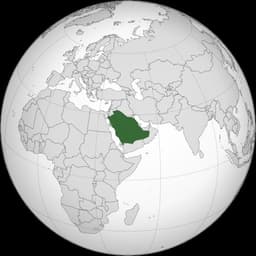
Faisal of Saudi Arabia
Emperor · Modern
58.0Total

Rama III
Emperor · Modern
52.3Total
Basic Information
Born
1906
1787
Died
1975
1851
Era
Modern
Modern
Nationality
Saudi Arabia
Thailand
Occupation
Emperor
Emperor
Civilization
Middle Eastern
Eastern
Score Comparison
Military (10%)
21.2
20.0
Political (20%)
82.0
68.0
Influence (20%)
58.3
54.9
Legacy (20%)
52.0
45.0
Leadership (15%)
80.0
72.0
Strategy (15%)
39.6
43.3
TOTAL
58.0
52.3
Faisal of Saudi Arabia — Complete Timeline
1964 AD
Modernization ReformsReform◆ Major
Upon becoming king, Faisal launched a series of modernization reforms including the introduction of television, expansion of education for girls, abolition of slavery, and creation of a modern bureaucracy. These reforms faced opposition from conservative religious elements.
ModernizationEducationSocial Reform
Impact: nationalprogressive
1973 AD
1973 Oil EmbargoPolitical Action◆ Major
King Faisal led Saudi Arabia in implementing an oil embargo against nations supporting Israel during the Yom Kippur War. The embargo caused global oil prices to quadruple, reshaping international energy politics and increasing Saudi influence.
Oil PoliticsArab-Israeli ConflictEconomic Warfare
Impact: global
Establishment of OPEC Price ControlPolitical Action◆ Major
Faisal coordinated with other Arab oil-producing states to use oil as a political weapon, leading to the formation of OAPEC and the first use of oil price controls for political ends. This marked a shift in global economic power.
OPECOil PoliticsEconomic Strategy
Impact: global
1975 AD
Assassination of King FaisalPolitical Action
King Faisal was shot and killed by his nephew, Prince Faisal bin Musaid, during a royal audience at the Royal Palace in Riyadh. The assassination ended Faisal's reformist reign and led to the accession of King Khalid.
AssassinationRoyal FamilySuccession
Impact: nationaltragic
Rama III — Complete Timeline
1824 AD
Accession to the Throne as King Rama IIIPolitical Action◆ Major
Rama III succeeded his father, Rama II, as the third monarch of the Chakri dynasty. His reign marked a period of commercial expansion and cautious engagement with Western powers while maintaining Siamese sovereignty.
SuccessionChakri DynastyReign
Impact: nationalconstructive
1826 AD
Suppression of the Lao Rebellion of 1826-1828War◆ Major
Rama III ordered the suppression of a rebellion led by Chao Anouvong of Vientiane. Siamese forces captured Vientiane, destroyed the city, and deported large populations to Siam, consolidating Siamese control over Lao territories.
RebellionLao StatesSuppression
Impact: regionaldestructive
Burney Treaty with the British EmpirePolitical Action◆ Major
Rama III signed the Burney Treaty with the British East India Company, establishing trade relations and defining spheres of influence in the Malay Peninsula. The treaty recognized Siamese suzerainty over Kedah while granting British commercial rights.
TreatyBritish EmpireTrade
Impact: regional
1830 AD
Resistance to Western Encroachment and ModernizationPolitical Action◆ Major
Rama III resisted Western demands for extraterritorial rights and military concessions, maintaining Siam's independence through diplomatic balancing. He also initiated limited modernization, including fortification upgrades and naval expansion.
DiplomacyModernizationIndependence
Impact: nationalconstructive
1831 AD
Siamese-Vietnamese War of 1831-1834War◆ Major
Rama III launched a military campaign against Vietnam to assert Siamese influence over Cambodia. The war ended with a treaty that divided Cambodia into Siamese and Vietnamese spheres of influence, but failed to achieve lasting dominance.
Siamese-Vietnamese WarCambodiaRegional Conflict
Impact: regional
This comparison has not been analyzed yet.
One-time AI generation (~1 minute). Scores and timeline are already available below.
Rankings
🥇
Faisal of Saudi ArabiaLeader
Mil: 21.2Pol: 82.0Inf: 58.3
58.0
🥈
Rama III
Mil: 20.0Pol: 68.0Inf: 54.9
52.3
+5.7 behind
How This Comparison Works
Algorithm
Each figure is scored on 6 dimensions (0—100 scale) based on structured historical data: Military (10%), Political (20%), Influence (20%), Legacy (20%), Leadership (15%), Strategy (15%). The weighted total produces the final ranking.
Data Sources
Scores are computed from structured sub-indicators in the database. Scale factors adjust for era (Ancient ×0.85, Modern ×1.0) and civilization size (Eastern ×1.05, Other ×0.80) to account for differences in population and military scale.
Maximum 3 Figures
Comparisons are limited to 2—3 figures to ensure readability and statistical meaningfulness.
Error Margins
±5 points per dimension — Sub-scores are derived from historical records with inherent uncertainty. Two figures within 5 points on a dimension should be considered roughly equivalent in that area.
Total Score Accuracy
±3 points overall — The weighted combination of 6 dimensions produces a total score with approximately ±3 points of uncertainty. Differences of less than 3 points are not statistically significant— the figures are effectively tied.
Known Limitations
- Historical records are incomplete and uneven across civilizations
- Figures from oral-tradition societies may be underrepresented
- Occupation labels can misclassify multi-role figures
- Scores measure capability and impact, not moral character
- Quantitative scoring is a comparison tool, not absolute truth
Capability Radar
Military (10%) — Battles & Warfare
Battles
10
45
Win Rate
10
50
Expansion
10
40
Political (20%) — Governance & Reform
Reform
80
55
Diplomacy
80
50
Economy
75
55
Influence (20%) — Cultural & Global Reach
Cultural
60
40
Global
60
30
Legacy (20%) — Historical Impact
Historical
65
45
Longevity
55
35
Leadership (15%) — Power & Stability
Tenure
70
60
Stability
65
60
Strategy (15%) — Tactics & Innovation
Strategy
10
45
Tactics
10
40
Reform
20
35
Similar Comparisons
Comments & Discussion
No comments yet. Be the first to share your thoughts!