Loading...
False Dmitry I vs Pratap Singh Gaekwad
Pratap Singh Gaekwad leads by 5.7 pts · 2 figures compared
…

False Dmitry I
Emperor · Modern
40.8Total
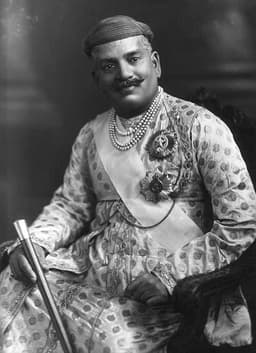
Pratap Singh Gaekwad
Emperor · Modern
46.5Total
Basic Information
Born
1581
1908
Died
1606
1968
Era
Modern
Modern
Nationality
Russia
India
Occupation
Emperor
Emperor
Civilization
Western
Indian
Score Comparison
Military (10%)
25.9
39.3
Political (20%)
32.2
48.0
Influence (20%)
49.4
50.2
Legacy (20%)
39.2
37.5
Leadership (15%)
38.1
58.8
Strategy (15%)
54.8
46.5
TOTAL
40.8
46.5
False Dmitry I — Complete Timeline
1604 AD
Invasion of RussiaWar◆ Major
False Dmitry I, claiming to be the miraculously surviving Tsarevich Dmitry, invaded Russia from Poland with a mixed force of Polish nobles, Cossacks, and Russian exiles. He gained support from disaffected boyars and peasants.
InvasionPolandImpostor
Impact: national
1605 AD
Capture of Moscow and CoronationPolitical Action◆ Major
After Tsar Boris Godunov's sudden death, False Dmitry I entered Moscow and was crowned Tsar. He was recognized by the boyars and the populace, who believed him to be the legitimate heir.
MoscowCoronationImpostor
Impact: national
1606 AD
Marriage to Marina MniszechPolitical Action
False Dmitry I married Marina Mniszech, a Polish noblewoman, in Moscow. The wedding included Catholic ceremonies, which angered the Russian Orthodox Church and alienated many of his Russian supporters.
MarriagePolandOrthodox
Impact: national
Overthrow and AssassinationPolitical Action◆ Major
A boyar uprising led by Vasily Shuisky stormed the Kremlin. False Dmitry I was killed, his body was mutilated and burned. His brief reign ended, and Vasily Shuisky was proclaimed Tsar Vasily IV.
UprisingAssassinationShuisky
Impact: nationaltragic
Pratap Singh Gaekwad — Complete Timeline
1930 AD
Played First-Class Cricket for BarodaCultural
Pratap Singh Gaekwad played first-class cricket for Baroda in the Ranji Trophy. He was a capable batsman and later served as a cricket administrator, contributing to the sport's development in the region.
CricketRanji TrophyBaroda
Impact: regionalconstructive
1939 AD
Ascended the Throne of BarodaPolitical Action◆ Major
Pratap Singh Gaekwad became the Maharaja of Baroda at the age of 31, following the death of his father Sayajirao Gaekwad III. He inherited one of the wealthiest and most progressive princely states in India.
SuccessionPrincely StateBaroda
Impact: regional
1947 AD
Signed the Instrument of Accession to IndiaPolitical Action◆ Major
Pratap Singh Gaekwad signed the Instrument of Accession, merging the princely state of Baroda with the Dominion of India. This decision integrated Baroda into the Indian Union, ending its sovereignty.
AccessionIndian UnionBaroda
Impact: nationalconstructive
1956 AD
Appointed as Ambassador to FrancePolitical Action
After the merger, Pratap Singh Gaekwad served as India's Ambassador to France from 1956 to 1958. This diplomatic role marked his transition from a ruling prince to a public servant in independent India.
DiplomacyAmbassadorFrance
Impact: globalconstructive
Expert Analysis
Origins
False Dmitry I, born around 1581, was likely Grigory Otrepyev, a defrocked monk from the Romanov household. He claimed to be Tsarevich Dmitry, son of Ivan the Terrible, who had died under mysterious circumstances in 1591. Educated in Polish courts, he converted to Catholicism and gained support from Polish magnates. In contrast, Pratap Singh Gaekwad was born in 1908 into the Gaekwad dynasty of Baroda, a princely state in western India. He was the eldest son of Maharaja Sayajirao Gaekwad III, a progressive ruler. Pratap Singh was educated at Harrow and Cambridge, preparing him for a constitutional role. While Dmitry fabricated his identity, Gaekwad inherited a legitimate throne.
Rise to Power
False Dmitry I rose by exploiting the Time of Troubles in Russia. In 1604, he invaded with a Polish-Cossack army, capturing several towns. After Tsar Boris Godunov's sudden death in April 1605, Dmitry's forces advanced. The Russian army defected, and he entered Moscow on June 20, 1605, crowned Tsar on July 21. His rise was swift but fragile. Pratap Singh Gaekwad ascended the throne of Baroda in 1939 at age 31, following his father's death. His rule was constitutional, under British paramountcy. He scored 32.2 in political acumen versus Gaekwad's 48.0, reflecting Gaekwad's stable succession versus Dmitry's precarious coup.
Leadership & Governance
As Tsar, Dmitry attempted reforms: he sought to integrate Poland, allowed Jesuit missionaries, and eased serfdom restrictions. But his pro-Catholic policies alienated the Orthodox Church and boyars. He married Marina Mniszech, a Catholic, and held a wedding with Catholic rites, sparking outrage. His leadership score of 38.1 reflects his inability to consolidate power. Pratap Singh Gaekwad governed Baroda as a constitutional monarch, continuing his father's modernization. He focused on education, healthcare, and infrastructure. In 1947, he signed the Instrument of Accession to India, peacefully integrating Baroda. His leadership score of 58.8 shows effective governance. While Dmitry's rule lasted only 11 months, Gaekwad ruled until 1951, then served as India's ambassador to France (1956-1958).
Triumph & Tragedy
Dmitry's triumph was seizing Moscow and being crowned Tsar, a remarkable feat for an impostor. However, his tragedy was his downfall: in May 1606, a boyar revolt led by Vasily Shuisky stormed the Kremlin. Dmitry was killed, his body mutilated and burned. His military score of 25.9 reflects his reliance on foreign troops. Gaekwad's triumph was the smooth integration of Baroda into India, preserving its legacy. He also played first-class cricket for Baroda. His tragedy was the loss of his princely status and the financial challenges after accession. His legacy score of 37.5 is modest, but his political score of 48.0 shows successful adaptation.
Character & Destiny
Dmitry was charismatic but reckless, believing his own imposture. His decision to spurn Orthodox traditions sealed his fate. He scored 54.8 in strategy, but his execution was poor. Gaekwad, by contrast, was pragmatic and diplomatic. He accepted the end of princely rule, choosing integration over conflict. His strategy score of 46.5 reflects a cautious approach. Historians judge Dmitry as an adventurer; Gaekwad as a responsible ruler who prioritized his people's welfare.
Legacy
Dmitry's legacy is as a symbol of the Time of Troubles' chaos. His brief reign exposed Russia's vulnerability to foreign influence. Gaekwad's legacy is as the last Maharaja of Baroda, who facilitated its merger into India. The Gaekwad dynasty's contributions to Baroda's development endure, including the Maharaja Sayajirao University. While Dmitry's influence score is 49.4, Gaekwad's is 50.2, marginally higher.
Conclusion
Pratap Singh Gaekwad had greater impact. His peaceful integration of Baroda into India preserved stability, while Dmitry's imposture led to chaos and his own death. Gaekwad's total score of 46.5 beats Dmitry's 40.8. Gaekwad's leadership (58.8) and political (48.0) scores dwarf Dmitry's (38.1 and 32.2). Dmitry's legacy is cautionary; Gaekwad's is constructive. In the balance of history, the integrator outweighs the impostor.
Rankings
🥇
Pratap Singh GaekwadLeader
Mil: 39.3Pol: 48.0Inf: 50.2
46.5
🥈
False Dmitry I
Mil: 25.9Pol: 32.2Inf: 49.4
40.8
+5.7 behind
How This Comparison Works
Algorithm
Each figure is scored on 6 dimensions (0—100 scale) based on structured historical data: Military (10%), Political (20%), Influence (20%), Legacy (20%), Leadership (15%), Strategy (15%). The weighted total produces the final ranking.
Data Sources
Scores are computed from structured sub-indicators in the database. Scale factors adjust for era (Ancient ×0.85, Modern ×1.0) and civilization size (Eastern ×1.05, Other ×0.80) to account for differences in population and military scale.
Maximum 3 Figures
Comparisons are limited to 2—3 figures to ensure readability and statistical meaningfulness.
Error Margins
±5 points per dimension — Sub-scores are derived from historical records with inherent uncertainty. Two figures within 5 points on a dimension should be considered roughly equivalent in that area.
Total Score Accuracy
±3 points overall — The weighted combination of 6 dimensions produces a total score with approximately ±3 points of uncertainty. Differences of less than 3 points are not statistically significant— the figures are effectively tied.
Known Limitations
- Historical records are incomplete and uneven across civilizations
- Figures from oral-tradition societies may be underrepresented
- Occupation labels can misclassify multi-role figures
- Scores measure capability and impact, not moral character
- Quantitative scoring is a comparison tool, not absolute truth
Capability Radar
Military (10%) — Battles & Warfare
Battles
15
32
Win Rate
20
33
Expansion
5
35
Political (20%) — Governance & Reform
Reform
15
35
Diplomacy
25
40
Economy
10
30
Influence (20%) — Cultural & Global Reach
Cultural
15
20
Global
10
10
Legacy (20%) — Historical Impact
Historical
25
15
Longevity
10
10
Leadership (15%) — Power & Stability
Tenure
20
30
Stability
5
25
Strategy (15%) — Tactics & Innovation
Strategy
10
38
Tactics
10
39
Reform
5
45
Similar Comparisons
Comments & Discussion
No comments yet. Be the first to share your thoughts!