Loading...
Analysis will be generated on first visit.
Scores and timeline are available below. The page will refresh automatically when ready.
Fang Xuanling vs Julius Caesar
Julius Caesar leads by 12.5 pts · 2 figures compared
…

Fang Xuanling
Politician · Medieval
70.8Total
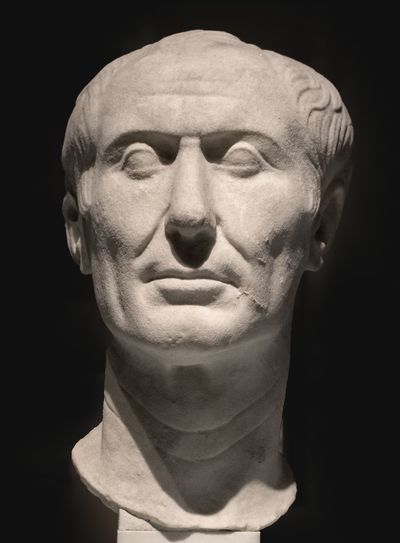
Julius Caesar
General · Ancient
83.3Total
Basic Information
Born
579
-100
Died
648
-44
Era
Medieval
Ancient
Nationality
China
Roman Republic
Occupation
Politician
General
Civilization
Eastern
Western
Score Comparison
Military (10%)
47.0
88.0
Political (20%)
80.0
78.0
Influence (20%)
74.2
85.0
Legacy (20%)
66.2
82.0
Leadership (15%)
79.8
82.0
Strategy (15%)
67.1
88.0
TOTAL
70.8
83.3
Rankings
🥇
Julius CaesarLeader
Mil: 88.0Pol: 78.0Inf: 85.0
83.3
🥈
Fang Xuanling
Mil: 47.0Pol: 80.0Inf: 74.2
70.8
+12.5 behind
How This Comparison Works
Algorithm
Each figure is scored on 6 dimensions (0—100 scale) based on structured historical data: Military (10%), Political (20%), Influence (20%), Legacy (20%), Leadership (15%), Strategy (15%). The weighted total produces the final ranking.
Data Sources
Scores are computed from structured sub-indicators in the database. Scale factors adjust for era (Ancient ×0.85, Modern ×1.0) and civilization size (Eastern ×1.05, Other ×0.80) to account for differences in population and military scale.
Maximum 3 Figures
Comparisons are limited to 2—3 figures to ensure readability and statistical meaningfulness.
Error Margins
±5 points per dimension — Sub-scores are derived from historical records with inherent uncertainty. Two figures within 5 points on a dimension should be considered roughly equivalent in that area.
Total Score Accuracy
±3 points overall — The weighted combination of 6 dimensions produces a total score with approximately ±3 points of uncertainty. Differences of less than 3 points are not statistically significant— the figures are effectively tied.
Known Limitations
- Historical records are incomplete and uneven across civilizations
- Figures from oral-tradition societies may be underrepresented
- Occupation labels can misclassify multi-role figures
- Scores measure capability and impact, not moral character
- Quantitative scoring is a comparison tool, not absolute truth
Capability Radar
Military (10%) — Battles & Warfare
Battles
38
95
Win Rate
41
92
Expansion
44
97
Political (20%) — Governance & Reform
Reform
80
90
Diplomacy
75
85
Economy
80
82
Influence (20%) — Cultural & Global Reach
Cultural
60
88
Global
50
94
Legacy (20%) — Historical Impact
Historical
70
95
Longevity
65
96
Leadership (15%) — Power & Stability
Tenure
85
75
Stability
85
60
Strategy (15%) — Tactics & Innovation
Strategy
49
94
Tactics
49
96
Reform
55
88
Analysis will be generated on first visit.
Scores and timeline are available below. The page will refresh automatically when ready.
Fang Xuanling — Complete Timeline
626 AD
Formed the Fang-Du Partnership with Du RuhuiPolitical Action◆ Major
Fang Xuanling and Du Ruhui served as co-chancellors under Emperor Taizong, forming the famous Fang-Du partnership. Fang was known for strategic planning and personnel decisions, while Du handled policy implementation. Their collaboration was credited with the success of the Zhenguan era.
Fang-Du PartnershipZhenguan EraChancellorship
Impact: nationalconstructive
Played Key Role in the Xuanwu Gate IncidentPolitical Action
Fang Xuanling was a key strategist for Li Shimin (later Emperor Taizong) during the Xuanwu Gate Incident. He advised Li Shimin to strike first against his brothers, Crown Prince Li Jiancheng and Prince Li Yuanji. After the coup, Fang was appointed as a chief minister.
Xuanwu Gate IncidentLi ShiminCoup
Impact: national
627 AD
Appointed Grand Chancellor (Shangshu Zu Pushe)Political Action◆ Major
Emperor Taizong appointed Fang Xuanling as Grand Chancellor (Shangshu Zu Pushe), making him the highest-ranking civil official in the Tang government. He held this position for over 20 years, overseeing the administration of the empire and implementing Taizong's policies.
Grand ChancellorTang GovernmentZhenguan Era
Impact: nationalconstructive
648 AD
Advised Emperor Taizong on the Compilation of the Book of JinCultural◆ Major
Fang Xuanling, as Grand Chancellor, oversaw the compilation of the Book of Jin (Jin Shu), the official history of the Jin dynasty. He served as the chief editor, directing a team of scholars. The work was completed in 648 AD and became one of the Twenty-Four Histories.
Book of JinHistoriographyTwenty-Four Histories
Impact: nationalconstructive
Death and Posthumous HonorsOther◆ Major
Fang Xuanling died in 648 AD at the age of 70. Emperor Taizong mourned him deeply and granted him posthumous honors, including the title of Duke of Liang and the posthumous name Wenzhao. He was buried with honors near Taizong's own tomb at Zhaoling.
DeathPosthumous HonorsZhaoling
Impact: nationaltragic
Similar Comparisons
Comments & Discussion
No comments yet. Be the first to share your thoughts!