Loading...
This comparison has not been analyzed yet.
One-time AI generation (~1 minute). Scores and timeline are already available below.
Faustin Soulouque vs Saud bin Rashid Al Mualla
Faustin Soulouque leads by 2.7 pts · 2 figures compared
…
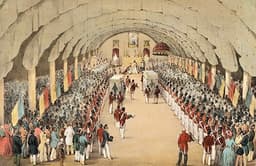
Faustin Soulouque
Emperor · Modern
42.6Total

Saud bin Rashid Al Mualla
Emperor · Modern
39.9Total
Basic Information
Born
1782
1952
Died
1867
—
Era
Modern
Modern
Nationality
Haiti
UAE
Occupation
Emperor
Emperor
Civilization
Other
Middle Eastern
Score Comparison
Military (10%)
50.0
47.2
Political (20%)
27.9
27.9
Influence (20%)
47.9
45.5
Legacy (20%)
36.7
33.3
Leadership (15%)
51.9
41.5
Strategy (15%)
45.0
50.7
TOTAL
42.6
39.9
Faustin Soulouque — Complete Timeline
1849 AD
Invasion of the Dominican RepublicWar◆ Major
Emperor Faustin I launched a military campaign to reconquer the Dominican Republic, which had gained independence from Haiti in 1844. The Haitian army was defeated at the Battle of Las Carreras by Dominican forces under Pedro Santana, ending the invasion.
WarDominican RepublicInvasion
Impact: regionaldestructive
Proclamation as Emperor Faustin IPolitical Action◆ Major
Faustin Soulouque, who had been President of Haiti since 1847, proclaimed himself Emperor Faustin I. He established a hereditary monarchy, created a nobility, and modeled his court after Napoleon III's France. This ended Haiti's republican government.
MonarchyEmpireHaiti
Impact: national
1855 AD
Second Invasion AttemptWar
Faustin I ordered a second invasion of the Dominican Republic with a larger army. The Haitian forces were again defeated at the Battle of Santom
WarDominican RepublicDefeat
Impact: regionaldestructive
1859 AD
Overthrow and ExilePolitical Action◆ Major
A revolution led by General Fabre Geffrard overthrew Emperor Faustin I. He was forced to abdicate and went into exile in Jamaica. The empire was abolished, and Haiti returned to a republican form of government under Geffrard.
RevolutionExileEnd of Empire
Impact: nationaltragic
Saud bin Rashid Al Mualla — Complete Timeline
2009 AD
Accession as Ruler of Umm Al QuwainPolitical Action◆ Major
Saud bin Rashid Al Mualla became the Ruler of Umm Al Quwain on January 2, 2009, following the death of his father, Rashid bin Ahmad Al Mualla. He is the current ruler and a member of the UAE Supreme Council.
SuccessionMonarchyUmm Al Quwain
2010 AD
Development of Umm Al Quwain's InfrastructureReform
Since becoming ruler, Saud bin Rashid has overseen infrastructure projects in Umm Al Quwain, including road expansions, a new airport, and tourism developments. These projects aimed to modernize the emirate and attract investment.
InfrastructureDevelopmentTourism
constructive
This comparison has not been analyzed yet.
One-time AI generation (~1 minute). Scores and timeline are already available below.
Rankings
🥇
Faustin SoulouqueLeader
Mil: 50.0Pol: 27.9Inf: 47.9
42.6
🥈
Saud bin Rashid Al Mualla
Mil: 47.2Pol: 27.9Inf: 45.5
39.9
+2.7 behind
How This Comparison Works
Algorithm
Each figure is scored on 6 dimensions (0—100 scale) based on structured historical data: Military (10%), Political (20%), Influence (20%), Legacy (20%), Leadership (15%), Strategy (15%). The weighted total produces the final ranking.
Data Sources
Scores are computed from structured sub-indicators in the database. Scale factors adjust for era (Ancient ×0.85, Modern ×1.0) and civilization size (Eastern ×1.05, Other ×0.80) to account for differences in population and military scale.
Maximum 3 Figures
Comparisons are limited to 2—3 figures to ensure readability and statistical meaningfulness.
Error Margins
±5 points per dimension — Sub-scores are derived from historical records with inherent uncertainty. Two figures within 5 points on a dimension should be considered roughly equivalent in that area.
Total Score Accuracy
±3 points overall — The weighted combination of 6 dimensions produces a total score with approximately ±3 points of uncertainty. Differences of less than 3 points are not statistically significant— the figures are effectively tied.
Known Limitations
- Historical records are incomplete and uneven across civilizations
- Figures from oral-tradition societies may be underrepresented
- Occupation labels can misclassify multi-role figures
- Scores measure capability and impact, not moral character
- Quantitative scoring is a comparison tool, not absolute truth
Capability Radar
Military (10%) — Battles & Warfare
Battles
20
23
Win Rate
25
28
Expansion
10
30
Political (20%) — Governance & Reform
Reform
10
10
Diplomacy
15
10
Economy
5
10
Influence (20%) — Cultural & Global Reach
Cultural
15
5
Global
10
5
Legacy (20%) — Historical Impact
Historical
20
5
Longevity
10
5
Leadership (15%) — Power & Stability
Tenure
40
15
Stability
5
15
Strategy (15%) — Tactics & Innovation
Strategy
10
32
Tactics
15
36
Reform
5
39
Similar Comparisons
Comments & Discussion
No comments yet. Be the first to share your thoughts!