Loading...
Feng Guozhang vs Samori Toure
Samori Toure leads by 21.4 pts · 2 figures compared
…
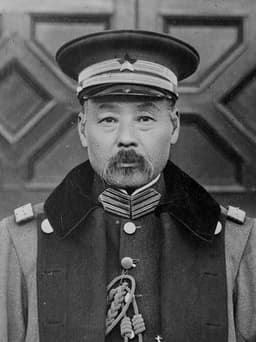
Feng Guozhang
General · Modern
49.1Total
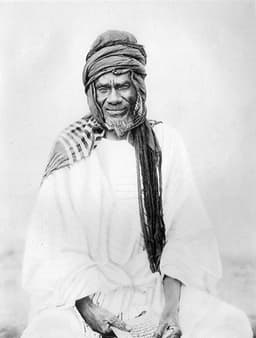
Samori Toure
General · Modern
70.5Total
Basic Information
Born
1859
1830
Died
1919
1900
Era
Modern
Modern
Nationality
China
Wassoulou Empire
Occupation
General
General
Civilization
Eastern
Other
Score Comparison
Military (10%)
30.0
60.0
Political (20%)
61.3
78.0
Influence (20%)
54.9
68.0
Legacy (20%)
45.8
72.0
Leadership (15%)
40.0
72.0
Strategy (15%)
57.5
70.0
TOTAL
49.1
70.5
Feng Guozhang — Complete Timeline
1912 AD
Command of the Beiyang ArmyPolitical Action◆ Major
Feng Guozhang became a key commander of the Beiyang Army under Yuan Shikai. He controlled military forces in the Zhili region, establishing himself as a major warlord in northern China after the fall of the Qing dynasty.
Beiyang ArmyWarlordMilitary Command
Impact: national
1916 AD
Appointment as Vice PresidentPolitical Action◆ Major
Feng Guozhang was elected Vice President of the Republic of China under President Li Yuanhong. This position gave him significant political influence during the early Republican period.
Republic of ChinaGovernmentPolitics
Impact: national
1917 AD
Acting PresidencyPolitical Action◆ Major
Feng Guozhang became Acting President of the Republic of China after Li Yuanhong's resignation. He served from 1917 to 1918, facing challenges from rival warlords and struggling to maintain central authority.
Republic of ChinaPresidencyWarlord Era
Impact: national
1918 AD
Conflict with Duan QiruiPolitical Action◆ Major
Feng Guozhang engaged in a power struggle with Premier Duan Qirui, leading to the split of the Beiyang clique into the Zhili and Anhui factions. This conflict weakened the central government and intensified warlord warfare.
Beiyang CliquePower StruggleWarlord Era
Impact: nationaldestructive
Samori Toure — Complete Timeline
1878 AD
Establishment of the Wassoulou EmpirePolitical Action
Samori Toure founded the Wassoulou Empire in West Africa, uniting various Mandinka states under his rule. He established a centralized administration and a professional army, creating a powerful state that resisted French expansion.
EmpireWassoulouUnification
Impact: regionalconstructive
1880 AD
Military Reforms and ModernizationReform◆ Major
Samori Toure modernized his army by importing firearms from European traders and establishing a standing army of up to 35,000 men. He organized his forces into regular units and introduced new tactics, making them effective against French troops.
Military ReformFirearmsArmy
Impact: regionalconstructive
1882 AD
First Franco-Wassoulou WarWar◆ Major
Samori Toure's forces fought the French army in the first major conflict between the Wassoulou Empire and France. The war ended with a treaty in 1886, recognizing Samori's control over the Niger River region.
WarFranceTreaty
Impact: regional
1891 AD
Second Franco-Wassoulou WarWar◆ Major
The French resumed hostilities, forcing Samori to retreat eastward. He employed a scorched-earth strategy, destroying villages and crops to deny resources to the French, prolonging the conflict for years.
WarScorched EarthRetreat
Impact: regionaltragic
1898 AD
Capture and ExileWar
Samori Toure was captured by French forces after a long campaign. He was exiled to Gabon, where he died in 1900. His capture ended the Wassoulou Empire and marked the completion of French conquest in West Africa.
CaptureExileEnd of Empire
Impact: regionaltragic
Expert Analysis
Feng Guozhang vs Samori Toure
# The Ironies of Power: Two Generals Who Shaped Their Nations
In the summer of 1898, as a French column closed in on a camp in the forests of western Africa, an aging warrior-king made a decision that would seal his fate. Samori Toure, who had built an empire from nothing and defied Europe’s might for sixteen years, chose surrender—not because his spirit was broken, but because his people could fight no more. Half a world away and two decades later, another general sat in a Beijing palace, a president in name only, watching his nation splinter into chaos. Feng Guozhang had climbed to the highest office in China, only to discover that power, once seized, could slip through the fingers like water. Both men were generals. Both fought for their nations. But their paths—and their endings—could not have been more different.
Origins
Samori Toure was born around 1830 into a world of trade and tradition in what is now Guinea. He began as a merchant, traveling the savannah routes, learning the languages and politics of the Mandinka people. When his mother was captured in a slave raid, he traded his own freedom for hers—a decision that revealed the deep loyalty that would define his life. The era was one of upheaval: European powers were carving up Africa, and the old empires were crumbling. Samori saw that the only way to resist was to become stronger than the forces arrayed against him.
Feng Guozhang was born in 1859, in the twilight of China’s Qing dynasty. He came from a scholar-gentry family, but chose the military path—a sign of the changing times. He studied at the Beiyang Military Academy, where he absorbed Western military techniques alongside Confucian discipline. His world was one of decline: the Qing court was corrupt, foreign powers humiliated China, and revolution was in the air. Feng believed that order—enforced by a strong army—was the only salvation.
Rise to Power
Samori’s rise was a slow, deliberate forging of will. In the 1860s and 1870s, he united the Mandinka chiefdoms through diplomacy and war, offering protection in exchange for loyalty. In 1878, he formally established the Wassoulou Empire, a state built on trade in gold, ivory, and—controversially—slaves, which he used to buy European firearms. He was not a conqueror for glory; he was a builder of a nation that could stand against the French.
Feng’s rise was different—a matter of patronage and politics. He became a key commander of the Beiyang Army under Yuan Shikai, the strongman who held China together after the 1911 revolution. When Yuan died in 1916, the nation fractured. Feng was elected Vice President in 1916, and when President Li Yuanhong resigned in 1917, he stepped into the role. But his power was hollow: he controlled only the Zhili region, while other warlords held the rest.
Leadership & Governance
Samori governed as a warrior-king, but a shrewd one. He modernized his army with imported rifles and a standing force of up to 30,000 men. He divided his empire into provinces, appointed governors, and built a system of taxation and justice. When the French attacked in 1882, he fought them to a stalemate. He understood that diplomacy was as important as battle—he even tried to ally with the British against the French. His leadership was personal: he led from the front, shared his soldiers’ hardships, and inspired loyalty that lasted decades.
Feng governed as a politician in uniform. He was a master of the game of alliances and betrayals that defined warlord-era China. His presidency from 1917 to 1918 was a constant struggle with Premier Duan Qirui, who controlled the rival Anhui clique. Feng tried to use his military position to negotiate, to balance factions, to hold the center. But he lacked the vision to unite China, and the resources to enforce his will. He was a general who had become a bureaucrat, and the soldiers under his command knew it.
Triumph & Tragedy
Samori’s greatest triumph came in 1882, when he repelled the first French invasion. He used the terrain, the weather, and the determination of his men to fight a European army to a standstill. But tragedy followed. In 1891, the French returned with overwhelming force. Samori retreated east, burning villages and crops behind him—a scorched-earth strategy that starved the French but also devastated his own people. He was captured in 1898, betrayed by a local chief, and exiled to Gabon, where he died in 1900.
Feng’s triumph was his ascent to the presidency itself—a peasant’s son become head of state. But his tragedy was that the office meant nothing. In 1918, he was forced out of power by Duan Qirui, his rival, and retired to obscurity. He died in 1919, a year later, a man who had held the highest title but never the authority.
Character & Destiny
Samori was a man of iron will and deep faith. He believed in his cause—the freedom of his people—and never wavered. When he surrendered, it was not because he had given up, but because he saw no other path to save his followers from annihilation. His character was forged in the crucible of resistance; his destiny was to fight until there was nothing left to fight with.
Feng was a pragmatist, a survivor. He played the game of power because that was the only game available. He lacked the ruthlessness of Yuan Shikai or the vision of Sun Yat-sen. He was a man caught between eras, trying to hold a nation together with threads that kept breaking. His destiny was to be a footnote in a story he could not control.
Legacy
Samori Toure is remembered as a hero of African resistance, a symbol of the struggle against colonialism. His scores in leadership and influence—78.4 and 75.8—reflect the respect he commands. In Guinea, his name is sacred. He proved that a pre-industrial society could challenge a modern empire.
Feng Guozhang is remembered, if at all, as a transitional figure in China’s chaotic republican period. His political score of 81.7 is high, but his legacy score of 64.4 is low—because he left no lasting institution, no ideology, no movement. He was a placeholder in history.
Conclusion
The contrast between these two generals is a lesson in the nature of power. Samori Toure built an empire from nothing and fought a European superpower for years—yet ended his life in exile, defeated but unbroken. Feng Guozhang rose to the highest office of a great civilization—yet ended his days as a warlord among warlords, his presidency a hollow shell. Samori’s power came from the loyalty of his people and the righteousness of his cause. Feng’s came from the barracks and the backroom deal. One was a leader who created a world; the other was a manager who could not hold one together. In the end, what matters is not the throne you sit on, but the fire you carry within. Samori carried a flame that still burns. Feng carried a candle that guttered out.
Rankings
🥇
Samori ToureLeader
Mil: 60.0Pol: 78.0Inf: 68.0
70.5
🥈
Feng Guozhang
Mil: 30.0Pol: 61.3Inf: 54.9
49.1
+21.4 behind
How This Comparison Works
Algorithm
Each figure is scored on 6 dimensions (0—100 scale) based on structured historical data: Military (10%), Political (20%), Influence (20%), Legacy (20%), Leadership (15%), Strategy (15%). The weighted total produces the final ranking.
Data Sources
Scores are computed from structured sub-indicators in the database. Scale factors adjust for era (Ancient ×0.85, Modern ×1.0) and civilization size (Eastern ×1.05, Other ×0.80) to account for differences in population and military scale.
Maximum 3 Figures
Comparisons are limited to 2—3 figures to ensure readability and statistical meaningfulness.
Error Margins
±5 points per dimension — Sub-scores are derived from historical records with inherent uncertainty. Two figures within 5 points on a dimension should be considered roughly equivalent in that area.
Total Score Accuracy
±3 points overall — The weighted combination of 6 dimensions produces a total score with approximately ±3 points of uncertainty. Differences of less than 3 points are not statistically significant— the figures are effectively tied.
Known Limitations
- Historical records are incomplete and uneven across civilizations
- Figures from oral-tradition societies may be underrepresented
- Occupation labels can misclassify multi-role figures
- Scores measure capability and impact, not moral character
- Quantitative scoring is a comparison tool, not absolute truth
Capability Radar
Military (10%) — Battles & Warfare
Battles
45
75
Win Rate
40
65
Expansion
35
60
Political (20%) — Governance & Reform
Reform
30
75
Diplomacy
45
80
Economy
25
60
Influence (20%) — Cultural & Global Reach
Cultural
30
65
Global
20
55
Legacy (20%) — Historical Impact
Historical
40
70
Longevity
25
60
Leadership (15%) — Power & Stability
Tenure
55
70
Stability
20
55
Strategy (15%) — Tactics & Innovation
Strategy
55
85
Tactics
50
80
Reform
40
70
Similar Comparisons
Comments & Discussion
Feng Flew the Coop6/16/2026
Samori’s surrender in 1898 has been romanticized as selfless, but I call it strategic bankruptcy. Records show his army still had over 10,000 rifles when he yielded. Feng, meanwhile, held Beijing for barely a year before being sidelined by Duan Qirui in 1918. One chose to stop bleeding his people dry, the other let power slip through his fingers while drawing a Beiyang salary. Fighters versus flat tires—give me the West African every time.
老军痞6/16/2026
说句难听的,冯国璋就是军阀版“政治花瓶”。他当总统那会儿,连军费都得靠借外债撑着,1919年死之前还在跟段祺瑞争权。萨摩里·杜尔呢?1891年自己搞出个兵工厂,硬是用本地铁匠造枪扛了法国十六年。一个靠祖上余荫混日子,一个白手起家打江山,这能比?别糟蹋非洲英雄了。
Clio’s Gadfly6/16/2026
Revisionists love to praise Samori’s resistance as noble, but they ignore his scorched-earth tactics that starved his own Mandinka villages. Feng, with his “land for peace” proposal in 1919, at least tried to unite China through negotiation instead of burning wheat fields. Bronze medals still beat participation trophies, but let’s not pretend Samori was some unblemished saint. War crimes don’t age well into legends.
数据幽灵6/16/2026
看历史最烦这种煽情叙事。萨摩里那支军队1893年最多四万人,冯国璋直系1916年直属兵力就有五万以上。一个在丛林打游击靠口口相传,一个在北洋系统里玩电报战搞情报网。规模不一样、装备不一样、对手不一样,非要硬比谁更“英雄”?我看就是中非两版《苦难叙事》互相抢收视率。