Loading...
Ferdinand I of Leon vs Fu Jian
Fu Jian leads by 5.2 pts · 2 figures compared
…
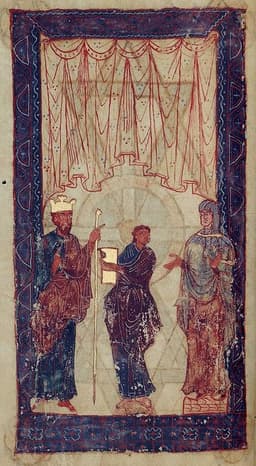
Ferdinand I of Leon
Emperor · Medieval
59.2Total
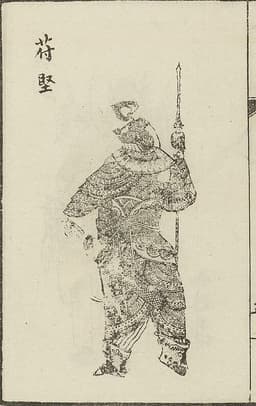
Fu Jian
Emperor · Ancient
64.4Total
Basic Information
Born
1015
338
Died
1065
385
Era
Medieval
Ancient
Nationality
Leon
China
Occupation
Emperor
Emperor
Civilization
Western
Eastern
Score Comparison
Military (10%)
70.0
78.0
Political (20%)
68.0
72.0
Influence (20%)
56.4
59.0
Legacy (20%)
49.2
50.0
Leadership (15%)
66.0
85.0
Strategy (15%)
57.5
58.0
TOTAL
59.2
64.4
Ferdinand I of Leon — Complete Timeline
1029 AD
Inheritance of the County of CastilePolitical Action◆ Major
Ferdinand I inherited the County of Castile from his father Sancho III of Navarre. He later expanded his territory through conquest and marriage, laying the foundation for the Kingdom of Castile.
Impact: regionalconstructive
1037 AD
Conquest of LeónWar◆ Major
Ferdinand I defeated and killed King Bermudo III of Le
Impact: regional
1056 AD
First Emperor of SpainPolitical Action◆ Major
Ferdinand I was crowned 'Imperator totius Hispaniae' (Emperor of all Spain) in 1056, claiming suzerainty over all Christian and Muslim rulers in Iberia. This title reflected his military dominance and political ambition.
Impact: regional
1065 AD
Division of the kingdomPolitical Action◆ Major
Upon his death, Ferdinand I divided his kingdom among his sons: Sancho II received Castile, Alfonso VI received Le
Impact: regionaldestructive
Fu Jian — Complete Timeline
370 AD
Conquest of Former YanWar◆ Major
Fu Jian's Former Qin forces conquered the Former Yan state, annexing its territory in northern China. This victory significantly expanded Former Qin's power and territory, bringing Fu Jian closer to unifying the north.
ConquestExpansion
Impact: regionalconstructive
376 AD
Conquest of Former LiangWar◆ Major
Fu Jian's forces conquered the Former Liang state in the northwest, incorporating its territory into Former Qin. This further consolidated his control over northern China.
ConquestExpansion
Impact: regionalconstructive
Conquest of DaiWar
Fu Jian's army conquered the Dai state, a Xianbei confederation in the north. This eliminated a rival and extended Former Qin's influence into the steppe region.
ConquestExpansion
Impact: regionalconstructive
379 AD
Capture of XiangyangWar
Fu Jian's forces captured the strategic city of Xiangyang from the Eastern Jin dynasty. This victory gave Former Qin a foothold south of the Huai River, setting the stage for the invasion that led to the Battle of Fei River.
ConquestCampaign
Impact: regionalconstructive
383 AD
Battle of Fei RiverWar
Fu Jian led a massive Former Qin army against the Eastern Jin dynasty at the Fei River. The Jin forces defeated the Qin army, causing a catastrophic rout. This defeat shattered Fu Jian's unification efforts and led to the collapse of Former Qin.
BattleUnificationDefeat
Impact: regionaltragic
Expert Analysis
Fu Jian vs Ferdinand I of Leon
# The Weight of an Empire
On a late autumn day in 383, two armies faced each other across the shallow waters of the Fei River in southern China. Fu Jian, the emperor of Former Qin, stood atop a hill and surveyed what he believed to be the largest force ever assembled in Chinese history—perhaps a million men, stretching as far as the eye could see. Across the river, a vastly smaller Eastern Jin army waited in disciplined silence. Fu Jian felt certain of victory. He could not know that within hours, his empire would begin to crumble.
Two centuries earlier and half a world away, another ruler faced a different kind of crossing. In 1037, Ferdinand of Castile rode toward the Battle of Tamarón, where the fate of León hung in the balance. He, too, commanded a formidable force. But where Fu Jian would be undone by his own ambition, Ferdinand would be defined by a careful, calculating patience. Both men sought to unite fractured lands under a single crown. Only one succeeded—and even his success came at a terrible price.
Origins
Fu Jian was born in 338 into a world of chaos. The collapse of the Western Jin dynasty had splintered China into the Sixteen Kingdoms, a brutal patchwork of warring states where ethnic tensions ran deep. Fu Jian was of Di ethnicity, a minority group often dismissed as barbarians by the Han Chinese elite. From childhood, he absorbed the teachings of a Han Chinese scholar named Wang Meng, who instilled in him a vision of a unified, Confucian empire. This dual identity—a non-Han ruler who dreamed of a Han-style civilization—would define everything he attempted.
Ferdinand I of León, born in 1015, inherited a very different legacy. He was the son of Sancho III of Navarre, a Christian king who had learned to navigate the complex politics of medieval Iberia. The Reconquista was not yet the crusading ideal it would later become; Christian and Muslim rulers frequently allied, traded, and intermarried. Ferdinand grew up in a world where power was personal, rooted in oaths, marriages, and the careful distribution of land. His father had taught him that a kingdom was not won by size alone, but by the loyalty of those who held it.
Rise to Power
Fu Jian ascended to the throne of Former Qin in 357 at age nineteen, after a coup that removed his tyrannical cousin. He immediately appointed Wang Meng as his prime minister, a partnership that would shape an era. Together, they built a state machine of astonishing efficiency. Wang Meng rooted out corruption, reformed the tax system, and promoted talent regardless of ethnicity. Fu Jian provided the military muscle. Over the next two decades, he conquered state after state: Former Yan in 370, Former Liang in 376, the Dai confederation in 376. By 379, when his forces captured the strategic city of Xiangyang from Eastern Jin, it seemed only a matter of time before all China would kneel to him.
Ferdinand’s path was more circuitous. He inherited the County of Castile from his father in 1029, but this was merely a foothold. The Kingdom of León, the heart of Christian Iberia, belonged to his brother-in-law, Bermudo III. For years, Ferdinand played a patient game—consolidating his lands, building alliances, and waiting for the right moment. That moment came in 1037. At the Battle of Tamarón, Ferdinand’s forces defeated and killed Bermudo. He claimed the crown of León not as a conqueror, but as a legitimate heir through his wife. It was a masterstroke of political legitimacy.
Leadership & Governance
Here the two rulers diverged most sharply. Fu Jian governed through a blend of Confucian idealism and military might. He appointed Han Chinese scholars to high office, encouraged agriculture, and built schools. He treated conquered peoples with surprising leniency, incorporating their leaders into his court. But this magnanimity had a dark side: Fu Jian trusted too easily. He believed that generosity could dissolve ethnic hatreds, that former enemies could become loyal subjects. Wang Meng repeatedly warned him that the Xianbei and other conquered peoples were biding their time, waiting for weakness.
Ferdinand governed through a different logic—the logic of feudal obligation. He understood that loyalty had to be earned and enforced. His campaigns against the Moors were not wars of annihilation but of tribute and expansion. He extracted wealth from Muslim taifas (city-states), using it to reward his nobles and strengthen his army. In 1056, he had himself crowned "Imperator totius Hispaniae"—Emperor of all Spain—a title that was more claim than reality, but one that gave him moral authority over the fractious Christian kingdoms.
Triumph & Tragedy
Fu Jian’s greatest triumph was also his greatest tragedy. In 383, he marched south to crush Eastern Jin, the last Han Chinese dynasty standing in his way. The Battle of Fei River should have been a foregone conclusion. Fu Jian’s army dwarfed the Jin forces. But the Jin commander, Xie Xuan, exploited a fatal flaw: Fu Jian’s army was a collection of conquered peoples with little loyalty to their emperor. When the Jin troops feigned retreat and the Qin lines began to waver, panic spread like wildfire. Fu Jian watched his army disintegrate, not from enemy steel, but from its own fractured heart. The empire he had built in a decade unraveled in a day.
Ferdinand’s tragedy was quieter but no less profound. He died in 1065, having divided his kingdom among his three sons—Sancho, Alfonso, and García. It was a decision that honored tradition but invited disaster. Within years, the brothers were at war, tearing apart everything Ferdinand had built. His dream of a united Spain would have to wait for another century.
Character & Destiny
Fu Jian was a man of grand visions and fatal generosity. He believed that will alone could reshape reality, that if he treated enemies as friends, they would become friends. Wang Meng, on his deathbed in 375, had begged him: "Do not trust the Xianbei. Do not trust the Qiang." Fu Jian wept at his minister’s passing, then ignored his advice. When asked why he spared the lives of conquered rulers, he replied, "I am not like the tyrants of old."
Ferdinand was a man of calculation. He knew that power was finite, that trust was earned, and that the best way to hold a kingdom was to make sure everyone had a reason to stay loyal. He was not cruel, but he was not naive. He understood that history is written by the patient, not the bold.
Legacy
Fu Jian’s legacy is a cautionary tale. The Former Qin collapsed within a decade of Fei River, and China would not be reunified until the Sui dynasty two centuries later. But Fu Jian’s attempt was not forgotten. Later emperors studied his mistakes, learning that empire requires not just military might, but the slow, patient work of building trust across ethnic lines.
Ferdinand’s legacy is more ambiguous. He is remembered as the first Emperor of Spain, a title that would become central to Spanish identity. But his division of the kingdom delayed unification for generations. His son Alfonso VI would eventually reunite the realm, but only after years of civil war. Ferdinand’s crowning achievement—the imperial title—was a promise that would take centuries to fulfill.
Conclusion
Standing on opposite sides of the world, Fu Jian and Ferdinand I faced the same question: How do you hold an empire together? Fu Jian answered with generosity and trust, believing that a shared vision could transcend hatred. Ferdinand answered with caution and obligation, believing that power must be carefully balanced. Both were right, and both were wrong. Fu Jian’s empire shattered because he trusted too much. Ferdinand’s fractured because he trusted too little. In the end, the lesson may be that no single philosophy can hold an empire together—only the wisdom to know when to trust, when to doubt, and when to let go.
Rankings
🥇
Fu JianLeader
Mil: 78.0Pol: 72.0Inf: 59.0
64.4
🥈
Ferdinand I of Leon
Mil: 70.0Pol: 68.0Inf: 56.4
59.2
+5.2 behind
How This Comparison Works
Algorithm
Each figure is scored on 6 dimensions (0—100 scale) based on structured historical data: Military (10%), Political (20%), Influence (20%), Legacy (20%), Leadership (15%), Strategy (15%). The weighted total produces the final ranking.
Data Sources
Scores are computed from structured sub-indicators in the database. Scale factors adjust for era (Ancient ×0.85, Modern ×1.0) and civilization size (Eastern ×1.05, Other ×0.80) to account for differences in population and military scale.
Maximum 3 Figures
Comparisons are limited to 2—3 figures to ensure readability and statistical meaningfulness.
Error Margins
±5 points per dimension — Sub-scores are derived from historical records with inherent uncertainty. Two figures within 5 points on a dimension should be considered roughly equivalent in that area.
Total Score Accuracy
±3 points overall — The weighted combination of 6 dimensions produces a total score with approximately ±3 points of uncertainty. Differences of less than 3 points are not statistically significant— the figures are effectively tied.
Known Limitations
- Historical records are incomplete and uneven across civilizations
- Figures from oral-tradition societies may be underrepresented
- Occupation labels can misclassify multi-role figures
- Scores measure capability and impact, not moral character
- Quantitative scoring is a comparison tool, not absolute truth
Capability Radar
Military (10%) — Battles & Warfare
Battles
55
75
Win Rate
60
70
Expansion
60
80
Political (20%) — Governance & Reform
Reform
50
70
Diplomacy
55
60
Economy
45
65
Influence (20%) — Cultural & Global Reach
Cultural
40
50
Global
30
45
Legacy (20%) — Historical Impact
Historical
45
60
Longevity
40
40
Leadership (15%) — Power & Stability
Tenure
65
65
Stability
50
55
Strategy (15%) — Tactics & Innovation
Strategy
55
70
Tactics
50
65
Reform
40
60
Similar Comparisons
Comments & Discussion
GuerrillaRomeo6/16/2026
Comparing Ferdinand and Fu Jian? One was a strategic builder, the other a brittle overload. Ferdinand tackled Galicia and León piecemeal, securing frontiers for decades. Fu Jian threw raw conscripts—including poorly integrated Xianbei ex-soldiers—into a river crossing, then watched his own army collapse from mutiny. It’s medieval lessons 101: trust your lieutenants, not your headcount.
Legionnaire_Snob6/16/2026
Fu Jian’s Fei River fiasco proves the man was an overconfident accountant, not a general. He bragged about “throwing whips into the river to stem its flow,” then panicked when rumors spread. Ferdinand? He outflanked Vermundo III at Tamarón and built a real kingdom, not a paper tiger. One guy wins; the other proves numbers don’t win battles—bad orders do.
铁骑之殇6/16/2026
苻坚就是个内战内行、外战外行的读书人。他在淝水玩“草木皆兵”的心理战,结果自己先崩了。费迪南一世在塔马隆战役骑马冲锋,一刀砍了贝尔穆多三世,直接吞下莱昂。真的领袖得亲手弄脏铠甲,苻坚连马都骑不稳吧?
Astute_Student6/16/2026
得了吧,苻坚败在人数吹太大。他真有一百万还是八十万?史书数字都是虚的。费迪南在1037年拼的是硬仗,打完后莱昂归卡斯蒂利亚,家业稳当当。苻坚倒好,前秦垮得比魔术师的鸽子还快,教训就是别信PPT远筹。