Loading...
Ferdinand Marcos Jr. vs Milorad Dodik
Milorad Dodik leads by 14.2 pts · 2 figures compared
…

Ferdinand Marcos Jr.
Politician · Modern
33.8Total
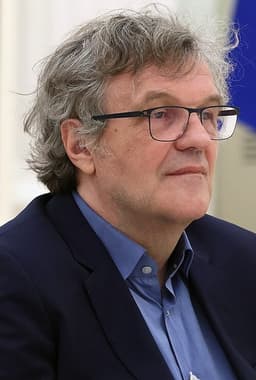
Milorad Dodik
Politician · Modern
48.0Total
Basic Information
Born
1957
1959
Died
—
—
Era
Modern
Modern
Nationality
Philippines
Bosnia
Occupation
Politician
Politician
Civilization
Eastern
Western
Score Comparison
Military (10%)
17.5
49.3
Political (20%)
26.4
43.7
Influence (20%)
45.5
50.2
Legacy (20%)
33.3
40.0
Leadership (15%)
38.1
65.0
Strategy (15%)
26.8
41.8
TOTAL
33.8
48.0
Ferdinand Marcos Jr. — Complete Timeline
1989 AD
Inherited the Marcos political dynastyPolitical Action
After his mother Imelda Marcos returned from exile, Ferdinand Marcos Jr. began consolidating the family's political base in Ilocos Norte. He served as governor and congressman, rebuilding the Marcos political machinery.
Political DynastyIlocos NorteMarcos Family
1998 AD
Appointed as Ilocos Norte GovernorPolitical Action
Marcos Jr. was elected governor of Ilocos Norte, a position he held for three terms until 2007. This role allowed him to build a local power base and continue the family's political influence in the region.
GovernorIlocos NorteLocal Politics
2010 AD
Elected to the Philippine SenatePolitical Action◆ Major
Marcos Jr. was elected to the Philippine Senate, placing 7th in the national elections. His Senate term allowed him to gain national prominence and position himself for a future presidential run.
SenateNational PoliticsElection
Impact: national
2016 AD
Lost vice-presidential bidPolitical Action◆ Major
Marcos Jr. ran for vice president under the Nacionalista Party but lost to Leni Robredo by a narrow margin of 263,473 votes. He filed an electoral protest that was later dismissed by the Supreme Court.
ElectionVice PresidencyElectoral Protest
Impact: national
2022 AD
Elected President of the PhilippinesPolitical Action◆ Major
Ferdinand Marcos Jr. won the Philippine presidential election with 58.8% of the vote, defeating Leni Robredo. His victory marked the return of the Marcos family to the highest office 36 years after his father's ouster.
ElectionPolitical DynastyPhilippine Politics
Impact: national
Milorad Dodik — Complete Timeline
1992 AD
Declared independence of Republika Srpska from Bosnia and HerzegovinaPolitical Action◆ Major
As a founding member of the Serb Democratic Party, Dodik supported the declaration of an independent Republika Srpska within Bosnia, leading to the Bosnian War. This action set the stage for his later secessionist politics.
Bosnian WarSecessionRepublika Srpska
Impact: regionaldestructive
1998 AD
Elected Prime Minister of Republika SrpskaPolitical Action◆ Major
Dodik became Prime Minister of Republika Srpska, leading a coalition government. He pursued economic reforms and closer ties with the West, but also maintained nationalist rhetoric.
GovernmentReformsBosnia
Impact: regionalconstructive
2010 AD
Elected President of Republika SrpskaPolitical Action◆ Major
Dodik won the presidency of Republika Srpska, advocating for greater autonomy and challenging the authority of the Bosnian central government. His tenure saw increased secessionist rhetoric.
PresidencySecessionBosnia
Impact: regionaldestructive
2016 AD
Organized a referendum on the authority of the Bosnian Constitutional CourtPolitical Action◆ Major
Dodik called a referendum in Republika Srpska challenging the authority of the Bosnian Constitutional Court, which was declared illegal by the Bosnian central government. The referendum passed, deepening the political crisis.
ReferendumConstitutional CrisisBosnia
Impact: regionaldestructive
2017 AD
Imposed sanctions by the United StatesPolitical Action◆ Major
The United States imposed sanctions on Dodik for undermining the Dayton Peace Agreement and engaging in corruption. This international condemnation isolated him further.
SanctionsCorruptionInternational Relations
Impact: regionaldestructive
2021 AD
Announced plans for secession of Republika SrpskaPolitical Action◆ Major
Dodik announced that Republika Srpska would begin withdrawing from Bosnian state institutions, including the army and judiciary, aiming for full secession. This escalated tensions with the Bosnian central government and the international community.
SecessionPolitical CrisisBosnia
Impact: regionaldestructive
Expert Analysis
Origins
Ferdinand Marcos Jr., born in 1957 in the Philippines, is the son of dictator Ferdinand Marcos and Imelda Marcos. He grew up in privilege, attending the University of Oxford but not graduating. His formative years were shaped by his father's authoritarian rule and the family's lavish lifestyle. After the 1986 People Power Revolution, the family fled to Hawaii, where Marcos Sr. died. Marcos Jr. returned to the Philippines in the early 1990s, inheriting the family's political machinery.
Milorad Dodik, born in 1959 in Laktaši, Bosnia and Herzegovina, then part of Yugoslavia, came from a modest background. He graduated from the University of Belgrade in political science. Dodik was influenced by Serbian nationalism and the disintegration of Yugoslavia. He joined the Serb Democratic Party (SDS) and later founded the Independent Social Democrats (SNSD), advocating for Serb interests in Bosnia.
Rise to Power
Marcos Jr. began his political career as a congressman in 1992, representing Ilocos Norte. He served as governor of the province from 1998 to 2007, then returned to Congress. In 2010, he was elected to the Senate, placing 7th. He ran for vice president in 2016 but lost to Leni Robredo by a narrow margin (263,473 votes), filing an electoral protest that was dismissed. In 2022, he won the presidency with 58.8% of the vote, a victory fueled by a massive social media campaign and consolidation of political elites.
Dodik rose in Bosnian Serb politics after the Dayton Agreement in 1995. He became Prime Minister of Republika Srpska in 1998, leading a coalition. He later won the presidency of Republika Srpska in 2010, advocating for secession. His power base relies on nationalist rhetoric and challenging the Bosnian central government. He organized a referendum in 2016 that rejected the authority of the Bosnian Constitutional Court, escalating tensions.
Leadership & Governance
Marcos Jr.'s governance is characterized by continuity with his father's political style: patronage, dynasty, and a soft authoritarian approach. He has maintained a high approval rating through economic measures like fuel subsidies but has avoided major reforms. His administration has been criticized for human rights abuses, including a crackdown on journalists and activists. He has prioritized infrastructure projects but lacks a clear economic vision.
Dodik's leadership is openly secessionist and confrontational. He has pursued policies to weaken Bosnian institutions, such as blocking laws and threatening to declare independence. He has been sanctioned by the United States for undermining the Dayton Peace Agreement. His governance is marked by corruption allegations and economic mismanagement, but he maintains support among Serb nationalists.
Triumph & Tragedy
Marcos Jr.'s greatest success is winning the presidency, restoring the Marcos family to the highest office. He has also consolidated political control, with allies in Congress and the judiciary. However, his failure to address long-standing issues like poverty and corruption, and his defense of his father's legacy, have damaged his reputation. His score of 33.8 reflects modest political impact but low military and strategic influence.
Dodik's triumph is his role in preserving Republika Srpska's autonomy and pushing for secession, gaining support from Russia and Serbia. However, his tragedy is that his actions have led to international isolation and sanctions. His score of 48.0 indicates higher leadership and military influence than Marcos Jr., but his legacy is marred by instability.
Character & Destiny
Marcos Jr. is often described as affable but evasive, relying on his family name and a carefully managed image. He avoids direct confrontation and prefers behind-the-scenes deals. His character reflects a sense of entitlement and a desire to rehabilitate the Marcos brand. This has shaped his destiny as a polarizing figure, with strong support from his base but widespread opposition from human rights advocates.
Dodik is aggressive, confrontational, and unapologetic in his nationalism. He is a skilled orator and manipulator of ethnic grievances. His character has made him a hero to Serb nationalists but a pariah to the international community. His destiny is tied to the fragile peace in Bosnia, and his actions risk renewed conflict.
Legacy
Marcos Jr.'s legacy is still unfolding, but he is likely to be remembered as a president who restored a disgraced dynasty without addressing systemic problems. His score of 33.3 in legacy reflects limited long-term impact. He may be seen as a transitional figure who failed to meet expectations.
Dodik's legacy will be that of a secessionist who destabilized Bosnia and challenged the post-war order. His score of 40.0 in legacy indicates a more significant, albeit negative, impact. He has cemented Republika Srpska's defiance and inspired other separatist movements.
Conclusion
Milorad Dodik has greater impact than Ferdinand Marcos Jr., with a total score of 48.0 versus 33.8. Dodik's actions have directly challenged the international order and the stability of Bosnia, while Marcos Jr. has largely maintained the status quo in the Philippines. Though both are divisive, Dodik's influence on geopolitics and his role in a fragile peace process give him a higher score in leadership, military, and legacy. Marcos Jr.'s impact is more domestic and limited to dynastic politics. Therefore, Dodik emerges as the more consequential figure, for better or worse.
Rankings
🥇
Milorad DodikLeader
Mil: 49.3Pol: 43.7Inf: 50.2
48.0
🥈
Ferdinand Marcos Jr.
Mil: 17.5Pol: 26.4Inf: 45.5
33.8
+14.2 behind
How This Comparison Works
Algorithm
Each figure is scored on 6 dimensions (0—100 scale) based on structured historical data: Military (10%), Political (20%), Influence (20%), Legacy (20%), Leadership (15%), Strategy (15%). The weighted total produces the final ranking.
Data Sources
Scores are computed from structured sub-indicators in the database. Scale factors adjust for era (Ancient ×0.85, Modern ×1.0) and civilization size (Eastern ×1.05, Other ×0.80) to account for differences in population and military scale.
Maximum 3 Figures
Comparisons are limited to 2—3 figures to ensure readability and statistical meaningfulness.
Error Margins
±5 points per dimension — Sub-scores are derived from historical records with inherent uncertainty. Two figures within 5 points on a dimension should be considered roughly equivalent in that area.
Total Score Accuracy
±3 points overall — The weighted combination of 6 dimensions produces a total score with approximately ±3 points of uncertainty. Differences of less than 3 points are not statistically significant— the figures are effectively tied.
Known Limitations
- Historical records are incomplete and uneven across civilizations
- Figures from oral-tradition societies may be underrepresented
- Occupation labels can misclassify multi-role figures
- Scores measure capability and impact, not moral character
- Quantitative scoring is a comparison tool, not absolute truth
Capability Radar
Military (10%) — Battles & Warfare
Battles
15
30
Win Rate
14
32
Expansion
19
35
Political (20%) — Governance & Reform
Reform
10
30
Diplomacy
20
40
Economy
15
35
Influence (20%) — Cultural & Global Reach
Cultural
5
20
Global
5
20
Legacy (20%) — Historical Impact
Historical
5
25
Longevity
5
15
Leadership (15%) — Power & Stability
Tenure
15
55
Stability
10
25
Strategy (15%) — Tactics & Innovation
Strategy
25
38
Tactics
25
40
Reform
32
43
Similar Comparisons
Comments & Discussion
No comments yet. Be the first to share your thoughts!