Loading...
Fiyanggu vs Joao Lourenco
Fiyanggu leads by 4.2 pts · 2 figures compared
…

Fiyanggu
General · Modern
55.5Total
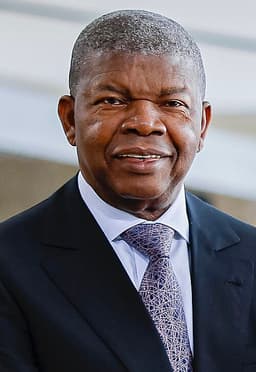
Joao Lourenco
General · Modern
51.3Total
Basic Information
Born
1645
1954
Died
1701
—
Era
Modern
Modern
Nationality
China
Angola
Occupation
General
General
Civilization
Eastern
Other
Score Comparison
Military (10%)
65.0
25.9
Political (20%)
46.6
68.0
Influence (20%)
52.5
52.5
Legacy (20%)
46.7
40.8
Leadership (15%)
80.0
74.0
Strategy (15%)
52.5
41.0
TOTAL
55.5
51.3
Fiyanggu — Complete Timeline
1696 AD
Battle of DsuunmodWar◆ Major
Fiyanggu commanded Qing forces against the Dzungar leader Galdan at Dsuunmod (also known as the Battle of Jao Modo). The Qing army decisively defeated Galdan's forces, leading to Galdan's suicide and the temporary stabilization of the Qing northern frontier.
Dzungar-Qing WarBattleMongolia
Impact: regional
Joao Lourenco — Complete Timeline
2017 AD
Elected President of AngolaPolitical Action◆ Major
João Lourenço succeeded José Eduardo dos Santos as president after winning the 2017 general election. He became the first new president of Angola in 38 years, marking a transition of power within the MPLA party.
AngolaPresidential TransitionMPLA
Impact: national
Launched Anti-Corruption CampaignPolitical Action◆ Major
Lourenço initiated a campaign against corruption and nepotism, targeting figures from the previous dos Santos administration. He removed Isabel dos Santos from the leadership of Sonangol and José Filomeno dos Santos from the sovereign wealth fund.
AngolaAnti-CorruptionDos Santos Family
Impact: nationalconstructive
2022 AD
Reelected President of AngolaPolitical Action
Lourenço won a second term in the 2022 general election with 51% of the vote. The election was marred by allegations of irregularities and low voter turnout, but the MPLA retained its parliamentary majority.
AngolaElectionMPLA
Impact: national
Expert Analysis
Origins
Fiyanggu was a Qing general of the Manchu Bordered Yellow Banner, born in the early 17th century. He rose through the ranks of the Eight Banners system, a hereditary military organization that formed the core of Qing power. His early career was marked by campaigns against Ming loyalists and the consolidation of Qing rule in China proper. Fiyanggu's military education was practical, honed in the field rather than in formal institutions.
João Lourenço was born on March 5, 1954, in the town of Malanje, Portuguese Angola. He studied at the Instituto Superior Politécnico de Angola and later at the Lenin Academy in Moscow, where he received training in engineering and military strategy. Lourenço joined the Popular Movement for the Liberation of Angola (MPLA) during the war for independence from Portugal, fighting as a guerrilla in the 1970s. His background combined political ideology with military experience, a blend that would define his career.
Rise to Power
Fiyanggu's rise was tied to the Kangxi Emperor's campaign against the Dzungar Khanate, a powerful steppe confederation. In 1696, the emperor launched a three-pronged invasion of Mongolia. Fiyanggu commanded the central army, which engaged Galdan's forces at the Battle of Dsuunmod (also known as Jao Modo). The Qing army, numbering around 10,000, used a combination of artillery and cavalry tactics to destroy Galdan's army of 20,000. Fiyanggu's decisive victory led to Galdan's death and the annexation of Outer Mongolia. This battle cemented Fiyanggu's reputation as a capable commander and earned him the title of Prince of the First Rank.
Lourenço's rise was more gradual and political. He served as Angola's Minister of Defense from 2014 to 2017, overseeing the military during a period of relative peace after the civil war. In 2017, President José Eduardo dos Santos, who had ruled for 38 years, chose not to run. Lourenço was selected as the MPLA's candidate and won the general election with 61% of the vote. He took office on September 26, 2017, becoming the first new president in nearly four decades.
Leadership & Governance
Fiyanggu's leadership was authoritarian and military-focused. He governed conquered territories with an iron fist, enforcing Qing law and integrating local elites into the banner system. His approach was typical of Qing frontier management: divide and rule, co-opting tribal leaders while suppressing dissent. Fiyanggu's governance score of 46.6 reflects his limited role in civil administration; he was primarily a military commander.
Lourenço's leadership style is more reformist and institutional. Upon taking office, he launched a high-profile anti-corruption campaign, targeting figures from the dos Santos era. He removed Isabel dos Santos, the former president's daughter, from her position as head of the state oil company Sonangol. He also arrested former central bank governor Valter Filipe da Silva. These actions earned him a political score of 68.0 and an influence score of 52.5. However, his government has been criticized for authoritarian tendencies, including crackdowns on dissent and media restrictions.
Triumph & Tragedy
Fiyanggu's greatest triumph was the Battle of Dsuunmod, which secured Qing dominance over the steppe. His military score of 65.0 reflects this success. However, his legacy is limited by the lack of lasting political institutions; the Qing system he served would collapse two centuries later. His tragedy lies in being overshadowed by more famous Qing generals like Zuo Zongtang.
Lourenço's triumph is his anti-corruption campaign, which has recovered billions of dollars and weakened the dos Santos political dynasty. He was reelected in 2022 with 51% of the vote, despite allegations of irregularities. His tragedy is the persistent economic crisis in Angola, with high unemployment and inflation. His leadership score of 74.0 indicates strong executive control, but his strategy score of 41.0 suggests limited success in addressing structural issues.
Character & Destiny
Fiyanggu was a disciplined, loyal commander who followed orders and executed them efficiently. His character was shaped by the Manchu martial tradition, emphasizing honor and obedience. His destiny was tied to the Kangxi Emperor's ambition; without that patronage, he might have remained a minor officer.
Lourenço is a pragmatic politician, willing to break with his predecessor's legacy to consolidate power. He is methodical and patient, traits that served him well in the MPLA's internal politics. His destiny is still unfolding, but his record suggests a leader who prioritizes stability over rapid change.
Legacy
Fiyanggu's legacy is primarily military. The Battle of Dsuunmod is studied as an example of combined arms warfare. His influence score of 52.5 reflects his role in expanding Qing territory, but his name is little known outside specialized history circles.
Lourenço's legacy is still being written. If his reforms succeed, he could be remembered as the man who ended the dos Santos era. His influence score of 52.5 matches Fiyanggu's, but his political score of 68.0 suggests a greater impact on governance. His legacy score of 40.8 is low, partly because he is still in office.
Conclusion
Fiyanggu and Lourenço represent different forms of power: one was a military instrument of empire, the other a political reformer in a struggling democracy. Fiyanggu's total score of 55.5 edges Lourenço's 51.3, but this gap is narrow. Fiyanggu's impact was immediate and territorial, while Lourenço's is institutional and ongoing. In terms of historical significance, Fiyanggu's victory at Dsuunmod reshaped Central Asia, while Lourenço's reforms are still contested. Therefore, Fiyanggu had a greater impact in his era, but Lourenço's potential legacy could surpass him if Angola stabilizes.
Rankings
🥇
FiyangguLeader
Mil: 65.0Pol: 46.6Inf: 52.5
55.5
🥈
Joao Lourenco
Mil: 25.9Pol: 68.0Inf: 52.5
51.3
+4.2 behind
How This Comparison Works
Algorithm
Each figure is scored on 6 dimensions (0—100 scale) based on structured historical data: Military (10%), Political (20%), Influence (20%), Legacy (20%), Leadership (15%), Strategy (15%). The weighted total produces the final ranking.
Data Sources
Scores are computed from structured sub-indicators in the database. Scale factors adjust for era (Ancient ×0.85, Modern ×1.0) and civilization size (Eastern ×1.05, Other ×0.80) to account for differences in population and military scale.
Maximum 3 Figures
Comparisons are limited to 2—3 figures to ensure readability and statistical meaningfulness.
Error Margins
±5 points per dimension — Sub-scores are derived from historical records with inherent uncertainty. Two figures within 5 points on a dimension should be considered roughly equivalent in that area.
Total Score Accuracy
±3 points overall — The weighted combination of 6 dimensions produces a total score with approximately ±3 points of uncertainty. Differences of less than 3 points are not statistically significant— the figures are effectively tied.
Known Limitations
- Historical records are incomplete and uneven across civilizations
- Figures from oral-tradition societies may be underrepresented
- Occupation labels can misclassify multi-role figures
- Scores measure capability and impact, not moral character
- Quantitative scoring is a comparison tool, not absolute truth
Capability Radar
Military (10%) — Battles & Warfare
Battles
60
10
Win Rate
70
10
Expansion
55
10
Political (20%) — Governance & Reform
Reform
30
40
Diplomacy
40
50
Economy
30
35
Influence (20%) — Cultural & Global Reach
Cultural
25
20
Global
20
25
Legacy (20%) — Historical Impact
Historical
40
25
Longevity
30
20
Leadership (15%) — Power & Stability
Tenure
50
55
Stability
45
30
Strategy (15%) — Tactics & Innovation
Strategy
60
15
Tactics
65
15
Reform
30
20
Similar Comparisons
Comments & Discussion
No comments yet. Be the first to share your thoughts!