Loading...
Forbes Burnham vs James Callaghan
Forbes Burnham leads by 2.6 pts · 2 figures compared
…
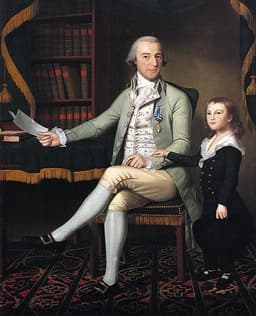
Forbes Burnham
Politician · Modern
51.6Total

James Callaghan
Politician · Modern
49.0Total
Basic Information
Born
1923
1912
Died
—
2005
Era
Modern
Modern
Nationality
Guyana
United Kingdom
Occupation
Politician
Politician
Civilization
Western
Western
Score Comparison
Military (10%)
50.0
50.0
Political (20%)
68.0
53.8
Influence (20%)
56.4
55.7
Legacy (20%)
48.3
46.7
Leadership (15%)
40.0
40.0
Strategy (15%)
42.7
43.0
TOTAL
51.6
49.0
Forbes Burnham — Complete Timeline
1964 AD
Elected Premier of British GuianaPolitical Action◆ Major
Burnham became Premier of British Guiana in December 1964, leading a coalition government after a controversial election. His victory was supported by the British and US governments, who opposed the Marxist Cheddi Jagan.
ElectionCold War
Impact: national
1966 AD
Led Guyana to IndependencePolitical Action
Burnham led British Guiana to independence from the United Kingdom on May 26, 1966, becoming the first Prime Minister of Guyana. The country adopted a new constitution and joined the Commonwealth.
IndependenceDecolonization
Impact: nationalconstructive
1970 AD
Declared Guyana a RepublicPolitical Action◆ Major
Burnham's government declared Guyana a republic on February 23, 1970, replacing the British monarch as head of state with a ceremonial president. This was part of his policy of 'cooperative socialism' and national assertion.
RepublicConstitutional Reform
Impact: nationalconstructive
Nationalized Key IndustriesPolitical Action◆ Major
Burnham nationalized the bauxite industry (1971) and sugar industry (1975), along with other key sectors. This was central to his 'cooperative socialism' policy, but led to economic decline and emigration.
NationalizationSocialism
Impact: nationaldestructive
1980 AD
Became President of GuyanaPolitical Action◆ Major
Burnham became the first Executive President of Guyana under a new constitution in 1980, concentrating power in his office. The constitution was criticized for entrenching authoritarian rule.
PresidencyAuthoritarianism
Impact: nationaldestructive
1985 AD
Died in OfficeOther◆ Major
Burnham died suddenly on August 6, 1985, during a minor surgical procedure. His death ended 21 years of uninterrupted rule, leaving a legacy of economic decline and political repression.
DeathEnd of Era
Impact: national
James Callaghan — Complete Timeline
1976 AD
Appointed Prime MinisterPolitical Action
Callaghan succeeded Harold Wilson as Prime Minister after Wilson's surprise resignation. He led a Labour government with a narrow majority, facing economic challenges and industrial unrest.
Prime MinisterLabour Party
Impact: national
IMF Loan CrisisPolitical Action◆ Major
Callaghan's government negotiated a $3.9 billion loan from the International Monetary Fund to stabilize the British economy. The loan required deep spending cuts, which were controversial within the Labour Party.
Economic CrisisIMF
Impact: nationaldestructive
1979 AD
Winter of DiscontentPolitical Action◆ Major
A series of public sector strikes during the winter of 1978-79, known as the Winter of Discontent, crippled services. Callaghan's government was seen as unable to control unions, leading to a loss of public confidence.
StrikesIndustrial Relations
Impact: nationaldestructive
Lost 1979 General ElectionPolitical Action
Callaghan lost the 1979 general election to Margaret Thatcher's Conservatives. The defeat ended 11 years of Labour government and ushered in a period of Conservative rule.
ElectionDefeat
Impact: nationaldestructive
Expert Analysis
Origins
Forbes Burnham was born on February 20, 1923, in Kitty, British Guiana, to a middle-class family of African descent. He excelled academically, earning a scholarship to study law at the University of London. There, he became involved with the West Indian Students' Union and later the Pan-Africanist movement. Returning to Guiana, he joined the People's Progressive Party (PPP) alongside Cheddi Jagan, but a split in 1955 led him to found the People's National Congress (PNC), rooted in African Guyanese support.
James Callaghan was born on March 27, 1912, in Portsmouth, England, into a working-class family. His father died when he was nine, and he left school at 16 to work as a tax officer. He rose through the trade union movement, becoming a full-time official for the Inland Revenue Staff Federation. His wartime service in the Royal Navy shaped his later commitment to social justice. Elected to Parliament in 1945, he quickly became a key figure in the Labour Party's left wing.
Rise to Power
Burnham's rise was marked by ethnic polarization. After the PPP split, his PNC won 11 seats in the 1957 elections, becoming the main opposition. The 1961 elections saw the PPP win a majority, but Burnham formed an alliance with the conservative United Force. In 1964, under a new proportional representation system imposed by the British, the PNC-United Force coalition won a narrow majority, and Burnham became Premier. He led the country to independence on May 26, 1966, as Prime Minister.
Callaghan's ascent was steadier. He served as Chancellor of the Exchequer under Harold Wilson from 1964 to 1967, resigning after devaluation. He later became Home Secretary (1967-1970), then Foreign Secretary (1974-1976). When Wilson resigned in 1976, Callaghan won the Labour leadership contest, defeating Michael Foot. He became Prime Minister on April 5, 1976, inheriting a fragile economy and a slim parliamentary majority.
Leadership & Governance
Burnham governed with an iron grip, transforming Guyana into a 'cooperative republic' in 1970. He nationalized key industries: bauxite in 1971, sugar in 1975, and other sectors. His 'cooperative socialism' aimed to reduce foreign dependency but led to economic decline, corruption, and emigration. Politically, he consolidated power: the 1980 constitution made him executive president with sweeping powers, and elections were widely seen as rigged. His score for political ability stands at 68.0, reflecting his strategic maneuvering.
Callaghan's governance was more constrained by democratic norms. He faced severe economic challenges: high inflation, unemployment, and a balance of payments crisis. In 1976, his government secured a $3.9 billion IMF loan requiring austerity. His style was conciliatory, seeking 'social contract' with unions. However, the breakdown of this pact led to the Winter of Discontent in 1978-79, with widespread strikes that crippled services. His leadership score of 40.0 reflects his inability to manage the crisis.
Triumph & Tragedy
Burnham's greatest triumph was leading Guyana to independence, ending 150 years of British rule. He also established the University of Guyana and expanded education. However, his legacy is marred by authoritarianism: suppression of political opponents, electoral fraud, and economic mismanagement that left Guyana impoverished. His total score of 51.6 reflects mixed outcomes.
Callaghan's triumph was his role in stabilizing the economy through the IMF loan, which laid groundwork for future growth. He also successfully negotiated the devolution of powers to Scotland and Wales. His tragedy was the Winter of Discontent, which shattered Labour's reputation for competent governance and led to the 1979 defeat by Margaret Thatcher. His total score of 49.0 is slightly lower than Burnham's.
Character & Destiny
Burnham was charismatic and ambitious, but also ruthless. He centralized power, suppressed dissent, and manipulated ethnic divisions to stay in control. His character shaped a destiny of isolation: Guyana became a one-party state under his rule, and he died in office in 1985 amid allegations of corruption.
Callaghan was pragmatic and well-meaning, but indecisive. His famous 'Crisis? What crisis?' remark during the Winter of Discontent (actually a newspaper headline) encapsulated a perceived detachment. His character led to a destiny of defeat: he lost the 1979 election and saw his party spend 18 years in opposition.
Legacy
Burnham's legacy is mixed: he is remembered as the father of Guyanese independence, but also as a dictator who ruined the economy. His cooperative socialism left a legacy of state control and ethnic tension. He scores 48.3 in legacy.
Callaghan's legacy is that of a transitional figure: the last Labour PM before Thatcherism. His government's failures paved the way for neoliberal reforms. He scores 46.7, slightly lower, reflecting his role as a caretaker rather than a transformative leader.
Conclusion
Forbes Burnham had a greater impact on his country than James Callaghan had on his. Burnham, scoring 51.6 overall against Callaghan's 49.0, fundamentally reshaped Guyana's political and economic structures, for better or worse. Callaghan, while managing a difficult period, was ultimately a caretaker who failed to prevent the collapse of the post-war consensus. Burnham's actions had more lasting consequences, even if largely negative.
Rankings
🥇
Forbes BurnhamLeader
Mil: 50.0Pol: 68.0Inf: 56.4
51.6
🥈
James Callaghan
Mil: 50.0Pol: 53.8Inf: 55.7
49.0
+2.6 behind
How This Comparison Works
Algorithm
Each figure is scored on 6 dimensions (0—100 scale) based on structured historical data: Military (10%), Political (20%), Influence (20%), Legacy (20%), Leadership (15%), Strategy (15%). The weighted total produces the final ranking.
Data Sources
Scores are computed from structured sub-indicators in the database. Scale factors adjust for era (Ancient ×0.85, Modern ×1.0) and civilization size (Eastern ×1.05, Other ×0.80) to account for differences in population and military scale.
Maximum 3 Figures
Comparisons are limited to 2—3 figures to ensure readability and statistical meaningfulness.
Error Margins
±5 points per dimension — Sub-scores are derived from historical records with inherent uncertainty. Two figures within 5 points on a dimension should be considered roughly equivalent in that area.
Total Score Accuracy
±3 points overall — The weighted combination of 6 dimensions produces a total score with approximately ±3 points of uncertainty. Differences of less than 3 points are not statistically significant— the figures are effectively tied.
Known Limitations
- Historical records are incomplete and uneven across civilizations
- Figures from oral-tradition societies may be underrepresented
- Occupation labels can misclassify multi-role figures
- Scores measure capability and impact, not moral character
- Quantitative scoring is a comparison tool, not absolute truth
Capability Radar
Military (10%) — Battles & Warfare
Battles
31
29
Win Rate
31
31
Expansion
32
33
Political (20%) — Governance & Reform
Reform
55
55
Diplomacy
50
60
Economy
40
45
Influence (20%) — Cultural & Global Reach
Cultural
45
30
Global
35
35
Legacy (20%) — Historical Impact
Historical
50
40
Longevity
40
30
Leadership (15%) — Power & Stability
Tenure
65
65
Stability
30
30
Strategy (15%) — Tactics & Innovation
Strategy
37
37
Tactics
43
42
Reform
44
45
Similar Comparisons
Comments & Discussion
No comments yet. Be the first to share your thoughts!