Loading...
Francis II Rakoczi vs Muhammad ibn Abd al-Karim al-Khattabi
Francis II Rakoczi leads by 12.5 pts · 2 figures compared
…
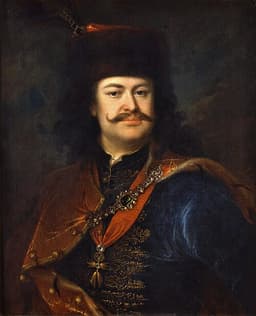
Francis II Rakoczi
Revolutionary · Modern
54.2Total
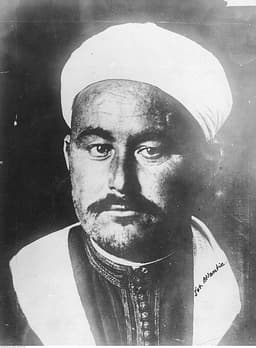
Muhammad ibn Abd al-Karim al-Khattabi
Revolutionary · Modern
41.7Total
Basic Information
Born
1676
1854
Died
1735
1927
Era
Modern
Modern
Nationality
Hungary
Sudan
Occupation
Revolutionary
Revolutionary
Civilization
Western
Other
Score Comparison
Military (10%)
55.0
47.5
Political (20%)
46.6
25.0
Influence (20%)
57.2
52.5
Legacy (20%)
52.0
40.0
Leadership (15%)
57.6
41.5
Strategy (15%)
57.5
38.3
TOTAL
54.2
41.7
Francis II Rakoczi — Complete Timeline
1703 AD
Rákóczi's War of IndependenceWar◆ Major
Francis II Rakoczi led a major uprising against Habsburg rule in Hungary, known as R
War of IndependenceHabsburgRebellion
Impact: regional
1704 AD
Election as Prince of TransylvaniaPolitical Action◆ Major
Francis II Rakoczi was elected Prince of Transylvania by the Hungarian estates, leading the anti-Habsburg rebellion. His election marked the formal leadership of the uprising.
ElectionRebellion
Impact: regional
1708 AD
Battle of TrencinWar◆ Major
Francis II Rakoczi's forces were decisively defeated by the Habsburg army at the Battle of Trencin. The defeat marked a turning point, leading to the decline of the rebellion.
BattleDefeatTurning Point
Impact: regionaltragic
1711 AD
Exile in the Ottoman EmpirePolitical Action◆ Major
After the failure of the rebellion, Francis II Rakoczi went into exile in the Ottoman Empire. He refused to accept Habsburg amnesty and lived in Ottoman territory until his death.
ExileOttoman
Impact: regionaltragic
Muhammad ibn Abd al-Karim al-Khattabi — Complete Timeline
1884 AD
Command at the Battle of El TebWar◆ Major
Muhammad ibn Abd al-Karim al-Khattabi led Mahdist forces at the Battle of El Teb against a British relief column. Although the Mahdists were defeated, the battle demonstrated their ability to challenge British military power in Sudan.
Mahdist WarBattle of El TebBritish Relief
Impact: regional
Participation in the Siege of KhartoumWar◆ Major
Al-Khattabi commanded Mahdist forces during the siege of Khartoum. His troops played a key role in the final assault that captured the city and killed General Gordon, contributing to the Mahdist victory.
Siege of KhartoumMahdist WarGordon's Death
Impact: regional
1899 AD
Capture by British ForcesWar◆ Major
Following the fall of the Mahdist state, al-Khattabi was captured by British forces. He was taken prisoner and later exiled, ending his military career and role in the Mahdist movement.
CaptureExileMahdist Defeat
Impact: regionaltragic
Expert Analysis
Muhammad ibn Abd al-Karim al-Khattabi vs Francis II Rakoczi
### The Rebel’s Crossroads: Two Paths from Empire’s Edge
In the autumn of 1708, Francis II Rakoczi watched from a hilltop as his Hungarian army shattered on the slopes of Trencin, the Habsburg cavalry cutting through his ranks like a scythe through wheat. Half a world away and two decades later, Muhammad ibn Abd al-Karim al-Khattabi stood in the dust of a defeated Mahdist state, his rifle taken, his cause lost, a British officer reading the terms of his exile. Both men had risen against empires, both had tasted the intoxicating promise of liberation, and both had ended in defeat. Yet one became a national hero, his name etched into the soul of Hungary; the other faded into the footnotes of colonial history, a footnote to a footnote. Why? The answer lies not in their courage—both had that in abundance—but in the soil in which their rebellions were planted.
### Origins
Rakoczi was born into the highest echelons of Hungarian nobility in 1676, a prince of Transylvania by blood, heir to a tradition of anti-Habsburg resistance that stretched back generations. His family had lost lands, titles, and lives fighting the Austrian grip on Hungary. He was raised in exile, tutored by Jesuits, steeped in the Latin learning of European courts, and acutely aware that his name was a banner waiting to be unfurled. His era was the age of the Grand Alliance, when the balance of power in Europe shifted between Louis XIV’s France, the Ottoman Empire, and the Habsburgs. Rakoczi was no peasant visionary; he was a magnate with a claim, a man who could write letters to the Sun King in perfect French and negotiate with the Sublime Porte in Turkish.
Al-Khattabi, by contrast, emerged from the rural heartland of Sudan, born in 1854 into a family of religious scholars and *fakis*—holy men who blended Islam with local traditions. His world was not the chancelleries of Europe but the arid plains of Kordofan, where the Mahdi, Muhammad Ahmad, had declared himself the guided one, the redeemer of Islam. Al-Khattabi’s authority came not from birth but from piety and military service; he was a commander who earned his rank through loyalty to the Mahdist cause, not through a dynastic claim. His era was the twilight of the Ottoman Empire and the high noon of European colonialism, when the British and Egyptians carved up the Nile Valley with the cold precision of surveyors.
### Rise to Power
Rakoczi’s entry onto the historical stage was theatrical. In 1703, he returned to Hungary from exile, raised the Kuruc flag, and issued a manifesto that appealed to both nobles and serfs. His rebellion was a coalition of convenience: Catholic magnates who resented Habsburg centralization, Protestant peasants who chafed under Catholic repression, and former Ottoman vassals who remembered a more autonomous past. He was elected Prince of Transylvania in 1704, a title that gave his war a legal veneer. His rise was swift because he filled a vacuum—the Habsburgs were distracted by the War of the Spanish Succession, and Hungary was a tinderbox of grievances.
Al-Khattabi’s path was quieter, more brutal. He commanded at the Battle of El Teb in 1884, where his Mahdist forces faced a British relief column under Sir Gerald Graham. The battle was a defeat—the British discipline and firepower overwhelmed the Mahdist charges—but al-Khattabi survived, and survival in the Mahdist state was a form of advancement. He later participated in the Siege of Khartoum that same year, where his troops helped breach the walls and kill General Gordon. That victory cemented the Mahdist state, and al-Khattabi rose within its ranks. But his power was contingent on the Mahdi’s charisma and, after the Mahdi’s death, on the Khalifa’s brutal pragmatism. There was no election, no manifesto, only the sword and the prayer.
### Leadership & Governance
Rakoczi governed as a prince, not a prophet. He established a mint, issued coins, and attempted to create a functioning state apparatus in the territories he controlled. His political wisdom was real: he understood that a rebellion needed legitimacy, so he sought foreign recognition from Louis XIV and, when that faltered, from the Ottoman sultan. He also understood economics, trying to fund his war through copper mines and taxes. But his military genius was limited. The Battle of Trencin in 1708 was a disaster because he divided his forces and underestimated Habsburg coordination. He was a better politician than a general, a man who could inspire but not outmaneuver.
Al-Khattabi was the opposite. His leadership was personal, charismatic, and religiously infused. He led from the front, sharing the hardships of his men, and his soldiers followed him because they believed he was fighting for God. His strategy at El Teb was tactically sound—he used the terrain, tried to envelop the British column—but he lacked the logistical base to sustain a modern war. After the fall of the Mahdist state in 1898, he was captured and exiled, his military skill rendered useless by the sheer industrial might of the Anglo-Egyptian army. He had no political vision beyond jihad, no state to build, only a war to fight.
### Triumph & Tragedy
Rakoczi’s greatest moment was the early success of his rebellion, when he controlled most of Hungary and Transylvania, and the Habsburgs seemed on the verge of collapse. His tragedy was Trencin, the slow unraveling of his coalition, and the final choice between exile and submission. He chose exile, living out his days in the Ottoman Empire, a prince without a throne, writing memoirs and dreaming of return.
Al-Khattabi’s triumph was Khartoum, the raw, visceral victory over the British, the death of Gordon, the establishment of a Mahdist state that lasted for over a decade. His tragedy was the quiet end: captured in 1899, sent into exile in Egypt, forgotten by the world. He died in 1927, an old man in a foreign land, his cause lost, his name unknown to most.
### Character & Destiny
Rakoczi’s character was shaped by his class. He was proud, educated, and stubborn, unwilling to compromise with the Habsburgs even when compromise might have saved his cause. His pride was his strength—it kept the rebellion alive—and his flaw—it prevented the negotiated settlement that might have preserved Hungarian autonomy. He saw himself as a prince, and princes do not bargain.
Al-Khattabi’s character was shaped by his faith. He was devout, fatalistic, and loyal to the Mahdi’s vision even after the Mahdi’s death. He fought not for land or title but for a religious order that promised salvation. When that order fell, he accepted it as God’s will. There was no bitterness in his exile, only a quiet resignation.
### Legacy
Rakoczi is remembered as a national hero in Hungary, his name on coins, statues, and streets. His rebellion, though failed, became a symbol of Hungarian resistance, a touchstone for later nationalist movements. His legacy is political: he showed that a Hungarian state was possible, even if only for a few years.
Al-Khattabi is remembered, if at all, as a footnote to the Mahdist wars, a minor commander in a major struggle. His legacy is religious, not national; he is a name in the annals of Sudanese Islam, a fighter for the faith who lost to the infidel. But his story, like Rakoczi’s, is a testament to the courage of those who rise against empires, no matter the odds.
### Conclusion
In the end, the difference between Rakoczi and al-Khattabi is not in their bravery or their sacrifice but in the stories their cultures chose to tell. Rakoczi’s Hungary survived as a nation, and so his defeat became a founding myth. Al-Khattabi’s Sudan was colonized, and so his victory at Khartoum became a forgotten echo. Both men fought for freedom; both lost. But one lost in a way that generations could remember, and the other lost in a way that history could forget. That is the cruel arithmetic of rebellion: the victors write the history, but the defeated write the poetry. And sometimes, the poetry is all that remains.
Rankings
🥇
Francis II RakocziLeader
Mil: 55.0Pol: 46.6Inf: 57.2
54.2
🥈
Muhammad ibn Abd al-Karim al-Khattabi
Mil: 47.5Pol: 25.0Inf: 52.5
41.7
+12.5 behind
How This Comparison Works
Algorithm
Each figure is scored on 6 dimensions (0—100 scale) based on structured historical data: Military (10%), Political (20%), Influence (20%), Legacy (20%), Leadership (15%), Strategy (15%). The weighted total produces the final ranking.
Data Sources
Scores are computed from structured sub-indicators in the database. Scale factors adjust for era (Ancient ×0.85, Modern ×1.0) and civilization size (Eastern ×1.05, Other ×0.80) to account for differences in population and military scale.
Maximum 3 Figures
Comparisons are limited to 2—3 figures to ensure readability and statistical meaningfulness.
Error Margins
±5 points per dimension — Sub-scores are derived from historical records with inherent uncertainty. Two figures within 5 points on a dimension should be considered roughly equivalent in that area.
Total Score Accuracy
±3 points overall — The weighted combination of 6 dimensions produces a total score with approximately ±3 points of uncertainty. Differences of less than 3 points are not statistically significant— the figures are effectively tied.
Known Limitations
- Historical records are incomplete and uneven across civilizations
- Figures from oral-tradition societies may be underrepresented
- Occupation labels can misclassify multi-role figures
- Scores measure capability and impact, not moral character
- Quantitative scoring is a comparison tool, not absolute truth
Capability Radar
Military (10%) — Battles & Warfare
Battles
65
35
Win Rate
55
30
Expansion
45
25
Political (20%) — Governance & Reform
Reform
55
15
Diplomacy
50
15
Economy
40
10
Influence (20%) — Cultural & Global Reach
Cultural
60
15
Global
45
10
Legacy (20%) — Historical Impact
Historical
65
20
Longevity
55
10
Leadership (15%) — Power & Stability
Tenure
50
20
Stability
30
10
Strategy (15%) — Tactics & Innovation
Strategy
65
35
Tactics
60
40
Reform
50
20
Similar Comparisons
Muhammad ibn Abd al-Karim al-Khattabi vs Abd el-KrimMuhammad ibn Abd al-Karim al-Khattabi vs Bal Gangadhar TilakMuhammad ibn Abd al-Karim al-Khattabi vs Theobald Wolfe ToneMuhammad ibn Abd al-Karim al-Khattabi vs Bhagat SinghMuhammad ibn Abd al-Karim al-Khattabi vs Li ZichengMuhammad ibn Abd al-Karim al-Khattabi vs Miguel Hidalgo
Comments & Discussion
No comments yet. Be the first to share your thoughts!