Loading...
This comparison has not been analyzed yet.
One-time AI generation (~1 minute). Scores and timeline are already available below.
Francisco de Toledo vs Vigdis Finnbogadottir
Vigdis Finnbogadottir leads by 4.5 pts · 2 figures compared
…
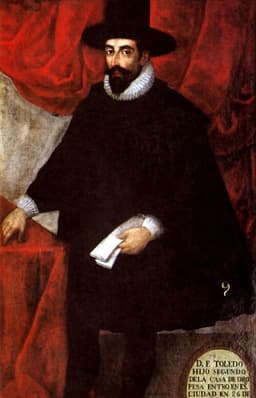
Francisco de Toledo
Politician · Modern
52.6Total
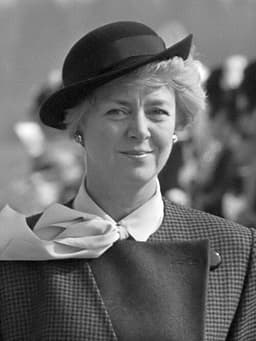
Vigdis Finnbogadottir
Politician · Modern
57.1Total
Basic Information
Born
1515
1930
Died
1582
—
Era
Modern
Modern
Nationality
Spain
Iceland
Occupation
Politician
Politician
Civilization
Western
Western
Score Comparison
Military (10%)
21.2
48.5
Political (20%)
62.7
62.7
Influence (20%)
55.0
56.7
Legacy (20%)
52.0
50.0
Leadership (15%)
72.0
79.8
Strategy (15%)
35.7
42.5
TOTAL
52.6
57.1
Francisco de Toledo — Complete Timeline
1569 AD
Appointed Fifth Viceroy of PeruPolitical Action◆ Major
Francisco de Toledo was appointed by King Philip II as the fifth viceroy of Peru. He arrived in Lima with a mandate to reorganize the colony, consolidate Spanish control, and implement administrative reforms.
AppointmentColonial administration
Impact: regional
1570 AD
Implemented the Reducción SystemReform◆ Major
Toledo forced the resettlement of indigenous populations into planned towns called reducciones. This system aimed to facilitate Christianization, taxation, and labor control, but disrupted traditional Andean communities and led to population decline.
ReformIndigenous policy
Impact: regionaldestructive
1572 AD
Executed Túpac Amaru, Last Inca EmperorPolitical Action◆ Major
Toledo ordered the capture and execution of T
ExecutionInca Empire
Impact: regionaldestructive
1573 AD
Established the Mita Labor SystemReform◆ Major
Toledo formalized the mita system, requiring indigenous communities to provide labor for mines, public works, and agriculture. The system was particularly harsh in the Potos
LaborMining
Impact: regionaldestructive
Reorganized the Potosí Silver MinesReform◆ Major
Toledo visited Potos
MiningEconomy
Impact: global
1574 AD
Codified Laws of the IndiesReform◆ Major
Toledo compiled and systematized the laws governing the Viceroyalty of Peru into the Ordenanzas de Toledo. These ordinances regulated indigenous affairs, mining, trade, and administration, serving as a legal framework for Spanish colonial rule.
LawAdministration
Impact: regionalconstructive
Vigdis Finnbogadottir — Complete Timeline
1980 AD
Elected President of IcelandPolitical Action
Vigdis Finnbogadottir won the Icelandic presidential election, becoming the world's first democratically elected female head of state. She defeated three male candidates, securing 33.6% of the vote. Her election marked a milestone for gender equality in political leadership globally.
Gender EqualityDemocracyIceland
Impact: globalprogressive
Promoted Icelandic Culture and LanguageCultural
Throughout her presidency, Finnbogadottir actively promoted Icelandic culture, language, and environmental conservation. She used her ceremonial role to advocate for cultural preservation and national identity, strengthening Iceland's cultural diplomacy internationally.
Cultural DiplomacyEnvironment
Impact: nationalconstructive
1996 AD
Re-elected to Fourth TermPolitical Action◆ Major
Finnbogadottir was re-elected for a fourth term as President of Iceland, serving until 1996. Her repeated re-elections demonstrated public confidence in her leadership and the stability of Iceland's political system. She chose not to seek a fifth term.
Re-electionPolitical Stability
Impact: nationalconstructive
This comparison has not been analyzed yet.
One-time AI generation (~1 minute). Scores and timeline are already available below.
Rankings
🥇
Vigdis FinnbogadottirLeader
Mil: 48.5Pol: 62.7Inf: 56.7
57.1
🥈
Francisco de Toledo
Mil: 21.2Pol: 62.7Inf: 55.0
52.6
+4.5 behind
How This Comparison Works
Algorithm
Each figure is scored on 6 dimensions (0—100 scale) based on structured historical data: Military (10%), Political (20%), Influence (20%), Legacy (20%), Leadership (15%), Strategy (15%). The weighted total produces the final ranking.
Data Sources
Scores are computed from structured sub-indicators in the database. Scale factors adjust for era (Ancient ×0.85, Modern ×1.0) and civilization size (Eastern ×1.05, Other ×0.80) to account for differences in population and military scale.
Maximum 3 Figures
Comparisons are limited to 2—3 figures to ensure readability and statistical meaningfulness.
Error Margins
±5 points per dimension — Sub-scores are derived from historical records with inherent uncertainty. Two figures within 5 points on a dimension should be considered roughly equivalent in that area.
Total Score Accuracy
±3 points overall — The weighted combination of 6 dimensions produces a total score with approximately ±3 points of uncertainty. Differences of less than 3 points are not statistically significant— the figures are effectively tied.
Known Limitations
- Historical records are incomplete and uneven across civilizations
- Figures from oral-tradition societies may be underrepresented
- Occupation labels can misclassify multi-role figures
- Scores measure capability and impact, not moral character
- Quantitative scoring is a comparison tool, not absolute truth
Capability Radar
Military (10%) — Battles & Warfare
Battles
10
30
Win Rate
10
32
Expansion
40
36
Political (20%) — Governance & Reform
Reform
85
55
Diplomacy
70
65
Economy
80
50
Influence (20%) — Cultural & Global Reach
Cultural
60
60
Global
55
55
Legacy (20%) — Historical Impact
Historical
70
55
Longevity
65
50
Leadership (15%) — Power & Stability
Tenure
75
60
Stability
75
70
Strategy (15%) — Tactics & Innovation
Strategy
20
38
Tactics
15
42
Reform
55
42
Similar Comparisons
Comments & Discussion
No comments yet. Be the first to share your thoughts!