Loading...
Francisco I. Madero vs Muhammad ibn Abd al-Karim al-Khattabi
Francisco I. Madero leads by 8.6 pts · 2 figures compared
…
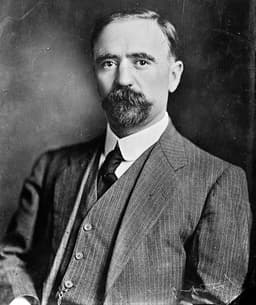
Francisco I. Madero
Revolutionary · Modern
50.3Total
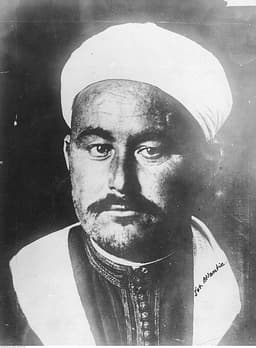
Muhammad ibn Abd al-Karim al-Khattabi
Revolutionary · Modern
41.7Total
Basic Information
Born
1873
1854
Died
1913
1927
Era
Modern
Modern
Nationality
Mexico
Sudan
Occupation
Revolutionary
Revolutionary
Civilization
Western
Other
Score Comparison
Military (10%)
50.0
47.5
Political (20%)
54.7
25.0
Influence (20%)
52.5
52.5
Legacy (20%)
47.5
40.0
Leadership (15%)
54.2
41.5
Strategy (15%)
39.6
38.3
TOTAL
50.3
41.7
Francisco I. Madero — Complete Timeline
1908 AD
Madero publishes 'The Presidential Succession in 1910'Cultural◆ Major
Francisco I. Madero published a book criticizing the long dictatorship of Porfirio D
Mexican RevolutionPolitical WritingDemocracy
Impact: nationalprogressive
1910 AD
Madero launches the Mexican RevolutionPolitical Action
After being fraudulently defeated in the 1910 presidential election, Madero issued the Plan of San Luis Potos
Mexican RevolutionArmed RebellionPlan of San Luis
Impact: national
1911 AD
Madero becomes President of MexicoPolitical Action◆ Major
Following the resignation of Porfirio D
PresidencyDemocracyReform
Impact: nationalconstructive
1913 AD
Madero's assassination during the Decena TrágicaPolitical Action
During a coup known as the Decena Tr
AssassinationCoupDecena Trágica
Impact: nationaltragic
Muhammad ibn Abd al-Karim al-Khattabi — Complete Timeline
1884 AD
Command at the Battle of El TebWar◆ Major
Muhammad ibn Abd al-Karim al-Khattabi led Mahdist forces at the Battle of El Teb against a British relief column. Although the Mahdists were defeated, the battle demonstrated their ability to challenge British military power in Sudan.
Mahdist WarBattle of El TebBritish Relief
Impact: regional
Participation in the Siege of KhartoumWar◆ Major
Al-Khattabi commanded Mahdist forces during the siege of Khartoum. His troops played a key role in the final assault that captured the city and killed General Gordon, contributing to the Mahdist victory.
Siege of KhartoumMahdist WarGordon's Death
Impact: regional
1899 AD
Capture by British ForcesWar◆ Major
Following the fall of the Mahdist state, al-Khattabi was captured by British forces. He was taken prisoner and later exiled, ending his military career and role in the Mahdist movement.
CaptureExileMahdist Defeat
Impact: regionaltragic
Expert Analysis
Muhammad ibn Abd al-Karim al-Khattabi vs Francisco I. Madero
# The Revolutionary’s Fate: Two Paths from the Periphery
On a cold February morning in 1913, Francisco I. Madero was led through the darkened streets of Mexico City, a prisoner in his own capital. He had been president for less than two years. Hours later, he was dead, shot by his own military. Half a world away and a generation earlier, Muhammad ibn Abd al-Karim al-Khattabi watched the walls of Khartoum fall in 1885, his Mahdist forces pouring into a city that had defied them for months. He was a commander at the peak of his power. Yet within fourteen years, he too would be a prisoner, marched into exile by the British. Both men rose from the edges of their worlds to challenge entrenched powers. Both believed they were instruments of history. But the revolutions they served devoured them in very different ways, and the reasons lie not just in their personalities but in the eras they inhabited.
Origins
Madero was born into privilege. The year was 1873, and Mexico was groaning under the iron hand of Porfirio Díaz, a dictator who had brought order at the cost of liberty. The Madero family owned vast estates in the northern state of Coahuila. Young Francisco studied in France and the United States, absorbing the liberal ideas of the nineteenth century. He was a small, slight man with a high-pitched voice, a spiritualist who believed in séances and democracy with equal fervor. His world was one of books, not battlefields.
Al-Khattabi came from a different soil. Born in 1854 in the Sudan, he was a member of the Jalayin tribe, a people who had long chafed under Egyptian—and by extension, British—rule. He was a religious scholar and a sheikh, steeped in the Islamic traditions of the Nile Valley. Where Madero saw politics as a contest of votes, al-Khattabi saw it as a struggle of faith. The Sudan of his youth was a land of slave raids, foreign occupation, and simmering apocalyptic expectation. The Mahdi, Muhammad Ahmad, had declared himself the guided one, and al-Khattabi became his sword.
Rise to Power
Madero’s path began with a book. In 1908, he published *The Presidential Succession in 1910*, a careful, reasoned argument that Díaz should allow free elections. It was a bold act in a dictatorship, but it was still the act of an intellectual. When Díaz rigged the 1910 election, Madero fled to Texas and issued the Plan of San Luis Potosí, calling for armed revolt. He was not a soldier. He was a catalyst. The revolution erupted without him leading any army—peasants like Emiliano Zapata and Pancho Villa took up arms in his name. Madero rode back into Mexico on a wave he had not created.
Al-Khattabi’s rise was forged in fire. He commanded at the Battle of El Teb in 1884, leading Mahdist forces against a British relief column. He lost that battle, but the experience hardened him. At the Siege of Khartoum that same year, his troops played a key role in the final assault that killed General Charles Gordon. Al-Khattabi was a military commander first, a political leader second. His authority came from the sword, not the ballot box.
Leadership & Governance
As president, Madero tried to govern through the very institutions Díaz had hollowed out. He believed in the rule of law, in free speech, in elections. But he was a poor administrator, indecisive and trusting. He refused to break up the great estates that Zapata demanded be returned to the villages. He kept Díaz’s army and bureaucracy intact, believing he could reform them from within. His political score of 53.1 reflects a man who understood democracy in theory but could not wield power in practice. His military score of 34.0 is telling—he was a revolutionary who disdained force.
Al-Khattabi never had to govern a nation. He was a commander in a theocratic state. His leadership score of 75.4 and strategy score of 63.7 show a man of action, not deliberation. He led by example on the battlefield, inspiring loyalty through piety and courage. But the Mahdist state was a war machine, not a civil society. When it fell to the Anglo-Egyptian forces at Omdurman in 1898, al-Khattabi’s world collapsed. He was captured in 1899 and exiled to Egypt, where he lived out his days as a prisoner of the British Empire.
Triumph & Tragedy
Madero’s greatest moment was his election in 1911. A dictator had fallen, and democracy had risen in its place. It was a triumph of hope over experience. His greatest failure was his inability to hold that democracy together. The Decena Trágica—the Ten Tragic Days of February 1913—saw his own general, Victoriano Huerta, turn against him. Madero was arrested, forced to resign, and murdered. He died believing in a revolution that had already abandoned him.
Al-Khattabi’s triumph was the fall of Khartoum. For a brief moment, the Mahdist state seemed invincible. His tragedy was that victory was fleeting. The British returned with Maxim guns and a will to dominate. When the Mahdi died in 1885, the movement lost its spiritual center. Al-Khattabi fought on, but the tide had turned. His capture in 1899 was not a betrayal but an ending. He died in exile in 1927, a relic of a failed uprising.
Character & Destiny
Madero’s character was his destiny. He was a democrat in an age of caudillos, a man of peace in a time of violence. He believed that reason could overcome force, that good intentions could reform corrupt institutions. He was wrong. His political score of 53.1 and leadership of 41.2 reveal a man who could inspire but not command. Al-Khattabi was the opposite. He was a warrior-scholar, comfortable with blood and faith. His leadership score of 75.4 reflects a man who could lead men into battle but not build a lasting state. Madero died because he was too gentle for his time. Al-Khattabi lived because he was too fierce for his.
Legacy
Madero is remembered as the “Apostle of Democracy” in Mexico, a martyr whose death discredited the old order and paved the way for the more radical revolution of the 1910s. His legacy score of 65.3 is a testament to his symbolic power. Al-Khattabi’s legacy is more obscure. His score of 52.3 reflects a figure remembered mainly by historians of the Mahdist wars. He is a footnote in the story of British imperialism, a brave but failed commander.
Conclusion
Both men were revolutionaries from the periphery, but they inhabited different worlds. Madero’s Mexico was a nation struggling toward modernity, where ideas of democracy and rights were beginning to take root. Al-Khattabi’s Sudan was a pre-colonial society clashing with industrial empire, where faith was the only weapon. Madero failed because he tried to build a new world with old tools. Al-Khattabi failed because he could not match the firepower of the new world. In the end, their stories remind us that revolutions are not made by men alone. They are made by the times that shape them—and the times that break them.
Rankings
🥇
Francisco I. MaderoLeader
Mil: 50.0Pol: 54.7Inf: 52.5
50.3
🥈
Muhammad ibn Abd al-Karim al-Khattabi
Mil: 47.5Pol: 25.0Inf: 52.5
41.7
+8.6 behind
How This Comparison Works
Algorithm
Each figure is scored on 6 dimensions (0—100 scale) based on structured historical data: Military (10%), Political (20%), Influence (20%), Legacy (20%), Leadership (15%), Strategy (15%). The weighted total produces the final ranking.
Data Sources
Scores are computed from structured sub-indicators in the database. Scale factors adjust for era (Ancient ×0.85, Modern ×1.0) and civilization size (Eastern ×1.05, Other ×0.80) to account for differences in population and military scale.
Maximum 3 Figures
Comparisons are limited to 2—3 figures to ensure readability and statistical meaningfulness.
Error Margins
±5 points per dimension — Sub-scores are derived from historical records with inherent uncertainty. Two figures within 5 points on a dimension should be considered roughly equivalent in that area.
Total Score Accuracy
±3 points overall — The weighted combination of 6 dimensions produces a total score with approximately ±3 points of uncertainty. Differences of less than 3 points are not statistically significant— the figures are effectively tied.
Known Limitations
- Historical records are incomplete and uneven across civilizations
- Figures from oral-tradition societies may be underrepresented
- Occupation labels can misclassify multi-role figures
- Scores measure capability and impact, not moral character
- Quantitative scoring is a comparison tool, not absolute truth
Capability Radar
Military (10%) — Battles & Warfare
Battles
25
35
Win Rate
30
30
Expansion
10
25
Political (20%) — Governance & Reform
Reform
60
15
Diplomacy
35
15
Economy
30
10
Influence (20%) — Cultural & Global Reach
Cultural
45
15
Global
40
10
Legacy (20%) — Historical Impact
Historical
55
20
Longevity
50
10
Leadership (15%) — Power & Stability
Tenure
40
20
Stability
15
10
Strategy (15%) — Tactics & Innovation
Strategy
25
35
Tactics
20
40
Reform
10
20
Similar Comparisons
Muhammad ibn Abd al-Karim al-Khattabi vs Abd el-KrimMuhammad ibn Abd al-Karim al-Khattabi vs Bal Gangadhar TilakMuhammad ibn Abd al-Karim al-Khattabi vs Theobald Wolfe ToneMuhammad ibn Abd al-Karim al-Khattabi vs Bhagat SinghMuhammad ibn Abd al-Karim al-Khattabi vs Li ZichengMuhammad ibn Abd al-Karim al-Khattabi vs Miguel Hidalgo
Comments & Discussion
No comments yet. Be the first to share your thoughts!