Loading...
Francisco Madero vs Miguel Hidalgo
Miguel Hidalgo leads by 2.5 pts · 2 figures compared
…
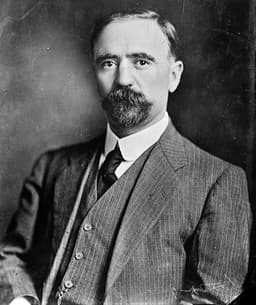
Francisco Madero
Revolutionary · Modern
44.5Total
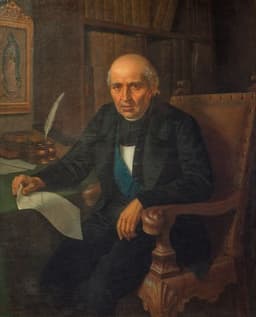
Miguel Hidalgo
Revolutionary · Modern
47.0Total
Basic Information
Born
1873
1753
Died
1913
1811
Era
Modern
Modern
Nationality
Mexico
Mexico
Occupation
Revolutionary
Revolutionary
Civilization
Western
Western
Score Comparison
Military (10%)
14.9
50.0
Political (20%)
48.0
36.5
Influence (20%)
49.4
55.0
Legacy (20%)
45.8
52.0
Leadership (15%)
43.8
39.0
Strategy (15%)
54.3
39.6
TOTAL
44.5
47.0
Francisco Madero — Complete Timeline
1908 AD
Published La Sucesión Presidencial en 1910Political Action◆ Major
Francisco Madero published a book criticizing the long dictatorship of Porfirio D
Mexican RevolutionDemocracyPolitical Writing
Impact: nationalconstructive
1910 AD
Issued the Plan of San Luis PotosíPolitical Action
After fleeing to the United States, Madero issued the Plan of San Luis Potos
Mexican RevolutionUprisingPlan
Impact: national
1911 AD
Elected President of MexicoPolitical Action◆ Major
Following the resignation of Porfirio D
Mexican RevolutionDemocracyPresidency
Impact: nationalconstructive
1913 AD
Assassinated During the Decena TrágicaPolitical Action
Francisco Madero was overthrown in a coup led by General Victoriano Huerta during the Ten Tragic Days in Mexico City. Madero was forced to resign and then executed along with Vice President Pino Su
AssassinationCoupMexican Revolution
Impact: nationaltragic
Miguel Hidalgo — Complete Timeline
1810 AD
Captured Guanajuato and massacred SpaniardsWar◆ Major
Hidalgo's army of 80,000 captured the city of Guanajuato on September 28, 1810. After taking the Alh
BattleMassacreViolence
Impact: regionaldestructive
Issued the Grito de DoloresPolitical Action
On September 16, 1810, Father Miguel Hidalgo rang the church bell in Dolores and called for rebellion against Spanish colonial rule. His speech, known as the Grito de Dolores, urged Mexicans to rise up against the Spanish and marked the beginning of the Mexican War of Independence.
IndependenceRebellionGrito de Dolores
Impact: nationalconstructive
1811 AD
Defeated at the Battle of Calderón BridgeWar◆ Major
Hidalgo's poorly trained army was decisively defeated by a smaller Spanish royalist force at the Battle of Calder
DefeatSpanish RoyalistsTurning Point
Impact: regionaltragic
Executed by Spanish authoritiesPolitical Action◆ Major
Hidalgo was captured in Acatita de Baj
ExecutionMartyrdomIndependence Movement
Impact: nationaltragic
Expert Analysis
Miguel Hidalgo vs Francisco Madero
The Bell and the Ballot
On September 16, 1810, a sixty-seven-year-old priest rang the bell of a small church in Dolores and shouted for rebellion. On November 20, 1910, a wealthy, spiritualist landowner across the Atlantic published a call for free elections. One century apart, Miguel Hidalgo and Francisco Madero each ignited a Mexican revolution. Yet their paths, their temperaments, and their fates could not have been more different. Hidalgo burned with the fire of a messianic insurrection; Madero believed in the quiet power of the ballot box. Both were destroyed by forces they could not control, but their contrasting visions shaped the very soul of modern Mexico.
Origins
Miguel Hidalgo y Costilla was born in 1753 into a Creole family of modest wealth in the Bajío region. He studied theology, became a priest, and served in parishes that exposed him to the brutal poverty of indigenous and mestizo peasants. Hidalgo was a man of the Enlightenment—he read banned French works, discussed ideas of liberty and equality, and even faced the Inquisition for his unorthodox views. His world was one of rigid colonial hierarchy, where the Spanish-born *peninsulares* held all power, and Creoles like himself were shut out.
Francisco Ignacio Madero was born in 1873 into one of Mexico’s wealthiest landowning families in Coahuila. Educated in France, the United States, and Mexico, he absorbed liberal democratic thought, but also spiritualism—he believed in communicating with the dead. Unlike Hidalgo, Madero was not a man of the masses; he was a privileged insider who became troubled by the three-decade-long dictatorship of Porfirio Díaz. His revolution was not born in poverty but in a moral crisis of conscience.
Rise to Power
Hidalgo’s rise was sudden, almost accidental. In 1810, a conspiracy for independence was discovered. Facing arrest, Hidalgo made a split-second decision. On the morning of September 16, he rang the bell of his church and issued the *Grito de Dolores*—a cry for independence, racial justice, and the end of Spanish rule. Within weeks, an army of 80,000 peasants, miners, and indigenous people followed him. He captured Guanajuato on September 28, 1810, where his followers stormed the Alhóndiga de Granaditas granary and massacred Spanish civilians. It was a moment of terrifying fury, not disciplined revolution.
Madero’s path was slower and more deliberate. In 1908, he published *La Sucesión Presidencial en 1910*, a book that criticized Díaz and called for democratic elections. When Díaz was re-elected fraudulently in 1910, Madero fled to the United States and issued the Plan of San Luis Potosí, which declared the election void and called for armed rebellion. Unlike Hidalgo, Madero did not command a mob; he coordinated with regional leaders like Pancho Villa and Emiliano Zapata. His revolution was a political movement that used force as a last resort. By May 1911, Díaz resigned, and Madero was elected president in November 1911.
Leadership & Governance
Hidalgo was a charismatic preacher, not a governor. He had no plan for administration. His military score of 42.0 and strategy of 45.0 reflect his weaknesses: he led a poorly trained, undisciplined army that looted and massacred. At the Battle of Calderón Bridge on January 17, 1811, a smaller Spanish royalist force routed his 100,000 men. Hidalgo’s political score of 63.2 shows some vision—he abolished slavery and tribute—but he never held power long enough to govern.
Madero, with a political score of 52.4 and leadership of 38.4, was also ill-suited for power. Once president, he tried to implement democracy, free press, and land reform, but he was naive. He kept the old Porfirian army and bureaucracy, trusting them to serve the new order. His strategy score of 43.6 reveals his failure to consolidate power. He alienated both conservatives, who saw him as weak, and revolutionaries like Zapata, who wanted immediate land redistribution. Madero governed by hope, not by force.
Triumph & Tragedy
Hidalgo’s greatest moment was the *Grito de Dolores* itself—a cry that still echoes every Independence Day. His greatest tragedy was his capture at Acatita de Baján on March 21, 1811. He was defrocked by the Inquisition and executed by firing squad. His head was displayed in Guanajuato for ten years as a warning.
Madero’s triumph was the peaceful transfer of power after Díaz—the first democratic election in Mexican history. His tragedy was the *Decena Trágica* (Ten Tragic Days) in February 1913, when a military coup led by General Victoriano Huerta, with the backing of the U.S. ambassador, overthrew him. Madero was forced to resign and then assassinated on the road to prison. He died believing in democracy to the end.
Character & Destiny
Hidalgo was a firebrand, impulsive and passionate. He believed in a sudden, violent break from the past. His personality drove him to lead a mass uprising, but his lack of military discipline doomed it. As he said before his execution, “Though I may die, the cause will live.”
Madero was a mystic and a democrat, gentle and stubborn. He believed that institutions could change hearts. But his trust in his enemies—allowing Huerta to remain in command of the army—was suicidal. His spiritualism led him to believe that his death would serve a higher purpose. Both men were destroyed by their own natures: Hidalgo by his fury, Madero by his faith.
Legacy
Hidalgo’s legacy score of 75.0 reflects his status as the Father of Mexican Independence. His *Grito* is reenacted every year by the president. He is a symbol of the radical, popular revolution—the people rising against the elite.
Madero’s legacy score of 63.0 is more complex. He is remembered as the “Apostle of Democracy,” but his failure taught Mexico that political change without social justice is hollow. The Mexican Revolution continued after his death, becoming far bloodier and more radical than he ever envisioned. His idealism inspired, but his naivety warned.
Conclusion
Hidalgo rang a bell; Madero wrote a book. One unleashed a storm, the other lit a candle. In the end, both were martyred, but they represent two poles of the Mexican soul: the passionate cry for justice and the patient hope for democracy. Their revolutions merged into one long, painful journey—a journey that Mexico is still walking today.
Rankings
🥇
Miguel HidalgoLeader
Mil: 50.0Pol: 36.5Inf: 55.0
47.0
🥈
Francisco Madero
Mil: 14.9Pol: 48.0Inf: 49.4
44.5
+2.5 behind
How This Comparison Works
Algorithm
Each figure is scored on 6 dimensions (0—100 scale) based on structured historical data: Military (10%), Political (20%), Influence (20%), Legacy (20%), Leadership (15%), Strategy (15%). The weighted total produces the final ranking.
Data Sources
Scores are computed from structured sub-indicators in the database. Scale factors adjust for era (Ancient ×0.85, Modern ×1.0) and civilization size (Eastern ×1.05, Other ×0.80) to account for differences in population and military scale.
Maximum 3 Figures
Comparisons are limited to 2—3 figures to ensure readability and statistical meaningfulness.
Error Margins
±5 points per dimension — Sub-scores are derived from historical records with inherent uncertainty. Two figures within 5 points on a dimension should be considered roughly equivalent in that area.
Total Score Accuracy
±3 points overall — The weighted combination of 6 dimensions produces a total score with approximately ±3 points of uncertainty. Differences of less than 3 points are not statistically significant— the figures are effectively tied.
Known Limitations
- Historical records are incomplete and uneven across civilizations
- Figures from oral-tradition societies may be underrepresented
- Occupation labels can misclassify multi-role figures
- Scores measure capability and impact, not moral character
- Quantitative scoring is a comparison tool, not absolute truth
Capability Radar
Military (10%) — Battles & Warfare
Battles
15
30
Win Rate
20
25
Expansion
5
20
Political (20%) — Governance & Reform
Reform
60
60
Diplomacy
40
30
Economy
20
20
Influence (20%) — Cultural & Global Reach
Cultural
35
70
Global
30
60
Legacy (20%) — Historical Impact
Historical
55
75
Longevity
40
70
Leadership (15%) — Power & Stability
Tenure
30
15
Stability
10
10
Strategy (15%) — Tactics & Innovation
Strategy
15
25
Tactics
10
20
Reform
5
10
Similar Comparisons
Comments & Discussion
The Bellringer's Shadow6/16/2026
People romanticize Madero as a democrat, but he was a naive aristocrat who thought election reform could fix Porfirian feudalism. Hidalgo understood that Mexico's cancer required amputation, not a band-aid. When Madero took power, he kept the Porfirian army and bureaucracy intact. That's not reform—that's cosplay. Hidalgo's mobs may have sacked Guanajuato, but at least he knew you can't negotiate with a system built on 300 years of genocide.
神父的愤怒6/16/2026
马德罗就是个灵媒附体的富二代,整天跟死去兄弟通灵,却对墨西哥农民的血泪视而不见。伊达尔戈虽然后来被教会开除,但他在瓜纳华托前线的演讲,字字都是印第安人的骨髓。一个喊着"民主选举"的阔少,和一个为饿殍揭竿的神父,谁才是真实的革命者?历史书骗了我们一百年。
The Data Skeptic6/16/2026
Let's apply Occam's razor: Hidalgo's rebellion mobilized 80,000 people in weeks with no telegraphs or newspapers. Madero's "revolution" required a cross-Atlantic steamer, telegraph wires, and a carefully orchestrated press campaign. One was a genuine social explosion, the other an elite power struggle wearing democratic clothes. Hidalgo's movement collapsed because it was authentic—authentic chaos. Madero's lasted two years because it was a staged performance with pre-arranged exits.
符文与子弹6/16/2026
比较这两人就像比较火与纸。伊达尔戈烧掉了多洛雷斯教堂的大门,马德罗却用圣安东尼奥的暗号发电报。前者用瓜达卢佩圣母旗召集贱民,后者用纽约银行账户购买革命。马德罗的"有效选举法"不过是割让土地给美国投资的遮羞布,而伊达尔戈至少在莫雷利亚试图废除土地私有制。谁更激进?让土地说话。
The Classics Scholar6/16/2026
Hidalgo was a Creole Prometheus, stealing the fire of Enlightenment ideas from the Spanish Olympus and delivering them to the proles. Madero was more like Theseus—navigating a labyrinth of elite alliances, only to be devoured by the Minotaur of his own class. Hidalgo's cry at Dolores was a primal scream; Madero's Plan de San Luis was a legal brief. One echoes in the blood, the other in boardrooms. Mexico's soul chose Hidalgo's bell.
修订史官6/16/2026
教科书总把马德罗塑造成民主之父,却故意遗忘他镇压萨帕塔的农民军时比迪亚斯更狠。伊达尔戈至少敢于面对自己暴动的后果,在瓜纳华托大屠杀后没有逃跑,而是继续向墨西哥