Loading...
Franjo Tuđman vs John Gorton
Franjo Tuđman leads by 7.4 pts · 2 figures compared
…
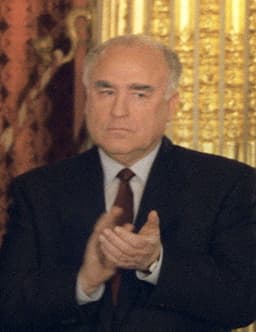
Franjo Tuđman
Politician · Modern
57.2Total

John Gorton
Politician · Modern
49.8Total
Basic Information
Born
1922
1911
Died
—
2002
Era
Modern
Modern
Nationality
Croatia
Australia
Occupation
Politician
Politician
Civilization
Western
Western
Score Comparison
Military (10%)
41.6
39.9
Political (20%)
68.0
68.0
Influence (20%)
60.0
53.3
Legacy (20%)
49.2
43.3
Leadership (15%)
68.0
40.0
Strategy (15%)
53.8
54.1
TOTAL
57.2
49.8
Franjo Tuđman — Complete Timeline
1990 AD
Election as First President of Independent CroatiaPolitical Action◆ Major
Franjo Tuđman was elected president of the Socialist Republic of Croatia in the first multi-party elections on May 30, 1990. His Croatian Democratic Union (HDZ) won a majority, and he led Croatia toward independence from Yugoslavia, declaring sovereignty later that year.
IndependenceElectionCroatia
Impact: nationalconstructive
1991 AD
Declaration of Croatian IndependencePolitical Action◆ Major
Tuđman led Croatia in declaring independence from Yugoslavia on June 25, 1991, following a referendum. This triggered the Croatian War of Independence against the Yugoslav People's Army and Serb rebels, resulting in a four-year conflict that ended with Croatian victory.
IndependenceWarYugoslav Breakup
Impact: regionalconstructive
1995 AD
Operation StormWar◆ Major
Tuđman ordered the Croatian Army to launch Operation Storm in August 1995, a military offensive that recaptured the Serb-held Krajina region. The operation ended the Croatian War of Independence but resulted in the exodus of approximately 200,000 Serb civilians and accusations of war crimes.
Military OffensiveWar CrimesCroatian War
Impact: regionaldestructive
Signing of the Dayton AgreementPolitical Action◆ Major
Tuđman signed the Dayton Peace Agreement on December 14, 1995, ending the Bosnian War. The agreement established Bosnia and Herzegovina as a decentralized state with two entities, and Tuđman's role was criticized for supporting Croat separatism in Bosnia.
Peace TreatyBosnian WarDiplomacy
Impact: regional
1999 AD
Death and Legacy ControversyOther◆ Major
Tuđman died on December 10, 1999, after a long battle with cancer. His death marked the end of an era, and his legacy remains divisive: praised for achieving Croatian independence but criticized for authoritarian tendencies and nationalist policies that contributed to ethnic conflict.
DeathLegacyCroatia
Impact: national
John Gorton — Complete Timeline
1949 AD
Elected to the Australian SenatePolitical Action
Gorton was elected to the Australian Senate as a Liberal Party member. He represented Victoria and quickly rose through the ranks, becoming a prominent figure in the party.
SenateLiberal Party
Impact: national
1968 AD
Became Prime Minister of AustraliaPolitical Action◆ Major
Gorton became Prime Minister on 10 January 1968 after being elected Liberal Party leader. He served until March 1971, focusing on national development and foreign policy.
Prime MinisterLiberal Leadership
Impact: national
1971 AD
Resigned as Prime MinisterPolitical Action◆ Major
Gorton resigned as Prime Minister on 10 March 1971 after losing a confidence vote in the Liberal Party. He was succeeded by William McMahon, ending his tenure amid internal party divisions.
ResignationParty Conflict
Impact: nationaldestructive
Expert Analysis
Origins
Franjo Tuđman was born on May 14, 1922, in Veliko Trgovišće, Croatia, then part of the Kingdom of Serbs, Croats, and Slovenes. His father was a prominent politician and landowner. Tuđman joined the Partisans during World War II, rising to the rank of major. After the war, he studied at the Military Academy in Belgrade and became the youngest general in the Yugoslav People's Army at age 33. He later left the military to focus on history, earning a doctorate in 1965 with a thesis on the Croatian national question.
John Gorton was born on September 9, 1911, in Melbourne, Australia, into a wealthy family. His father was a fruit grower and his mother a schoolteacher. Gorton attended the prestigious Geelong Grammar School and later Brasenose College, Oxford, where he studied law. During World War II, he served in the Royal Australian Air Force as a fighter pilot, surviving a crash that left him with facial injuries. After the war, he entered politics, winning a seat in the Australian Senate in 1949.
Rise to Power
Tuđman's rise began in the 1960s when he became a dissident historian critical of Yugoslav centralism. He was expelled from the Communist Party in 1967 for his nationalist views and later imprisoned in 1972 for 'counter-revolutionary activities.' In 1989, he founded the Croatian Democratic Union (HDZ), a nationalist party. In the first multi-party elections on May 30, 1990, the HDZ won a landslide, and Tuđman was elected President of the Socialist Republic of Croatia. He declared independence from Yugoslavia on June 25, 1991, triggering the Croatian War of Independence.
Gorton rose through the Liberal Party ranks, serving as Minister for the Navy (1958–1963), Minister for the Interior (1963–1964), and Minister for Works (1964–1968). He was elected to the House of Representatives in 1967 after the death of Prime Minister Harold Holt. On January 10, 1968, Gorton was elected Liberal Party leader and became Prime Minister, defeating Paul Hasluck and Billy McMahon.
Leadership & Governance
Tuđman governed Croatia through the war and post-war transition. He centralized power, often bypassing parliament, and used the HDZ to control media and suppress dissent. He pursued a policy of ethnic homogenization, which contributed to the displacement of Serbs during Operation Storm in 1995. Tuđman's leadership style was authoritarian; he frequently clashed with international bodies over human rights. His political score of 68.0 reflects his ability to maintain power and achieve independence, but his legacy is marred by authoritarian tendencies.
Gorton's governance focused on national development, including boosting education and the arts. He established the Australian Film Development Corporation and increased funding for universities. However, his leadership was erratic; he often made decisions without consulting cabinet, leading to internal party conflicts. Gorton's leadership score of 40.0 indicates his struggles to maintain party unity. He also faced criticism for his handling of the Vietnam War and conscription.
Triumph & Tragedy
Tuđman's greatest triumph was leading Croatia to independence and defending it against Serbian forces. Operation Storm in August 1995 recaptured the Krajina region, securing Croatia's borders. He also signed the Dayton Agreement in 1995, which ended the Bosnian War. However, his greatest tragedy was the human cost of war: over 20,000 deaths and the displacement of 200,000 Serbs. Tuđman's authoritarianism also undermined democratic institutions, and his involvement in the Bosnian War led to accusations of war crimes (though he was never convicted).
Gorton's triumph was his early vision for a more independent Australia, reducing reliance on the UK and US. He also oversaw the introduction of decimal currency and the expansion of the welfare state. His tragedy was his inability to control his party; he resigned in March 1971 after losing a confidence vote. His legacy is mixed: he is remembered as a visionary but flawed leader.
Character & Destiny
Tuđman was determined and single-minded, with a deep belief in Croatian statehood. His authoritarian tendencies and nationalist ideology shaped his decisions, leading to both success and controversy. Historians note his strategic thinking, scoring 53.8 in strategy, but his inflexibility contributed to international isolation. His death in 1999 left a divisive legacy, with some viewing him as a founding father and others as a nationalist warmonger.
Gorton was impulsive and outspoken, often clashing with colleagues. His military background gave him a direct style, but his lack of political tact led to his downfall. He scored 54.1 in strategy, but his leadership score of 40.0 reflects his inability to manage party dynamics. His personal life, including heavy drinking, also damaged his reputation.
Legacy
Tuđman's legacy is central to modern Croatia. He is remembered as the father of independence, and his HDZ party remains influential. However, his authoritarianism and role in war crimes (such as the ethnic cleansing of Serbs) taint his image. Croatia's political system still bears his imprint, with a strong executive presidency. His legacy score of 49.2 reflects this ambivalence.
Gorton's legacy is more modest. He is often overlooked among Australian prime ministers, though he modernized the country in some areas. His support for the arts and education had lasting impact, but his short tenure and chaotic leadership limit his influence. His legacy score of 43.3 places him below average.
Conclusion
Franjo Tuđman had a greater impact than John Gorton, as reflected by his total score of 57.2 compared to Gorton's 49.8. Tuđman's role in founding an independent nation, despite his flaws, overshadows Gorton's domestic reforms. While Gorton's policies had lasting effects, they were incremental, whereas Tuđman's actions reshaped the Balkans. Tuđman's leadership score of 68.0 also exceeds Gorton's 40.0, indicating his stronger hold on power. Thus, Tuđman is the more consequential figure.
Rankings
🥇
Franjo TuđmanLeader
Mil: 41.6Pol: 68.0Inf: 60.0
57.2
🥈
John Gorton
Mil: 39.9Pol: 68.0Inf: 53.3
49.8
+7.4 behind
How This Comparison Works
Algorithm
Each figure is scored on 6 dimensions (0—100 scale) based on structured historical data: Military (10%), Political (20%), Influence (20%), Legacy (20%), Leadership (15%), Strategy (15%). The weighted total produces the final ranking.
Data Sources
Scores are computed from structured sub-indicators in the database. Scale factors adjust for era (Ancient ×0.85, Modern ×1.0) and civilization size (Eastern ×1.05, Other ×0.80) to account for differences in population and military scale.
Maximum 3 Figures
Comparisons are limited to 2—3 figures to ensure readability and statistical meaningfulness.
Error Margins
±5 points per dimension — Sub-scores are derived from historical records with inherent uncertainty. Two figures within 5 points on a dimension should be considered roughly equivalent in that area.
Total Score Accuracy
±3 points overall — The weighted combination of 6 dimensions produces a total score with approximately ±3 points of uncertainty. Differences of less than 3 points are not statistically significant— the figures are effectively tied.
Known Limitations
- Historical records are incomplete and uneven across civilizations
- Figures from oral-tradition societies may be underrepresented
- Occupation labels can misclassify multi-role figures
- Scores measure capability and impact, not moral character
- Quantitative scoring is a comparison tool, not absolute truth
Capability Radar
Military (10%) — Battles & Warfare
Battles
10
10
Win Rate
10
10
Expansion
10
5
Political (20%) — Governance & Reform
Reform
60
50
Diplomacy
55
45
Economy
50
45
Influence (20%) — Cultural & Global Reach
Cultural
55
30
Global
45
30
Legacy (20%) — Historical Impact
Historical
55
35
Longevity
40
25
Leadership (15%) — Power & Stability
Tenure
65
55
Stability
40
40
Strategy (15%) — Tactics & Innovation
Strategy
10
15
Tactics
10
20
Reform
15
5
Similar Comparisons
Comments & Discussion
No comments yet. Be the first to share your thoughts!