Loading...
Franz Vranitzky vs Syngman Rhee
Franz Vranitzky leads by 1.9 pts · 2 figures compared
…

Franz Vranitzky
Politician · Modern
55.3Total
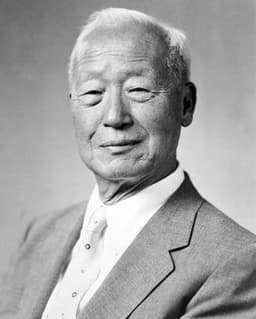
Syngman Rhee
Politician · Modern
53.4Total
Basic Information
Born
1937
1875
Died
—
1965
Era
Modern
Modern
Nationality
Austria
Korea
Occupation
Politician
Politician
Civilization
Western
Eastern
Score Comparison
Military (10%)
49.8
38.2
Political (20%)
60.0
68.0
Influence (20%)
54.9
60.0
Legacy (20%)
45.0
50.0
Leadership (15%)
80.0
40.0
Strategy (15%)
43.6
58.4
TOTAL
55.3
53.4
Franz Vranitzky — Complete Timeline
1986 AD
Appointed Chancellor of AustriaPolitical Action◆ Major
Franz Vranitzky became Chancellor of Austria on June 16, 1986, succeeding Fred Sinowatz. He led a coalition government between the Social Democratic Party and the Freedom Party of Austria until 1987, then with the Austrian People's Party.
ChancellorshipCoalition Government
Impact: national
1989 AD
Austrian EU Accession NegotiationsPolitical Action◆ Major
Vranitzky submitted Austria's application for membership in the European Communities on July 17, 1989. This initiated a multi-year negotiation process that culminated in Austria joining the European Union on January 1, 1995.
European IntegrationEU Accession
Impact: nationalconstructive
1995 AD
Austria Joins the European UnionPolitical Action
Under Vranitzky's chancellorship, Austria became a full member of the European Union on January 1, 1995, following a referendum in 1994 where 66.6% of voters approved. This marked a major shift in Austrian foreign policy from neutrality to integration.
European IntegrationReferendum
Impact: nationalconstructive
1997 AD
Resignation as ChancellorPolitical Action◆ Major
Vranitzky resigned as Chancellor on January 20, 1997, after 11 years in office. He cited a desire for a change in leadership and was succeeded by Viktor Klima. His tenure was the second-longest in post-war Austria.
ResignationEnd of Chancellorship
Impact: national
Syngman Rhee — Complete Timeline
1948 AD
Establishment of the Republic of KoreaPolitical Action
Syngman Rhee became the first president of the Republic of Korea (South Korea) after U.S.-supervised elections. His government was recognized by the UN as the legitimate government of Korea, while the North established a separate communist regime, formalizing the division.
FoundingDivisionSouth Korea
Impact: globalconstructive
1950 AD
Korean War OutbreakWar
North Korean forces invaded South Korea, triggering the Korean War. Syngman Rhee's government fled to Busan as UN forces intervened. The war lasted three years, resulted in millions of casualties, and ended in an armistice, leaving Korea divided along the 38th parallel.
Korean WarInvasionCold War
Impact: globaltragic
1953 AD
Signing of the Mutual Defense Treaty with the USPolitical Action◆ Major
Syngman Rhee signed the Mutual Defense Treaty with the United States, establishing a military alliance. The treaty committed the US to defend South Korea in case of attack and allowed US troops to remain stationed in the country, shaping security dynamics for decades.
US AllianceSecurityCold War
Impact: globalconstructive
1960 AD
April Revolution and ResignationPolitical Action◆ Major
Massive student-led protests erupted against Syngman Rhee's authoritarian rule and election rigging. The April Revolution forced Rhee to resign and flee to Hawaii, ending his 12-year presidency and leading to a brief democratic interlude before Park Chung-hee's coup.
RevolutionDemocracySouth Korea
Impact: nationalprogressive
Expert Analysis
Origins
Franz Vranitzky was born on October 4, 1937, in Vienna, Austria, to a working-class family. His father was a factory worker. Vranitzky studied business and economics at the University of World Trade in Vienna, earning a doctorate in 1960. He worked in banking and later for the Austrian National Bank, where he became a deputy director. His early career was in finance, not politics, giving him a technocratic background.
Syngman Rhee was born on March 26, 1875, in Hwanghae Province, Joseon (now North Korea), into a rural aristocratic family. He received a classical Confucian education but later converted to Christianity. Rhee studied at Pai Chai School in Seoul and then in the United States, earning a B.A. from George Washington University, an M.A. from Harvard, and a Ph.D. from Princeton in 1910. His early activism against Japanese colonial rule shaped his nationalist fervor.
Rise to Power
Vranitzky entered politics in the 1970s, joining the Social Democratic Party of Austria (SPÖ). He served as Minister of Finance from 1984 to 1986, during which he stabilized Austria's economy. On June 16, 1986, he became Chancellor, succeeding Fred Sinowatz. Vranitzky's rise was marked by his competence in economic policy and his ability to maintain the SPÖ's coalition with the Freedom Party, and later with the People's Party.
Rhee's rise was longer and more tumultuous. He was a prominent independence activist, serving as president of the Korean Provisional Government in exile from 1919 to 1925. After Japan's defeat in 1945, Rhee returned to Korea and, with U.S. backing, became the first president of the Republic of Korea on July 24, 1948. His leadership was consolidated through anti-communist rhetoric and suppression of leftist opposition.
Leadership & Governance
Vranitzky's leadership style was pragmatic and consensual. He prioritized economic stability and European integration. His governance was characterized by fiscal discipline and social partnership with labor unions. He successfully navigated Austria's accession to the European Union, submitting the application on July 17, 1989, and completing negotiations by 1994. A referendum in 1994 saw 66.6% support, and Austria joined on January 1, 1995. Vranitzky's political score is 60.0, reflecting his effective coalition management.
Rhee's governance was authoritarian and anti-communist. He suppressed political dissent, manipulated elections, and maintained power through the Liberal Party. He signed the Mutual Defense Treaty with the United States on October 1, 1953, securing U.S. military support. However, his regime was marked by corruption and human rights abuses. His leadership score is 40.0, lower due to his repressive methods and eventual downfall.
Triumph & Tragedy
Vranitzky's greatest success was leading Austria into the EU, enhancing its economic and political standing. He also stabilized the economy, reducing inflation and unemployment. His resignation in 1997 was voluntary, a rare peaceful transition. However, his tenure saw the rise of far-right populism, which he failed to counter effectively. His legacy score is 45.0, indicating moderate long-term impact.
Rhee's triumph was founding an independent South Korea and securing the U.S. alliance, which protected the country from North Korean aggression. However, his tragedy was the Korean War (1950-1953), which devastated the peninsula. His authoritarian rule led to the April Revolution in 1960, forcing him to resign and flee to Hawaii, where he died in exile in 1965. His influence score is 60.0, but his legacy is tarnished by repression.
Character & Destiny
Vranitzky was measured and technocratic, avoiding ideological extremes. His character allowed him to build consensus, but also made him seem detached. He resigned at age 59, perhaps lacking the drive for further reform. His destiny was to be a competent manager in a neutral country.
Rhee was stubborn, nationalist, and authoritarian. His uncompromising anti-communism and desire for reunification led to aggressive policies. He refused to sign the 1953 armistice, wanting to continue the war. His character led to his isolation and eventual overthrow. His strategy score is 58.4, but his inflexibility limited his effectiveness.
Legacy
Vranitzky's legacy is tied to Austria's EU membership, which brought prosperity and integration. He is remembered as a steady hand during a transformative period. His political score of 60.0 reflects his success in governance.
Rhee's legacy is mixed: he is a founding father of South Korea but also an authoritarian. His military score is 38.2, reflecting his reliance on the U.S. The Mutual Defense Treaty remains a cornerstone of South Korea's security. However, his repression taints his memory.
Conclusion
Franz Vranitzky had greater impact in terms of sustained, positive governance. His total score of 55.3 versus Rhee's 53.4 reflects this. Vranitzky's leadership score of 80.0 far exceeds Rhee's 40.0, indicating more effective governance. While Rhee's founding role is significant, his authoritarianism and the devastation of the Korean War reduce his overall contribution. Vranitzky's peaceful EU integration had a more enduring positive effect on his nation's development.
Rankings
🥇
Franz VranitzkyLeader
Mil: 49.8Pol: 60.0Inf: 54.9
55.3
🥈
Syngman Rhee
Mil: 38.2Pol: 68.0Inf: 60.0
53.4
+1.9 behind
How This Comparison Works
Algorithm
Each figure is scored on 6 dimensions (0—100 scale) based on structured historical data: Military (10%), Political (20%), Influence (20%), Legacy (20%), Leadership (15%), Strategy (15%). The weighted total produces the final ranking.
Data Sources
Scores are computed from structured sub-indicators in the database. Scale factors adjust for era (Ancient ×0.85, Modern ×1.0) and civilization size (Eastern ×1.05, Other ×0.80) to account for differences in population and military scale.
Maximum 3 Figures
Comparisons are limited to 2—3 figures to ensure readability and statistical meaningfulness.
Error Margins
±5 points per dimension — Sub-scores are derived from historical records with inherent uncertainty. Two figures within 5 points on a dimension should be considered roughly equivalent in that area.
Total Score Accuracy
±3 points overall — The weighted combination of 6 dimensions produces a total score with approximately ±3 points of uncertainty. Differences of less than 3 points are not statistically significant— the figures are effectively tied.
Known Limitations
- Historical records are incomplete and uneven across civilizations
- Figures from oral-tradition societies may be underrepresented
- Occupation labels can misclassify multi-role figures
- Scores measure capability and impact, not moral character
- Quantitative scoring is a comparison tool, not absolute truth
Capability Radar
Military (10%) — Battles & Warfare
Battles
26
49
Win Rate
32
56
Expansion
38
56
Political (20%) — Governance & Reform
Reform
60
55
Diplomacy
70
65
Economy
65
40
Influence (20%) — Cultural & Global Reach
Cultural
30
40
Global
40
50
Legacy (20%) — Historical Impact
Historical
40
55
Longevity
30
50
Leadership (15%) — Power & Stability
Tenure
65
60
Stability
70
35
Strategy (15%) — Tactics & Innovation
Strategy
39
61
Tactics
43
61
Reform
43
66
Similar Comparisons
Comments & Discussion
No comments yet. Be the first to share your thoughts!