Loading...
Fred Timakata vs Praexedes Mateo Sagasta
Praexedes Mateo Sagasta leads by 8.7 pts · 2 figures compared
…
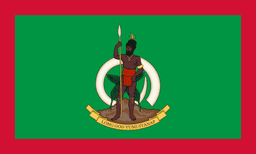
Fred Timakata
Politician · Modern
43.7Total

Praexedes Mateo Sagasta
Politician · Modern
52.4Total
Basic Information
Born
1936
1825
Died
—
1903
Era
Modern
Modern
Nationality
Vanuatu
Spain
Occupation
Politician
Politician
Civilization
Other
Western
Score Comparison
Military (10%)
43.3
10.4
Political (20%)
32.2
60.0
Influence (20%)
47.9
55.7
Legacy (20%)
37.5
48.3
Leadership (15%)
58.8
79.8
Strategy (15%)
44.1
43.5
TOTAL
43.7
52.4
Fred Timakata — Complete Timeline
1989 AD
Election as President of VanuatuPolitical Action◆ Major
Fred Timakata was elected as the President of Vanuatu, serving from 1989 to 1994. He was a Presbyterian pastor before entering politics, and his presidency focused on national unity and development.
PresidencyVanuatuPolitical Leadership
Impact: national
1994 AD
End of PresidencyPolitical Action
Timakata's term ended in 1994 after serving one term. He was succeeded by Jean-Marie Leye Lenelgau. His presidency was noted for its stability and pastoral approach.
PresidencyTransitionVanuatu
Impact: national
Praexedes Mateo Sagasta — Complete Timeline
1885 AD
Signed the Pact of El PardoPolitical Action◆ Major
Sagasta, as leader of the Liberal Party, signed the Pact of El Pardo with Conservative leader Antonio Canovas del Castillo. This agreement formalized the turno pacifico, ensuring the peaceful alternation of power between the two parties after the death of King Alfonso XII.
Political PactTurno PacificoRestoration
Impact: nationalconstructive
1887 AD
Approved the Law of AssociationsReform◆ Major
Sagasta's government passed the Law of Associations, which legalized trade unions and political organizations. This law provided a legal framework for labor movements and political parties, fostering the growth of civil society in Spain.
AssociationsLabor RightsCivil Society
Impact: nationalprogressive
1890 AD
Passed the Law of Universal Suffrage (1890)Reform◆ Major
As prime minister, Sagasta enacted the Law of Universal Suffrage for men over 25, replacing the previous census-based suffrage. This reform expanded the electorate significantly, though its impact was limited by continued electoral manipulation through caciquismo.
SuffrageElectoral ReformDemocracy
Impact: nationalprogressive
1898 AD
Led Spain During the Spanish-American WarWar
Sagasta was prime minister when the Spanish-American War broke out following the sinking of the USS Maine. Spain suffered a decisive defeat, losing its remaining colonies of Cuba, Puerto Rico, the Philippines, and Guam, marking the end of the Spanish Empire.
Spanish-American WarColonial LossEmpire
Impact: globaltragic
Expert Analysis
Origins
Fred Timakata was born in 1937 on the island of Tongoa, Vanuatu. He trained as a Presbyterian pastor and served the church before entering politics. His early life was shaped by colonial rule under the Anglo-French Condominium, which ended in 1980.
Praexedes Mateo Sagasta was born in 1825 in Torrecilla de Cameros, Spain. He studied civil engineering but soon turned to politics. He joined the Liberal Party and became a leading figure in the Progressive Party, advocating for constitutional monarchy and civil liberties.
Rise to Power
Timakata rose through the Presbyterian Church and became active in the independence movement. After Vanuatu's independence in 1980, he served as Minister of Health and later as Minister of Education. In 1989, he was elected President by an electoral college, scoring 58.8 in leadership.
Sagasta entered the Cortes in 1854 and quickly became a key liberal voice. He served as Prime Minister seven times between 1874 and 1902. His rise was cemented by the Pact of El Pardo (1885) with Conservative leader Canovas del Castillo, which ensured political stability through alternating governments. His political score of 60.0 reflects his long tenure.
Leadership & Governance
As a president with limited executive power, Timakata focused on ceremonial duties and national unity. His leadership score of 58.8 indicates steady but unambitious governance. He prioritized stability and pastoral care, but enacted no major reforms.
Sagasta governed with a clear liberal agenda. He passed the Law of Universal Suffrage for men over 25 in 1890, expanding the electorate from 800,000 to 4.8 million. He also legalized trade unions and political associations, scoring 79.8 in leadership. However, his governance was marred by the Spanish-American War (1898), where Spain lost Cuba, Puerto Rico, and the Philippines.
Triumph & Tragedy
Timakata's triumph was presiding over a stable transition in Vanuatu's early republic, scoring 37.5 in legacy. His tragedy was the lack of significant political change; his presidency is largely forgotten.
Sagasta's triumphs include universal suffrage and association laws, which modernized Spain. His tragedy was the catastrophic defeat in the Spanish-American War, which shattered Spain's empire and led to a loss of national confidence. His military score of 10.4 reflects his failed wartime leadership.
Character & Destiny
Timakata was a gentle, consensus-building leader. His pastoral background made him a unifying figure but limited his political ambition. He scored 44.1 in strategy, reflecting cautious decision-making.
Sagasta was pragmatic and skilled in negotiation. He balanced liberal reforms with monarchist realities. However, his strategic score of 43.5 shows that his long-term planning failed in foreign policy. His character was defined by persistence and reform, but his destiny tied to Spain's decline.
Legacy
Timakata's legacy is minor; he is remembered as Vanuatu's second president but left no lasting reforms. His influence score of 47.9 reflects limited regional impact.
Sagasta's legacy is substantial: universal suffrage and legalized associations laid groundwork for modern Spanish democracy. He scored 48.3 in legacy, but his influence score of 55.7 indicates broader historical importance. The Pact of El Pardo influenced Spanish politics for decades.
Conclusion
Praexedes Sagasta had greater impact. Despite his failing in the Spanish-American War, his domestic reforms transformed Spain's political landscape. With a total score of 52.4 against Timakata's 43.7, Sagasta's universal suffrage alone affected millions. Timakata served his nation with dignity but lacked the reach to shape history beyond Vanuatu.
Rankings
🥇
Praexedes Mateo SagastaLeader
Mil: 10.4Pol: 60.0Inf: 55.7
52.4
🥈
Fred Timakata
Mil: 43.3Pol: 32.2Inf: 47.9
43.7
+8.7 behind
How This Comparison Works
Algorithm
Each figure is scored on 6 dimensions (0—100 scale) based on structured historical data: Military (10%), Political (20%), Influence (20%), Legacy (20%), Leadership (15%), Strategy (15%). The weighted total produces the final ranking.
Data Sources
Scores are computed from structured sub-indicators in the database. Scale factors adjust for era (Ancient ×0.85, Modern ×1.0) and civilization size (Eastern ×1.05, Other ×0.80) to account for differences in population and military scale.
Maximum 3 Figures
Comparisons are limited to 2—3 figures to ensure readability and statistical meaningfulness.
Error Margins
±5 points per dimension — Sub-scores are derived from historical records with inherent uncertainty. Two figures within 5 points on a dimension should be considered roughly equivalent in that area.
Total Score Accuracy
±3 points overall — The weighted combination of 6 dimensions produces a total score with approximately ±3 points of uncertainty. Differences of less than 3 points are not statistically significant— the figures are effectively tied.
Known Limitations
- Historical records are incomplete and uneven across civilizations
- Figures from oral-tradition societies may be underrepresented
- Occupation labels can misclassify multi-role figures
- Scores measure capability and impact, not moral character
- Quantitative scoring is a comparison tool, not absolute truth
Capability Radar
Military (10%) — Battles & Warfare
Battles
21
21
Win Rate
25
26
Expansion
28
28
Political (20%) — Governance & Reform
Reform
20
70
Diplomacy
30
65
Economy
15
60
Influence (20%) — Cultural & Global Reach
Cultural
15
30
Global
10
35
Legacy (20%) — Historical Impact
Historical
15
50
Longevity
10
40
Leadership (15%) — Power & Stability
Tenure
30
75
Stability
25
55
Strategy (15%) — Tactics & Innovation
Strategy
28
29
Tactics
31
32
Reform
39
36
Similar Comparisons
Comments & Discussion
No comments yet. Be the first to share your thoughts!