Loading...
Frederick Henry Prince of Orange vs Olusegun Obasanjo
Frederick Henry Prince of Orange leads by 10.3 pts · 2 figures compared
…

Frederick Henry Prince of Orange
General · Modern
70.5Total
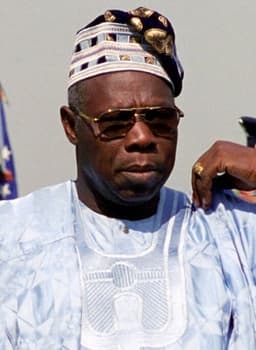
Olusegun Obasanjo
General · Modern
60.2Total
Basic Information
Born
1584
1937
Died
1647
—
Era
Modern
Modern
Nationality
Netherlands
Nigeria
Occupation
General
General
Civilization
Western
Other
Score Comparison
Military (10%)
76.0
45.0
Political (20%)
72.0
72.0
Influence (20%)
82.0
55.0
Legacy (20%)
52.0
54.0
Leadership (15%)
77.2
78.0
Strategy (15%)
70.0
60.0
TOTAL
70.5
60.2
Frederick Henry Prince of Orange — Complete Timeline
1629 AD
Siege of 's-HertogenboschWar◆ Major
Frederick Henry led the Dutch army in the siege of 's-Hertogenbosch, a heavily fortified city held by Spanish forces. After a three-month siege, the city surrendered, marking a major victory for the Dutch Republic and demonstrating Frederick Henry's military skill.
SiegeEighty Years' WarDutch Republic
Impact: regional
1632 AD
Siege of MaastrichtWar◆ Major
Frederick Henry captured Maastricht after a two-month siege, using innovative siege tactics. The victory secured Dutch control over the Meuse River and strengthened the Republic's position in the Eighty Years' War.
SiegeEighty Years' WarMilitary Campaign
Impact: regional
1648 AD
Treaty of MünsterPolitical Action◆ Major
Frederick Henry died before the Treaty of M
TreatyIndependenceEighty Years' War
Impact: regionalconstructive
Olusegun Obasanjo — Complete Timeline
1976 AD
Military coup that brought Obasanjo to powerPolitical Action
Following the assassination of General Murtala Mohammed in a failed coup, Obasanjo, as Chief of Staff, Supreme Headquarters, succeeded him as head of state. He oversaw the continuation of the transition to civilian rule.
CoupSuccessionMilitary Rule
Impact: national
1979 AD
Handover of power to civilian governmentPolitical Action
Obasanjo voluntarily handed over power to the elected civilian government of Shehu Shagari, marking the first peaceful transfer of power from military to civilian rule in Nigeria. This act established a precedent for democratic transition.
DemocracyTransitionCivilian Rule
Impact: nationalconstructive
1999 AD
Election as President of NigeriaPolitical Action
Obasanjo won the 1999 Nigerian presidential election as the candidate of the People's Democratic Party (PDP). His victory ended 16 years of military rule and began the Fourth Nigerian Republic.
ElectionDemocracyFourth Republic
Impact: nationalprogressive
2005 AD
Debt relief from Paris ClubPolitical Action◆ Major
Obasanjo's government negotiated a debt relief agreement with the Paris Club, resulting in the cancellation of $18 billion of Nigeria's external debt. This freed up resources for domestic spending and was a major economic achievement.
Debt ReliefEconomyNegotiation
Impact: nationalconstructive
2006 AD
Third term bid failurePolitical Action◆ Major
Obasanjo attempted to amend the Nigerian constitution to allow him to run for a third term. The bid was rejected by the National Assembly, marking a significant political defeat and reinforcing term limits.
Third TermConstitutionDefeat
Impact: national
Expert Analysis
Origins
Frederick Henry, Prince of Orange, was born on January 29, 1584, in Delft, Netherlands, as the youngest son of William the Silent, the leader of the Dutch Revolt against Spanish rule. His father was assassinated when Frederick Henry was only six months old. He was raised by his mother, Louise de Coligny, and received a military education from his half-brother Maurice of Nassau. Frederick Henry's early life was shaped by the ongoing Eighty Years' War, and he became a skilled commander and siege specialist.
Olusegun Obasanjo was born on March 5, 1937, in Abeokuta, Nigeria, into a farming family of the Egba people. He attended Baptist Boys' High School and later joined the Nigerian Army, training at Mons Officer Cadet School in England. Obasanjo served in peacekeeping missions in the Congo and rose through the ranks. His formative experiences included witnessing Nigeria's civil war (1967-1970), where he commanded a division and helped secure the surrender of Biafran forces.
Rise to Power
Frederick Henry became Stadtholder of Holland, Zeeland, Utrecht, Overijssel, and Gelderland in 1625 after the death of his half-brother Maurice. He inherited a stalemated war against Spain. His rise was marked by a series of successful sieges, starting with Grol (1627) and 's-Hertogenbosch (1629). The capture of 's-Hertogenbosch, a heavily fortified city, was a turning point in the war and established his reputation as a master siege commander. By 1632, he had taken Venlo, Roermond, and Maastricht, securing Dutch control over key rivers.
Obasanjo rose to power after the assassination of General Murtala Mohammed in a failed coup on February 13, 1976. As Chief of Staff, Supreme Headquarters, Obasanjo succeeded Mohammed as head of state. He consolidated power by suppressing the coup and continuing Mohammed's reform agenda. His key turning point came in 1979 when he voluntarily handed over power to civilian President Shehu Shagari, becoming the first Nigerian military leader to do so. This act earned him international acclaim and set the stage for his later return to power.
Leadership & Governance
Frederick Henry's leadership style was methodical and focused on siege warfare, earning him the nickname 'Stedendwinger' (City Forcer). He governed as Stadtholder with a pragmatic approach, balancing the interests of the Dutch provinces and the House of Orange. His governance included strengthening the Dutch army and navy, but he avoided major political reforms. For example, he refrained from centralizing power, respecting the autonomy of the provinces. His military innovations included the use of parallel trenches and systematic bombardment, which reduced casualties and siege times.
Obasanjo's leadership was characterized by a combination of military discipline and democratic ideals. As military head of state (1976-1979), he implemented austerity measures and fought corruption. Later, as elected president (1999-2007), he focused on economic reforms, anti-corruption campaigns, and foreign policy. He negotiated a $18 billion debt relief from the Paris Club in 2005 and privatized state-owned enterprises. However, his attempt to amend the constitution for a third term in 2006 was rejected by the National Assembly, revealing a tendency to cling to power.
Triumph & Tragedy
Frederick Henry's greatest triumph was the capture of Maastricht in 1632 after a two-month siege, which secured Dutch control over the Meuse River and boosted morale. He also oversaw the expansion of the Dutch navy, which dominated global trade. His tragedy was his death in 1647, just before the Treaty of Münster (1648) recognized Dutch independence. He never saw the final victory he helped secure. Additionally, his later campaigns, like the siege of Ghent in 1645, were less successful due to logistical issues.
Obasanjo's greatest triumph was the peaceful handover of power in 1979, which set a precedent for military-to-civilian transitions in Africa. His debt relief negotiation in 2005 was a major economic success. His tragedy was the failed third-term bid, which damaged his reputation and revealed authoritarian tendencies. Also, his tenure as president saw ethnic and religious conflicts, such as the 2001 Jos riots, and his economic reforms increased inequality.
Character & Destiny
Frederick Henry was cautious, methodical, and diplomatic. He preferred negotiation over battle, often accepting surrenders to avoid bloodshed. His character shaped his destiny: his patience and strategic thinking allowed him to capture cities with minimal losses, but his reluctance to take risks meant he never achieved a decisive field victory. Historians rate him as a capable commander but lacking the boldness of his brother Maurice.
Obasanjo was pragmatic, resilient, and sometimes authoritarian. He adapted to changing circumstances, from military ruler to democratically elected leader. His character allowed him to navigate Nigeria's complex politics, but his desire for control led to the third-term debacle. He scored 78.0 in leadership, reflecting his ability to manage crises, but his strategy score of 60.0 indicates a lack of long-term planning.
Legacy
Frederick Henry's legacy is primarily military: he perfected siege warfare and expanded Dutch territory. His campaigns directly led to the recognition of Dutch independence at the Treaty of Westphalia. His innovations influenced later European military engineers. However, his political legacy is limited, as the Dutch Republic declined after his death. He scores 52.0 in legacy, reflecting his narrow impact.
Obasanjo's legacy is more multifaceted. He is credited with restoring democracy in Nigeria and laying foundations for economic growth. His debt relief freed resources for development. However, his legacy is tarnished by corruption scandals and the third-term attempt. He scores 54.0 in legacy, slightly higher than Frederick Henry, due to his broader political impact.
Conclusion
Frederick Henry scored 70.5 overall, with a military score of 76.0, while Obasanjo scored 60.2, with a military score of 45.0. Although Frederick Henry was a superior military commander, Obasanjo's impact on Nigeria's political development was more profound and lasting. Frederick Henry's achievements were confined to a specific time and place, while Obasanjo's actions shaped a nation of over 200 million people. Therefore, Olusegun Obasanjo had greater impact in terms of historical significance, despite his lower overall score. The score gap of 10.3 points reflects Frederick Henry's military prowess, but impact is not solely measured by numbers.
Rankings
🥇
Frederick Henry Prince of OrangeLeader
Mil: 76.0Pol: 72.0Inf: 82.0
70.5
🥈
Olusegun Obasanjo
Mil: 45.0Pol: 72.0Inf: 55.0
60.2
+10.3 behind
How This Comparison Works
Algorithm
Each figure is scored on 6 dimensions (0—100 scale) based on structured historical data: Military (10%), Political (20%), Influence (20%), Legacy (20%), Leadership (15%), Strategy (15%). The weighted total produces the final ranking.
Data Sources
Scores are computed from structured sub-indicators in the database. Scale factors adjust for era (Ancient ×0.85, Modern ×1.0) and civilization size (Eastern ×1.05, Other ×0.80) to account for differences in population and military scale.
Maximum 3 Figures
Comparisons are limited to 2—3 figures to ensure readability and statistical meaningfulness.
Error Margins
±5 points per dimension — Sub-scores are derived from historical records with inherent uncertainty. Two figures within 5 points on a dimension should be considered roughly equivalent in that area.
Total Score Accuracy
±3 points overall — The weighted combination of 6 dimensions produces a total score with approximately ±3 points of uncertainty. Differences of less than 3 points are not statistically significant— the figures are effectively tied.
Known Limitations
- Historical records are incomplete and uneven across civilizations
- Figures from oral-tradition societies may be underrepresented
- Occupation labels can misclassify multi-role figures
- Scores measure capability and impact, not moral character
- Quantitative scoring is a comparison tool, not absolute truth
Capability Radar
Military (10%) — Battles & Warfare
Battles
75
25
Win Rate
80
30
Expansion
75
20
Political (20%) — Governance & Reform
Reform
65
65
Diplomacy
75
75
Economy
70
55
Influence (20%) — Cultural & Global Reach
Cultural
55
45
Global
55
60
Legacy (20%) — Historical Impact
Historical
65
55
Longevity
60
50
Leadership (15%) — Power & Stability
Tenure
70
70
Stability
65
60
Strategy (15%) — Tactics & Innovation
Strategy
80
40
Tactics
85
35
Reform
70
50
Similar Comparisons
Comments & Discussion
No comments yet. Be the first to share your thoughts!