Loading...
Analysis will be generated on first visit.
Scores and timeline are available below. The page will refresh automatically when ready.
Frederick I Barbarossa vs Julius Caesar
Julius Caesar leads by 12.5 pts · 2 figures compared
…
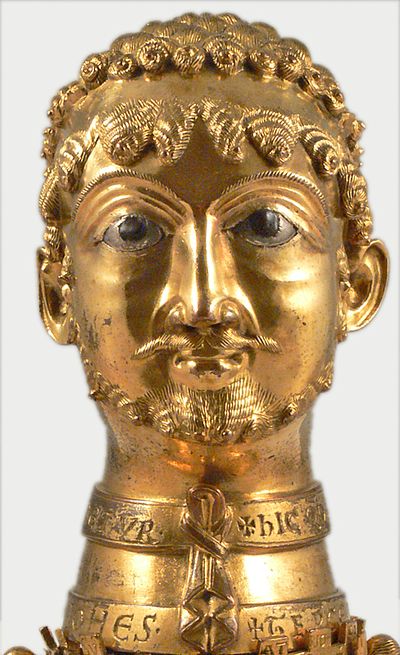
Frederick I Barbarossa
Emperor · Medieval
70.8Total
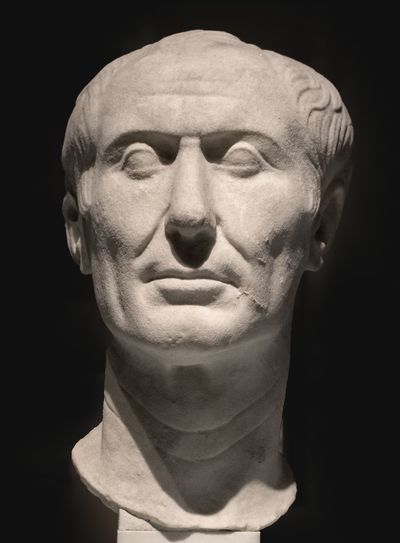
Julius Caesar
General · Ancient
83.3Total
Basic Information
Born
1122
-100
Died
1190
-44
Era
Medieval
Ancient
Nationality
Holy Roman Empire
Roman Republic
Occupation
Emperor
General
Civilization
Western
Western
Score Comparison
Military (10%)
63.9
88.0
Political (20%)
66.9
78.0
Influence (20%)
76.2
85.0
Legacy (20%)
72.2
82.0
Leadership (15%)
79.3
82.0
Strategy (15%)
63.0
88.0
TOTAL
70.8
83.3
Rankings
🥇
Julius CaesarLeader
Mil: 88.0Pol: 78.0Inf: 85.0
83.3
🥈
Frederick I Barbarossa
Mil: 63.9Pol: 66.9Inf: 76.2
70.8
+12.5 behind
How This Comparison Works
Algorithm
Each figure is scored on 6 dimensions (0—100 scale) based on structured historical data: Military (10%), Political (20%), Influence (20%), Legacy (20%), Leadership (15%), Strategy (15%). The weighted total produces the final ranking.
Data Sources
Scores are computed from structured sub-indicators in the database. Scale factors adjust for era (Ancient ×0.85, Modern ×1.0) and civilization size (Eastern ×1.05, Other ×0.80) to account for differences in population and military scale.
Maximum 3 Figures
Comparisons are limited to 2—3 figures to ensure readability and statistical meaningfulness.
Error Margins
±5 points per dimension — Sub-scores are derived from historical records with inherent uncertainty. Two figures within 5 points on a dimension should be considered roughly equivalent in that area.
Total Score Accuracy
±3 points overall — The weighted combination of 6 dimensions produces a total score with approximately ±3 points of uncertainty. Differences of less than 3 points are not statistically significant— the figures are effectively tied.
Known Limitations
- Historical records are incomplete and uneven across civilizations
- Figures from oral-tradition societies may be underrepresented
- Occupation labels can misclassify multi-role figures
- Scores measure capability and impact, not moral character
- Quantitative scoring is a comparison tool, not absolute truth
Capability Radar
Military (10%) — Battles & Warfare
Battles
75
95
Win Rate
70
92
Expansion
70
97
Political (20%) — Governance & Reform
Reform
75
90
Diplomacy
72
85
Economy
68
82
Influence (20%) — Cultural & Global Reach
Cultural
65
88
Global
60
94
Legacy (20%) — Historical Impact
Historical
75
95
Longevity
70
96
Leadership (15%) — Power & Stability
Tenure
80
75
Stability
60
60
Strategy (15%) — Tactics & Innovation
Strategy
78
94
Tactics
72
96
Reform
65
88
Analysis will be generated on first visit.
Scores and timeline are available below. The page will refresh automatically when ready.
Frederick I Barbarossa — Complete Timeline
1158 AD
Diet of RoncagliaPolitical Action◆ Major
Frederick I convened a diet at Roncaglia in northern Italy. He proclaimed the Regalian Rights, asserting imperial authority over Italian cities. The diet declared that all public authority derived from the emperor, leading to conflict with the Lombard League.
Imperial AuthorityItalyLegislation
Impact: regional
1176 AD
Battle of LegnanoWar
Frederick I Barbarossa was defeated by the Lombard League at Legnano in northern Italy. The League's infantry used a carroccio (war wagon) as a rallying point. This defeat forced Frederick to recognize the autonomy of Italian communes in the Peace of Venice.
Lombard LeagueItalian CampaignsDefeat
Impact: regional
1177 AD
Peace of VenicePolitical Action◆ Major
Frederick I signed a treaty with Pope Alexander III and the Lombard League in Venice. He recognized Alexander III as pope and agreed to a six-year truce with the Italian communes. The peace ended the schism in the Church and temporarily halted imperial campaigns in Italy.
TreatyPapacyLombard League
Impact: regionalconstructive
1190 AD
Death on the Third CrusadeWar◆ Major
Frederick I drowned in the Saleph River in Cilicia while leading the Third Crusade. His death caused the German contingent to largely return home, weakening the crusade. He was buried in Antioch, and his body later moved to Tyre.
CrusadeDeathAccident
Impact: globaltragic
Similar Comparisons
Comments & Discussion
No comments yet. Be the first to share your thoughts!