Loading...
This comparison has not been analyzed yet.
One-time AI generation (~1 minute). Scores and timeline are already available below.
Frederick II of Baden vs Rama Varma of Travancore
Rama Varma of Travancore leads by 18.3 pts · 2 figures compared
…

Frederick II of Baden
Emperor · Modern
40.5Total
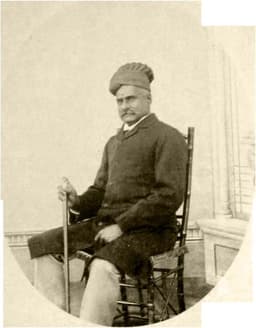
Rama Varma of Travancore
Emperor · Modern
58.8Total
Basic Information
Born
1857
1724
Died
1928
1798
Era
Modern
Modern
Nationality
Baden
India
Occupation
Emperor
Emperor
Civilization
Western
Indian
Score Comparison
Military (10%)
46.7
46.7
Political (20%)
27.9
72.0
Influence (20%)
46.3
58.0
Legacy (20%)
34.2
49.2
Leadership (15%)
41.5
80.0
Strategy (15%)
52.5
45.0
TOTAL
40.5
58.8
Frederick II of Baden — Complete Timeline
1907 AD
Accession as Grand Duke of BadenPolitical Action◆ Major
Frederick II became Grand Duke of Baden on 28 September 1907, succeeding his father Frederick I. His reign was short and marked by continuity of liberal policies.
BadenSuccession
Impact: national
1918 AD
World War I abdicationPolitical Action
On 22 November 1918, during the German Revolution, Frederick II abdicated the throne of Baden. He was the last grand duke, and his abdication ended the Z
German RevolutionEnd of monarchyBaden
Impact: nationaltragic
1928 AD
Retirement and deathOther
After his abdication, Frederick II retired to private life in Badenweiler. He died on 9 August 1928 at Freiburg im Breisgau. He was the last surviving German grand duke from the imperial era.
DeathRetirement
Rama Varma of Travancore — Complete Timeline
1788 AD
Alliance with the British East India CompanyPolitical Action◆ Major
Rama Varma, known as Dharma Raja, signed a subsidiary alliance with the British East India Company, agreeing to pay tribute and provide military support in exchange for British protection. This alliance helped Travancore resist invasions from Tipu Sultan of Mysore and ensured the kingdom's survival during the Anglo-Mysore Wars.
Subsidiary AllianceBritish East India CompanyTravancore
Impact: regional
1789 AD
Defense against Tipu Sultan's invasionWar◆ Major
Tipu Sultan of Mysore invaded Travancore, but Rama Varma's forces, aided by the British, successfully defended the kingdom. The Travancore Lines, a defensive fortification, held against Tipu's army. This conflict escalated into the Third Anglo-Mysore War, which ended with Tipu's defeat and the Treaty of Seringapatam.
Anglo-Mysore WarsTipu SultanTravancore Lines
Impact: regional
1790 AD
Promotion of religious toleranceReform◆ Major
Rama Varma, known as Dharma Raja, implemented policies of religious tolerance, allowing Christians and Muslims to practice freely in Travancore. He granted land for churches and mosques and protected minority communities. This policy contrasted with the religious persecution in neighboring Mysore and earned him the title 'Dharma Raja' (Righteous King).
Religious ToleranceTravancoreDharma Raja
Impact: regionalprogressive
Construction of the Padmanabhaswamy Temple complexCultural
Rama Varma completed the construction of the Padmanabhaswamy Temple complex in Thiruvananthapuram, including the mandapam and other structures. The temple became the center of Travancore's religious and cultural life, and the king dedicated the kingdom to the deity Padmanabha, ruling as a servant of the god.
Temple ArchitecturePadmanabhaswamyThiruvananthapuram
Impact: regionalconstructive
This comparison has not been analyzed yet.
One-time AI generation (~1 minute). Scores and timeline are already available below.
Rankings
🥇
Rama Varma of TravancoreLeader
Mil: 46.7Pol: 72.0Inf: 58.0
58.8
🥈
Frederick II of Baden
Mil: 46.7Pol: 27.9Inf: 46.3
40.5
+18.3 behind
How This Comparison Works
Algorithm
Each figure is scored on 6 dimensions (0—100 scale) based on structured historical data: Military (10%), Political (20%), Influence (20%), Legacy (20%), Leadership (15%), Strategy (15%). The weighted total produces the final ranking.
Data Sources
Scores are computed from structured sub-indicators in the database. Scale factors adjust for era (Ancient ×0.85, Modern ×1.0) and civilization size (Eastern ×1.05, Other ×0.80) to account for differences in population and military scale.
Maximum 3 Figures
Comparisons are limited to 2—3 figures to ensure readability and statistical meaningfulness.
Error Margins
±5 points per dimension — Sub-scores are derived from historical records with inherent uncertainty. Two figures within 5 points on a dimension should be considered roughly equivalent in that area.
Total Score Accuracy
±3 points overall — The weighted combination of 6 dimensions produces a total score with approximately ±3 points of uncertainty. Differences of less than 3 points are not statistically significant— the figures are effectively tied.
Known Limitations
- Historical records are incomplete and uneven across civilizations
- Figures from oral-tradition societies may be underrepresented
- Occupation labels can misclassify multi-role figures
- Scores measure capability and impact, not moral character
- Quantitative scoring is a comparison tool, not absolute truth
Capability Radar
Military (10%) — Battles & Warfare
Battles
24
30
Win Rate
28
40
Expansion
30
25
Political (20%) — Governance & Reform
Reform
20
65
Diplomacy
15
75
Economy
15
70
Influence (20%) — Cultural & Global Reach
Cultural
10
50
Global
5
30
Legacy (20%) — Historical Impact
Historical
10
55
Longevity
5
40
Leadership (15%) — Power & Stability
Tenure
10
70
Stability
20
65
Strategy (15%) — Tactics & Innovation
Strategy
34
40
Tactics
36
35
Reform
37
30
Similar Comparisons
Comments & Discussion
No comments yet. Be the first to share your thoughts!