Loading...
This comparison has not been analyzed yet.
One-time AI generation (~1 minute). Scores and timeline are already available below.
Frederick II of Saxe-Gotha vs Oba Orhogbua
Oba Orhogbua leads by 1.0 pts · 2 figures compared
…

Frederick II of Saxe-Gotha
Emperor · Modern
47.1Total
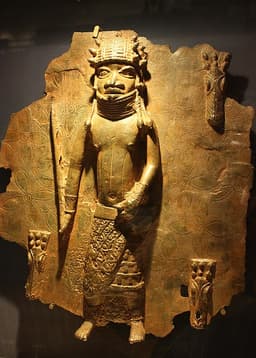
Oba Orhogbua
Emperor · Modern
48.1Total
Basic Information
Born
1676
1550
Died
1732
1578
Era
Modern
Modern
Nationality
Saxe-Gotha
Benin Kingdom
Occupation
Emperor
Emperor
Civilization
Western
Other
Score Comparison
Military (10%)
43.3
46.7
Political (20%)
39.4
39.4
Influence (20%)
48.6
51.8
Legacy (20%)
38.3
42.5
Leadership (15%)
65.0
64.0
Strategy (15%)
54.3
43.3
TOTAL
47.1
48.1
Frederick II of Saxe-Gotha — Complete Timeline
1700 AD
Construction of Friedenstein PalaceCultural◆ Major
Frederick II completed the construction of Friedenstein Palace in Gotha, a large Baroque residence. The palace became the administrative and cultural center of the duchy, housing the court, government offices, and art collections.
ArchitectureBaroqueFriedenstein Palace
Impact: regionalconstructive
Maintained Neutrality in the Great Northern WarPolitical Action
Frederick II kept Saxe-Gotha neutral during the Great Northern War, avoiding the devastation that affected many German states. This policy preserved the duchy's resources and population, allowing continued internal development.
NeutralityGreat Northern WarForeign Policy
Impact: regionalconstructive
1705 AD
Established the Gotha MintReform
Frederick II established a state mint in Gotha to standardize coinage in his duchy. This reform improved economic stability and facilitated trade, though it also aimed to increase ducal revenue.
CoinageEconomic ReformMint
Impact: nationalconstructive
Oba Orhogbua — Complete Timeline
1555 AD
First use of firearms in Benin warfareWar◆ Major
Oba Orhogbua armed his soldiers with Portuguese muskets during campaigns against the Igbo and Ijo peoples. This marked the first systematic use of firearms by a Benin ruler, giving his army a technological advantage.
Military TechnologyFirearmsBenin
Impact: regional
1560 AD
Conquest of LagosWar◆ Major
Orhogbua led a military expedition that conquered the coastal settlement of Eko (modern-day Lagos), establishing Benin's control over the lagoon area. He installed a military governor and used the port for trade with Europeans.
ConquestLagosBenin
Impact: regional
1565 AD
Expansion of the Benin navyReform
Orhogbua built a fleet of war canoes armed with small cannons, creating a naval force to patrol the Niger Delta. This navy protected Benin's trade routes and enabled amphibious attacks on coastal communities.
NavyMilitary ReformBenin
Impact: regionalconstructive
This comparison has not been analyzed yet.
One-time AI generation (~1 minute). Scores and timeline are already available below.
Rankings
🥇
Oba OrhogbuaLeader
Mil: 46.7Pol: 39.4Inf: 51.8
48.1
🥈
Frederick II of Saxe-Gotha
Mil: 43.3Pol: 39.4Inf: 48.6
47.1
+1.0 behind
How This Comparison Works
Algorithm
Each figure is scored on 6 dimensions (0—100 scale) based on structured historical data: Military (10%), Political (20%), Influence (20%), Legacy (20%), Leadership (15%), Strategy (15%). The weighted total produces the final ranking.
Data Sources
Scores are computed from structured sub-indicators in the database. Scale factors adjust for era (Ancient ×0.85, Modern ×1.0) and civilization size (Eastern ×1.05, Other ×0.80) to account for differences in population and military scale.
Maximum 3 Figures
Comparisons are limited to 2—3 figures to ensure readability and statistical meaningfulness.
Error Margins
±5 points per dimension — Sub-scores are derived from historical records with inherent uncertainty. Two figures within 5 points on a dimension should be considered roughly equivalent in that area.
Total Score Accuracy
±3 points overall — The weighted combination of 6 dimensions produces a total score with approximately ±3 points of uncertainty. Differences of less than 3 points are not statistically significant— the figures are effectively tied.
Known Limitations
- Historical records are incomplete and uneven across civilizations
- Figures from oral-tradition societies may be underrepresented
- Occupation labels can misclassify multi-role figures
- Scores measure capability and impact, not moral character
- Quantitative scoring is a comparison tool, not absolute truth
Capability Radar
Military (10%) — Battles & Warfare
Battles
5
30
Win Rate
5
30
Expansion
5
35
Political (20%) — Governance & Reform
Reform
30
30
Diplomacy
30
30
Economy
30
30
Influence (20%) — Cultural & Global Reach
Cultural
20
30
Global
10
20
Legacy (20%) — Historical Impact
Historical
20
35
Longevity
20
30
Leadership (15%) — Power & Stability
Tenure
40
40
Stability
40
35
Strategy (15%) — Tactics & Innovation
Strategy
5
30
Tactics
5
35
Reform
5
40
Similar Comparisons
Comments & Discussion
No comments yet. Be the first to share your thoughts!