Loading...
Fuad Chehab vs Hyder Ali
Hyder Ali leads by 19.5 pts · 2 figures compared
…
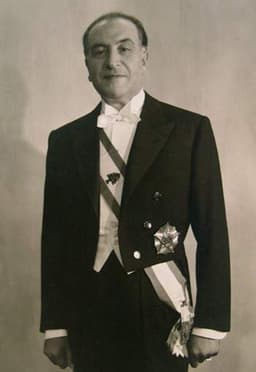
Fuad Chehab
General · Modern
49.9Total
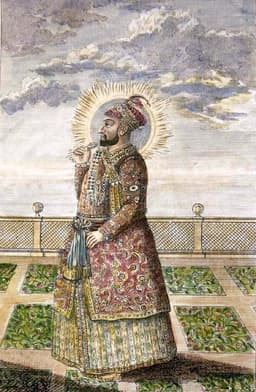
Hyder Ali
General · Modern
69.4Total
Basic Information
Born
1902
1720
Died
1973
1782
Era
Modern
Modern
Nationality
Lebanon
India
Occupation
General
General
Civilization
Middle Eastern
Indian
Score Comparison
Military (10%)
10.2
80.0
Political (20%)
70.0
65.7
Influence (20%)
54.1
82.0
Legacy (20%)
44.2
56.0
Leadership (15%)
72.0
68.0
Strategy (15%)
30.3
68.0
TOTAL
49.9
69.4
Fuad Chehab — Complete Timeline
1958 AD
Launched Chehabist reforms and modernizationReform◆ Major
President Chehab implemented a series of reforms known as Chehabism, including administrative modernization, economic planning, and strengthening state institutions. He established the Central Bank of Lebanon and the Civil Service Board.
ReformModernizationState Building
Impact: nationalconstructive
Elected President of LebanonPolitical Action◆ Major
Fuad Chehab was elected President of Lebanon on September 23, 1958, succeeding Camille Chamoun. His election ended the 1958 crisis and was supported by both Christian and Muslim factions seeking stability.
PresidencyElectionStabilization
Impact: nationalconstructive
Created the Deuxième Bureau intelligence agencyPolitical Action
Chehab expanded the role of the Deuxi
IntelligenceSecurityAuthoritarianism
Impact: national
1960 AD
Presided over the 1960s economic boomOther
Under Chehab's presidency, Lebanon experienced a period of economic growth and stability, with Beirut becoming a major financial and tourism hub. His policies attracted foreign investment and expanded the middle class.
Economic GrowthBeirutProsperity
Impact: nationalconstructive
1964 AD
Refused to amend constitution for a second termPolitical Action
Chehab declined to seek a second term as president, respecting the constitutional limit. He retired from politics in 1964, setting a precedent for peaceful transitions of power in Lebanon.
ConstitutionTerm LimitRetirement
Impact: nationalconstructive
Hyder Ali — Complete Timeline
1757 AD
Battle of PlasseyWar◆ Major
Hyder Ali, as a commander under the Wodeyar dynasty, participated in the Battle of Plassey indirectly by supporting the French against the British. However, his major role came later. This battle marked the beginning of British dominance in Bengal, which Hyder Ali would later challenge in the Carnatic Wars.
Carnatic WarsBritish East India CompanyMysore
Impact: regional
1761 AD
Capture of the throne of MysorePolitical Action◆ Major
Hyder Ali, a military commander, overthrew the Wodeyar ruler Krishnaraja Wodeyar II and established himself as the de facto ruler of Mysore. He imprisoned the maharaja and assumed full control, transforming Mysore into a powerful state through military reforms and expansion.
CoupMysore KingdomWodeyar Dynasty
Impact: regionaldestructive
1767 AD
First Anglo-Mysore WarWar◆ Major
Hyder Ali led Mysore against the British East India Company in the First Anglo-Mysore War. He formed alliances with the Nizam of Hyderabad and the Marathas. The war ended with the Treaty of Madras in 1769, which restored conquered territories and established a defensive alliance between Mysore and the British.
Anglo-Mysore WarsTreaty of MadrasBritish India
Impact: regional
1780 AD
Second Anglo-Mysore WarWar◆ Major
Hyder Ali launched the Second Anglo-Mysore War, attacking British territories in the Carnatic. He captured Arcot and defeated British forces at Pollilur. The war continued after his death in 1782, with his son Tipu Sultan taking command. The conflict ended with the Treaty of Mangalore in 1784.
Anglo-Mysore WarsBattle of PollilurTipu Sultan
Impact: regional
Expert Analysis
Fuad Chehab vs Hyder Ali
# The General Who Refused Power, and the General Who Seized It
On a September morning in 1958, Fuad Chehab stood before the Lebanese parliament and accepted a presidency he had never sought. Across the centuries and continents, another general—Hyder Ali—was doing something very different. In 1761, Hyder Ali had already taken the throne of Mysore by force, overthrowing his own king. Two generals. Two paths. One refused to hold power beyond its constitutional limit; the other built an empire from a coup. What drove them apart was not just time or place, but the very nature of the worlds they inhabited.
Origins
Fuad Chehab was born in 1902 into a family of Lebanese aristocrats, descendants of the old emirs of Mount Lebanon. His was a world of Ottoman decline, French mandates, and sectarian tensions. He joined the French-trained Troupes Spéciales du Levant, learning to navigate between colonial masters and local loyalties. Lebanon was a mosaic of Maronites, Sunnis, Shia, Druze, and Orthodox Christians—a country where a soldier had to be a diplomat first.
Hyder Ali, born in 1720, came from a very different soil. He was a soldier of fortune in the Deccan, rising through the ranks of the Wodeyar kingdom of Mysore. His India was a chessboard of collapsing Mughal authority, rising Maratha power, and the creeping menace of the British East India Company. Hyder learned war as a way of life, not as a profession. He could read no book, but he could read a battlefield. His world demanded ruthlessness; there was no room for a gentleman’s restraint.
Rise to Power
Chehab’s rise was quiet, almost reluctant. He became commander of the Lebanese army in 1945, a force so weak it could barely defend Beirut’s airport. His moment came in 1958, when Lebanon’s sectarian factions erupted into civil war over President Camille Chamoun’s attempt to amend the constitution for a second term. The United States landed Marines in Beirut. Chehab, a Maronite Christian, emerged as the compromise candidate—trusted by Muslims for his neutrality, respected by Christians for his integrity. He was elected president on September 23, 1958, not because he wanted power, but because Lebanon needed a healer.
Hyder Ali’s rise was a coup d’état. In 1761, after years as a military commander, he deposed the young Wodeyar king Krishnaraja Wodeyar II and declared himself the de facto ruler of Mysore. He did not abolish the monarchy—he kept the king as a puppet—but real power now rested in his hands. The difference is stark: Chehab inherited a fractured state and tried to mend it; Hyder Ali broke the existing order to build his own.
Leadership & Governance
Chehabism was a philosophy of cautious reform. Chehab expanded the state’s role in the economy, launched development projects, and created the Deuxième Bureau—a military intelligence agency meant to monitor political opponents and prevent sectarian violence. He believed that a strong, impartial state could rise above Lebanon’s communal divisions. Under his watch, Beirut boomed in the 1960s, becoming a financial hub. But his methods were not always gentle: the Deuxième Bureau became a tool of surveillance, and his reforms often stalled against entrenched elites.
Hyder Ali governed as a warrior-king. He modernized Mysore’s army with French-trained artillery, built a formidable cavalry, and created a revenue system that funded his wars. His military genius shone in the First Anglo-Mysore War (1767–1769), where he forced the British East India Company to sign a humiliating treaty. In the Second Anglo-Mysore War (1780), he captured Arcot and threatened Madras itself. He was a master of guerrilla tactics, using the monsoon and the jungle to neutralize British firepower. His rule was personal, autocratic, and effective—but it left no room for the kind of institutional reform Chehab attempted.
Triumph & Tragedy
Chehab’s greatest triumph was his refusal to amend the constitution for a second term in 1964. He stepped down, honoring the rule of law, and retired to his village. It was a rare act of self-restraint in a region where leaders cling to power. His tragedy was that his vision of a strong, unified Lebanon did not outlast him. The Chehabist project faded, and the sectarian tensions he tried to suppress erupted again in 1975, two years after his death.
Hyder Ali’s triumph was his defiance of the British. He made Mysore a power that London had to take seriously. His tragedy was his death in 1782, during the Second Anglo-Mysore War, before he could complete his campaign. His son Tipu Sultan inherited a war that would eventually destroy Mysore. Hyder’s empire was built on his personal authority—and it died with him.
Character & Destiny
Chehab was a man of discipline and humility. He once said, “I do not want to be a president who rules; I want to be a president who serves.” His personality was shaped by the fragility of Lebanon—a country where a single misstep could ignite civil war. He chose caution over glory, reform over revolution. His destiny was to be a caretaker, not a conqueror.
Hyder Ali was a man of ambition and iron will. He saw the British as a mortal threat and fought them with every weapon available. His personality was forged in the furnace of eighteenth-century warfare, where mercy was weakness and hesitation was death. He chose to seize power, to expand it, and to risk everything in battle. His destiny was to be a fighter, not a builder.
Legacy
Chehab is remembered in Lebanon as a symbol of integrity. His name survives in “Chehabism,” a term for moderate, state-led reform. But his legacy is ambiguous: his intelligence apparatus later became a tool of repression, and his reforms failed to prevent Lebanon’s collapse.
Hyder Ali is remembered as a pioneer of anti-colonial resistance. He is celebrated in India as a warrior who humbled the British. Yet his legacy is also one of authoritarian rule and endless war. He left no lasting institutions, only a son who fought and lost.
Conclusion
Two generals, two worlds. Chehab refused to hold power beyond its limit; Hyder Ali seized it and held it with an iron grip. Chehab tried to build a state that could transcend its divisions; Hyder Ali built an army that could defy an empire. Both failed in the end—Lebanon fell into civil war, Mysore fell to the British. But their failures illuminate the deepest truth of leadership: that a leader’s character is not just a personal trait, but a response to the world they are given. Chehab’s restraint was Lebanon’s hope; Hyder Ali’s ferocity was Mysore’s shield. Neither was wrong. They were simply men of their time, doing what their time demanded.
Rankings
🥇
Hyder AliLeader
Mil: 80.0Pol: 65.7Inf: 82.0
69.4
🥈
Fuad Chehab
Mil: 10.2Pol: 70.0Inf: 54.1
49.9
+19.5 behind
How This Comparison Works
Algorithm
Each figure is scored on 6 dimensions (0—100 scale) based on structured historical data: Military (10%), Political (20%), Influence (20%), Legacy (20%), Leadership (15%), Strategy (15%). The weighted total produces the final ranking.
Data Sources
Scores are computed from structured sub-indicators in the database. Scale factors adjust for era (Ancient ×0.85, Modern ×1.0) and civilization size (Eastern ×1.05, Other ×0.80) to account for differences in population and military scale.
Maximum 3 Figures
Comparisons are limited to 2—3 figures to ensure readability and statistical meaningfulness.
Error Margins
±5 points per dimension — Sub-scores are derived from historical records with inherent uncertainty. Two figures within 5 points on a dimension should be considered roughly equivalent in that area.
Total Score Accuracy
±3 points overall — The weighted combination of 6 dimensions produces a total score with approximately ±3 points of uncertainty. Differences of less than 3 points are not statistically significant— the figures are effectively tied.
Known Limitations
- Historical records are incomplete and uneven across civilizations
- Figures from oral-tradition societies may be underrepresented
- Occupation labels can misclassify multi-role figures
- Scores measure capability and impact, not moral character
- Quantitative scoring is a comparison tool, not absolute truth
Capability Radar
Military (10%) — Battles & Warfare
Battles
5
78
Win Rate
5
72
Expansion
5
70
Political (20%) — Governance & Reform
Reform
65
70
Diplomacy
60
68
Economy
50
60
Influence (20%) — Cultural & Global Reach
Cultural
30
50
Global
25
50
Legacy (20%) — Historical Impact
Historical
35
55
Longevity
30
45
Leadership (15%) — Power & Stability
Tenure
55
65
Stability
45
55
Strategy (15%) — Tactics & Innovation
Strategy
10
80
Tactics
10
85
Reform
20
75
Similar Comparisons
Comments & Discussion
Emir of Bayonets6/16/2026
Chehab was a colonial officer playing at statesmanship, and it showed. His "constitutional humility" wasn't virtue—it was paralysis. Lebanon's 1958 crisis demanded a Caesar, not a caretaker. By refusing to consolidate power, he left the country to the militias that would tear it apart in '75. Compare to Hyder: illiterate, but he knew power waits for no man. Chehab read too many French civics manuals; Hyder read the terrain. One built nothing; the other carved an empire from chaos.
王朝铁骑6/16/2026
说海德尔是“文盲将军”完全是欧洲史观的傲慢。他创立了第一个用火箭技术的南亚军队,其铁甲骑兵能在一昼夜内行军120公里,这在18世纪堪称装甲师级机动。切哈布呢?他在1958年让黎巴嫩军队保持中立——这算什么统帅?军人就该在危机时刻掌权,而不是把国家交给政客的妥协游戏。海德尔用实力说话,切哈布用沉默治国。
数据怀疑论者6/16/2026
拿1950年代黎巴嫩跟1760年代迈索尔比,本身就是伪命题。切哈布任期4年GDP增长率7.2%,而海德尔在与英国人打消耗战时,迈索尔财政收入暴跌了40%。权力游戏背后是经济基础。切哈布拒绝连任是理性的——黎巴嫩教派结构注定了任何强人都会引爆内爆。海德尔靠掠夺战利品维持政权,但可持续性为零。两位将军都聪明地读懂了各自时代的经济红线,别把他们的选择神化成道德或暴力寓言。
The Coup Connoisseur6/16/2026
The real difference isn't virtue vs ambition—it's institutional trust. Chehab inherited a French-built officer corps that respected constitutional forms; Hyder rose through a warband system where loyalty was personal and violence was the currency. Chehab's "refusal" of power is meaningless when the state already had mechanisms to distribute it. Hyder's "seizure" was the only path in a world without rule of law. Both men were rational actors within their cages. Don't moralize structure.