Loading...
Fuad Chehab vs Oliver Cromwell
Oliver Cromwell leads by 21.9 pts · 2 figures compared
…
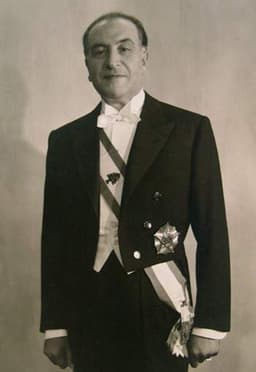
Fuad Chehab
General · Modern
49.9Total
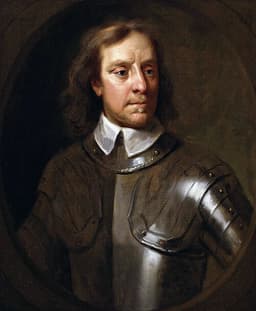
Oliver Cromwell
General · Modern
71.8Total
Basic Information
Born
1902
1599
Died
1973
1658
Era
Modern
Modern
Nationality
Lebanon
England
Occupation
General
General
Civilization
Middle Eastern
Western
Score Comparison
Military (10%)
10.2
82.0
Political (20%)
70.0
55.0
Influence (20%)
54.1
82.0
Legacy (20%)
44.2
72.0
Leadership (15%)
72.0
62.0
Strategy (15%)
30.3
75.0
TOTAL
49.9
71.8
Fuad Chehab — Complete Timeline
1958 AD
Launched Chehabist reforms and modernizationReform◆ Major
President Chehab implemented a series of reforms known as Chehabism, including administrative modernization, economic planning, and strengthening state institutions. He established the Central Bank of Lebanon and the Civil Service Board.
ReformModernizationState Building
Impact: nationalconstructive
Elected President of LebanonPolitical Action◆ Major
Fuad Chehab was elected President of Lebanon on September 23, 1958, succeeding Camille Chamoun. His election ended the 1958 crisis and was supported by both Christian and Muslim factions seeking stability.
PresidencyElectionStabilization
Impact: nationalconstructive
Created the Deuxième Bureau intelligence agencyPolitical Action
Chehab expanded the role of the Deuxi
IntelligenceSecurityAuthoritarianism
Impact: national
1960 AD
Presided over the 1960s economic boomOther
Under Chehab's presidency, Lebanon experienced a period of economic growth and stability, with Beirut becoming a major financial and tourism hub. His policies attracted foreign investment and expanded the middle class.
Economic GrowthBeirutProsperity
Impact: nationalconstructive
1964 AD
Refused to amend constitution for a second termPolitical Action
Chehab declined to seek a second term as president, respecting the constitutional limit. He retired from politics in 1964, setting a precedent for peaceful transitions of power in Lebanon.
ConstitutionTerm LimitRetirement
Impact: nationalconstructive
Oliver Cromwell — Complete Timeline
1644 AD
Battle of Marston MoorWar◆ Major
Cromwell, as a cavalry commander in the Parliamentarian army, played a key role in the decisive victory over Royalist forces at Marston Moor. This battle secured Parliament's control of northern England and boosted Cromwell's military reputation.
English Civil WarParliamentarianCavalry
Impact: national
1645 AD
Battle of NasebyWar
Cromwell led the New Model Army to a decisive victory over King Charles I's forces at Naseby. This battle effectively ended the First English Civil War, leading to the capture of the king and Parliament's supremacy.
English Civil WarNew Model ArmyRoyalist Defeat
Impact: national
1649 AD
Cromwellian Conquest of IrelandWar◆ Major
Cromwell led a brutal military campaign in Ireland to suppress the Irish Confederacy and Royalist alliance. His forces massacred garrisons at Drogheda and Wexford, resulting in widespread death and land confiscation, cementing English Protestant dominance.
IrelandConquestMassacre
Impact: regionaldestructive
Execution of King Charles IPolitical Action
Cromwell was a leading figure in the trial and execution of King Charles I for treason. This unprecedented act abolished the monarchy and established the Commonwealth of England, a republican government.
RegicideCommonwealthRepublic
Impact: globaldestructive
1653 AD
Appointment as Lord ProtectorPolitical Action◆ Major
Cromwell was installed as Lord Protector of the Commonwealth of England, Scotland, and Ireland, effectively becoming head of state. He ruled as a military dictator, dissolving parliaments and imposing Puritan moral laws.
Lord ProtectorCommonwealthDictatorship
Impact: national
Expert Analysis
Oliver Cromwell vs Fuad Chehab
### The General and the Guardian: Cromwell and Chehab
On a cold January morning in 1649, Oliver Cromwell stood in the Palace of Westminster as a king was condemned to death, an act so audacious it shattered the divine right of monarchy across Europe. Three centuries later, in the summer of 1958, Fuad Chehab rode a wave of crisis into the presidential palace in Beirut, not to destroy a throne but to save a fragile nation from tearing itself apart. One man wielded the sword to remake his world; the other used the law to hold his together. What drove these two generals—both products of chaos, both hailed as saviors in their time—to such different destinies?
### Origins
Cromwell was born into the English gentry in 1599, a time when religious fury and royal absolutism were colliding. His Puritan faith was not merely a personal piety but a political weapon; he believed himself an instrument of God’s will, a conviction that hardened during the Civil Wars. Chehab, born in 1902, came from a different world—a Lebanon still part of the Ottoman Empire, where Maronite Christians, Sunni Muslims, Druze, and others lived in a delicate, often violent, equilibrium. Where Cromwell saw a cosmic struggle between righteousness and tyranny, Chehab saw a mosaic that could shatter with one wrong step. His family had served the Ottoman sultans and the French Mandate alike, teaching him that survival meant balance, not conquest.
### Rise to Power
Cromwell entered history on horseback. At the Battle of Marston Moor in 1644, his cavalry charges broke the Royalist lines, earning him a reputation as a military genius. But his true turning point came at Naseby in 1645, where his New Model Army—a disciplined, godly force—annihilated King Charles I’s last hope. Cromwell did not seek power through politics; he seized it through victory. Chehab’s ascent was quieter but no less dramatic. In 1958, Lebanon was engulfed in a civil conflict between pro-Western President Camille Chamoun and Arab nationalist rebels. As army commander, Chehab refused to use the military to crush the opposition, earning trust from both sides. When a compromise made him president, he stepped in not as a conqueror but as a referee.
### Leadership & Governance
As Lord Protector from 1653, Cromwell ruled England as a military dictator wrapped in republican language. He banned theaters, enforced Puritan morality, and crushed the Levellers who demanded democracy. His military brilliance was undeniable—his conquest of Ireland in 1649 remains one of the most brutal chapters in British history, with massacres at Drogheda and Wexford that still echo. Yet he also reformed the legal system and tolerated Jews to return to England, a rare moment of enlightenment. Chehab’s Chehabism was the opposite: a philosophy of state-building through moderation. He created the Deuxième Bureau intelligence agency to monitor extremists, but also launched economic planning, modernized the bureaucracy, and balanced sectarian appointments. His Lebanon boomed in the 1960s, with Beirut becoming a financial hub. Where Cromwell ruled by the sword, Chehab governed by the ledger.
### Triumph & Tragedy
Cromwell’s triumph was the execution of a king—an act that declared no man above the law. His tragedy was that he became the very tyrant he fought. He dissolved Parliament repeatedly, ruled without consent, and died in 1658 with his republic crumbling. Within two years, the monarchy was restored, and his body was dug up and hanged. Chehab’s triumph was the 1960s economic boom and the prevention of a full-blown civil war. His tragedy was that his reforms were too shallow. The Deuxième Bureau became a tool of surveillance and repression. When he refused a second term in 1964, respecting the constitution, he left a system that soon collapsed into the 1975 civil war. His moderation bought time, but not peace.
### Character & Destiny
Cromwell’s character was fire: uncompromising, convinced of his divine mission, willing to burn the old world to build a new one. “I had rather have a plain, russet-coated captain that knows what he fights for, and loves what he knows,” he once said. That passion made him a revolutionary but also a destroyer. Chehab’s character was water: patient, calculating, skeptical of absolutes. He told an aide, “I am not a savior, only a caretaker.” His caution preserved Lebanon for a decade but could not heal its wounds. One believed history was a battle to be won; the other, a balance to be kept.
### Legacy
Cromwell is remembered as both a champion of liberty and a war criminal. In England, his statue stands outside Parliament, but in Ireland, his name is a curse. He shaped the idea of a republic that would later inspire America and France. Chehab is a more ambiguous figure. In Lebanon, he is revered as a rare honest leader, but his intelligence state is blamed for later abuses. His Chehabism—a vision of a strong, neutral state—is still invoked, though never realized. Both men prove that generals who become rulers leave deep marks, but the direction of those marks depends on whether they choose to break or to mend.
### Conclusion
Standing at the edge of their eras, Cromwell and Chehab reveal a profound truth about power: it is not the uniform that defines a leader, but the humility to know what cannot be conquered. Cromwell tried to remake England in God’s image and failed; Chehab tried to hold Lebanon together in man’s image and only delayed the fall. Perhaps the most lasting lesson is that the greatest generals are not those who win the most battles, but those who understand that some wars are not meant to be won—only endured.
Rankings
🥇
Oliver CromwellLeader
Mil: 82.0Pol: 55.0Inf: 82.0
71.8
🥈
Fuad Chehab
Mil: 10.2Pol: 70.0Inf: 54.1
49.9
+21.9 behind
How This Comparison Works
Algorithm
Each figure is scored on 6 dimensions (0—100 scale) based on structured historical data: Military (10%), Political (20%), Influence (20%), Legacy (20%), Leadership (15%), Strategy (15%). The weighted total produces the final ranking.
Data Sources
Scores are computed from structured sub-indicators in the database. Scale factors adjust for era (Ancient ×0.85, Modern ×1.0) and civilization size (Eastern ×1.05, Other ×0.80) to account for differences in population and military scale.
Maximum 3 Figures
Comparisons are limited to 2—3 figures to ensure readability and statistical meaningfulness.
Error Margins
±5 points per dimension — Sub-scores are derived from historical records with inherent uncertainty. Two figures within 5 points on a dimension should be considered roughly equivalent in that area.
Total Score Accuracy
±3 points overall — The weighted combination of 6 dimensions produces a total score with approximately ±3 points of uncertainty. Differences of less than 3 points are not statistically significant— the figures are effectively tied.
Known Limitations
- Historical records are incomplete and uneven across civilizations
- Figures from oral-tradition societies may be underrepresented
- Occupation labels can misclassify multi-role figures
- Scores measure capability and impact, not moral character
- Quantitative scoring is a comparison tool, not absolute truth
Capability Radar
Military (10%) — Battles & Warfare
Battles
5
75
Win Rate
5
80
Expansion
5
60
Political (20%) — Governance & Reform
Reform
65
75
Diplomacy
60
60
Economy
50
65
Influence (20%) — Cultural & Global Reach
Cultural
30
65
Global
25
65
Legacy (20%) — Historical Impact
Historical
35
80
Longevity
30
70
Leadership (15%) — Power & Stability
Tenure
55
70
Stability
45
55
Strategy (15%) — Tactics & Innovation
Strategy
10
82
Tactics
10
78
Reform
20
85
Similar Comparisons
Comments & Discussion
The Sword of the Commonwealth6/16/2026
Cromwell was God’s iron fist against tyranny, Chehab was a careful steward of a house of cards. Cromwell’s New Model Army crushed royalist opposition decisively at Naseby and Preston, reshaping Parliament’s authority. But Chehab’s greatest maneuver was political—he refused to unleash the army fully in 1958, even when Lebanon begged for order. That’s not a general; that’s a caretaker. Cromwell understood that to lead, you sometimes have to break.
数据猎手6/16/2026
从数据看,Cromwell一生打了超过10场大型战役,而Chehab的主要战绩是平息一场内战,还是靠谈判。这算军事对比?Cromwell直接处决君主,推翻体制;Chehab在位6年,经济成长率从4%爬到6%左右,政策温和得像白开水。一个革命,一个管理,放一块比较实在勉强。别被“改革者”标签忽悠了。
Hoplite Historian6/16/2026
Comparing a Puritan zealot who dissolved Parliament at swordpoint to a Maronite general who resisted military dictatorship is fascinatingly absurd. Cromwell was a revolutionary fundamentalist, Chehab a constitutional improviser. Chehab’s 1958 intervention actually preserved Lebanon’s fragile sectarian democracy, not crushed it—quite the opposite of Cromwell’s Rump Parliament purge. One tore down institutions to remake them; the other patched up the cracks. Different souls entirely.
铁血考据党6/16/2026
Cromwell在1649年处决查理一世后,建立了英格兰共和国,但1653年又自封护国公,本质是军事独裁。Chehab呢?1958年上任后推行“谢哈比主义”,加强国家机构而非个人权力,甚至拒绝连任修改宪法。一个把自己推上权力顶峰,一个主动守规矩。你能说他们都是“强人”?Chehab更像现代政治家的模板,Cromwell则是个中世纪的暴君前身。
The Revisionist Lens6/16/2026
Stop romanticizing Cromwell as a liberator—he was a genocidal colonizer in Ireland, slaughtering thousands at Drogheda and Wexford, puritans imposing terror. Chehab, flawed as he was, at least tried to balance Lebanon’s fractious communities without ethnic cleansing. Cromwell’s legacy is soaked in blood and religious conquest; Chehab’s is a cautionary tale of failed institutionalism but genuine pluralism. One led a crusade, the other a tightrope act. Not the same category.