Loading...
Fuad Chehab vs Samori Toure
Samori Toure leads by 20.6 pts · 2 figures compared
…
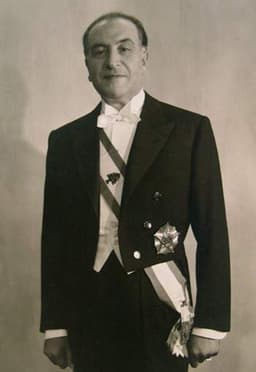
Fuad Chehab
General · Modern
49.9Total
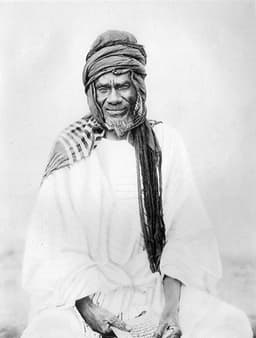
Samori Toure
General · Modern
70.5Total
Basic Information
Born
1902
1830
Died
1973
1900
Era
Modern
Modern
Nationality
Lebanon
Wassoulou Empire
Occupation
General
General
Civilization
Middle Eastern
Other
Score Comparison
Military (10%)
10.2
60.0
Political (20%)
70.0
78.0
Influence (20%)
54.1
68.0
Legacy (20%)
44.2
72.0
Leadership (15%)
72.0
72.0
Strategy (15%)
30.3
70.0
TOTAL
49.9
70.5
Fuad Chehab — Complete Timeline
1958 AD
Launched Chehabist reforms and modernizationReform◆ Major
President Chehab implemented a series of reforms known as Chehabism, including administrative modernization, economic planning, and strengthening state institutions. He established the Central Bank of Lebanon and the Civil Service Board.
ReformModernizationState Building
Impact: nationalconstructive
Elected President of LebanonPolitical Action◆ Major
Fuad Chehab was elected President of Lebanon on September 23, 1958, succeeding Camille Chamoun. His election ended the 1958 crisis and was supported by both Christian and Muslim factions seeking stability.
PresidencyElectionStabilization
Impact: nationalconstructive
Created the Deuxième Bureau intelligence agencyPolitical Action
Chehab expanded the role of the Deuxi
IntelligenceSecurityAuthoritarianism
Impact: national
1960 AD
Presided over the 1960s economic boomOther
Under Chehab's presidency, Lebanon experienced a period of economic growth and stability, with Beirut becoming a major financial and tourism hub. His policies attracted foreign investment and expanded the middle class.
Economic GrowthBeirutProsperity
Impact: nationalconstructive
1964 AD
Refused to amend constitution for a second termPolitical Action
Chehab declined to seek a second term as president, respecting the constitutional limit. He retired from politics in 1964, setting a precedent for peaceful transitions of power in Lebanon.
ConstitutionTerm LimitRetirement
Impact: nationalconstructive
Samori Toure — Complete Timeline
1878 AD
Establishment of the Wassoulou EmpirePolitical Action
Samori Toure founded the Wassoulou Empire in West Africa, uniting various Mandinka states under his rule. He established a centralized administration and a professional army, creating a powerful state that resisted French expansion.
EmpireWassoulouUnification
Impact: regionalconstructive
1880 AD
Military Reforms and ModernizationReform◆ Major
Samori Toure modernized his army by importing firearms from European traders and establishing a standing army of up to 35,000 men. He organized his forces into regular units and introduced new tactics, making them effective against French troops.
Military ReformFirearmsArmy
Impact: regionalconstructive
1882 AD
First Franco-Wassoulou WarWar◆ Major
Samori Toure's forces fought the French army in the first major conflict between the Wassoulou Empire and France. The war ended with a treaty in 1886, recognizing Samori's control over the Niger River region.
WarFranceTreaty
Impact: regional
1891 AD
Second Franco-Wassoulou WarWar◆ Major
The French resumed hostilities, forcing Samori to retreat eastward. He employed a scorched-earth strategy, destroying villages and crops to deny resources to the French, prolonging the conflict for years.
WarScorched EarthRetreat
Impact: regionaltragic
1898 AD
Capture and ExileWar
Samori Toure was captured by French forces after a long campaign. He was exiled to Gabon, where he died in 1900. His capture ended the Wassoulou Empire and marked the completion of French conquest in West Africa.
CaptureExileEnd of Empire
Impact: regionaltragic
Expert Analysis
Fuad Chehab vs Samori Toure
# The General and the Statesman: Two Paths of Power in a Turbulent World
On a humid morning in 1898, a French colonel watched as the legendary Samori Toure, once master of an empire stretching from the upper Niger to the Liberian forests, was led in chains onto a steamer bound for Gabon. Sixty years later and half a world away, Fuad Chehab stood on the balcony of the Baabda Palace in Beirut, watching a different kind of conquest unfold—the peaceful transition of power after Lebanon’s first civil war. Both men were generals. Both faced empires and chaos. But their journeys reveal how the same profession could lead to radically different destinies when shaped by vastly different worlds.
Origins
Samori Toure was born around 1830 in what is now Guinea, into a family of Dyula traders. His early life was marked by the upheaval of the collapsing Mali Empire and the rising tide of European encroachment. He learned war as a young man, serving under local chiefs before striking out on his own. The son of a trader and a warrior, he absorbed the harsh lessons of the savanna: that power belonged to those who could adapt, and that the only law the Europeans respected was force.
Fuad Chehab entered the world in 1902, in Beirut, then part of the Ottoman Empire. He was born into a Maronite Christian family of aristocratic lineage—his great-grandfather had been a governor under the Ottomans. Educated at the French Jesuit College and later at the military academy in Damascus, Chehab was shaped by the delicate balance of Lebanon’s sectarian mosaic. Where Samori learned to fight, Chehab learned to negotiate.
Rise to Power
Samori’s path to power was carved by the sword and the gun. In 1878, he established the Wassoulou Empire, uniting Mandinka states through a combination of military conquest and political marriage. His genius lay in his ability to see the future: he understood that the old ways of warfare were obsolete. By 1880, he had begun a sweeping military modernization, importing breech-loading rifles from European traders and building a standing army of up to 30,000 men, organized in European-style companies. He was not just a warrior; he was a reformer who saw that survival required transformation.
Chehab’s rise was quieter but no less strategic. A career soldier, he served as commander of the Lebanese army during the 1958 crisis, when the country teetered on the brink of disintegration amid sectarian violence. He refused to commit troops to either side, earning the trust of all factions. When President Camille Chamoun stepped down, Chehab was the compromise candidate—a general who had proven he could be above the fray. On September 23, 1958, he was elected president, inheriting a nation scarred by war.
Leadership & Governance
Samori Toure governed as a war-king. His empire was a military machine designed for a single purpose: resistance. He moved his capital eastward as the French pressed, burning villages and crops behind him to deny the enemy supplies. His reforms were pragmatic: he standardized weights and measures, encouraged trade, and maintained a network of spies. But his rule was autocratic, and his vision was defined by opposition. He could not build a lasting state because he could not stop fighting.
Chehab, by contrast, governed as a referee. His philosophy, known as Chehabism, was to strengthen the state as a neutral arbiter between Lebanon’s 18 sects. He launched administrative reforms, created a national planning council, and expanded the Deuxième Bureau, the military intelligence agency, to monitor political opponents—a move that would later be criticized as authoritarian. But he also presided over an economic boom in the early 1960s, turning Beirut into a financial hub. His greatest act of statesmanship came in 1964, when he refused to amend the constitution for a second term. He walked away from power, respecting the law.
Triumph & Tragedy
Samori’s greatest triumph was his longevity. For nearly two decades, he held off the French army—the most powerful military force in Africa—through a combination of guerrilla tactics, scorched-earth retreats, and sheer will. His tragedy came in 1898, when he was captured in a surprise French attack. He was exiled to Gabon, where he died in 1900, his empire erased from the map.
Chehab’s triumph was the peace he preserved. Under his watch, Lebanon avoided another civil war, and the economy flourished. His tragedy was that his reforms did not outlast him. The Deuxième Bureau became a tool of repression, and the sectarian tensions he tried to manage would explode into a devastating civil war just a decade after his death.
Character & Destiny
Samori was a man of iron will. He trusted no one, fought to the end, and never surrendered—even in exile, he refused to bow. His destiny was to be a symbol of resistance, but his rigidity was also his flaw. He could not compromise because he could not afford to.
Chehab was a man of restraint. He was cautious, methodical, and deeply aware of Lebanon’s fragility. His destiny was to be a healer, but his caution meant he did not address the root causes of sectarianism. He managed the disease but did not cure it.
Legacy
Today, Samori Toure is remembered as a founding father of African resistance to colonialism. His name adorns streets and schools across West Africa. His legacy is one of defiance—a reminder that even in defeat, dignity can be preserved.
Chehab is remembered more ambiguously. In Lebanon, he is admired as a rare leader who put country before self, but his Chehabist model is seen as a failed experiment. His legacy is a cautionary tale: that stability without reform is only a temporary truce.
Conclusion
Standing at the end of their lives, Samori Toure and Fuad Chehab could not have been more different. One died in exile, his empire destroyed; the other died in retirement, his nation still whole. Yet both faced the same fundamental question: how does a leader hold together a fractured world? Samori answered with the sword; Chehab with the scales. Neither answer proved permanent. But in their different paths, they reveal the eternal tension of power—between the will to fight and the wisdom to yield, between the glory of resistance and the quiet duty of governance. Their stories remind us that history judges not by victory alone, but by the courage to lead in impossible times.
Rankings
🥇
Samori ToureLeader
Mil: 60.0Pol: 78.0Inf: 68.0
70.5
🥈
Fuad Chehab
Mil: 10.2Pol: 70.0Inf: 54.1
49.9
+20.6 behind
How This Comparison Works
Algorithm
Each figure is scored on 6 dimensions (0—100 scale) based on structured historical data: Military (10%), Political (20%), Influence (20%), Legacy (20%), Leadership (15%), Strategy (15%). The weighted total produces the final ranking.
Data Sources
Scores are computed from structured sub-indicators in the database. Scale factors adjust for era (Ancient ×0.85, Modern ×1.0) and civilization size (Eastern ×1.05, Other ×0.80) to account for differences in population and military scale.
Maximum 3 Figures
Comparisons are limited to 2—3 figures to ensure readability and statistical meaningfulness.
Error Margins
±5 points per dimension — Sub-scores are derived from historical records with inherent uncertainty. Two figures within 5 points on a dimension should be considered roughly equivalent in that area.
Total Score Accuracy
±3 points overall — The weighted combination of 6 dimensions produces a total score with approximately ±3 points of uncertainty. Differences of less than 3 points are not statistically significant— the figures are effectively tied.
Known Limitations
- Historical records are incomplete and uneven across civilizations
- Figures from oral-tradition societies may be underrepresented
- Occupation labels can misclassify multi-role figures
- Scores measure capability and impact, not moral character
- Quantitative scoring is a comparison tool, not absolute truth
Capability Radar
Military (10%) — Battles & Warfare
Battles
5
75
Win Rate
5
65
Expansion
5
60
Political (20%) — Governance & Reform
Reform
65
75
Diplomacy
60
80
Economy
50
60
Influence (20%) — Cultural & Global Reach
Cultural
30
65
Global
25
55
Legacy (20%) — Historical Impact
Historical
35
70
Longevity
30
60
Leadership (15%) — Power & Stability
Tenure
55
70
Stability
45
55
Strategy (15%) — Tactics & Innovation
Strategy
10
85
Tactics
10
80
Reform
20
70
Similar Comparisons
Comments & Discussion
Samurai's Shadow6/16/2026
The comparison game is rigged from the start. Samori Toure built an actual empire from scratch using guerrilla warfare that'd make modern special forces jealous, while Chehab inherited a cushy French mandate position and his biggest challenge was keeping a UN building standing. Toure's brechpot rifle production system outpaced anything Chehab ever organized. Apples to oranges? More like comparing a lion to a house cat. Toure fought forty years against three European powers simultaneously; Chehab
沙漠之矛6/16/2026
两人根本不在一个战场维度。萨摩里·杜尔在非洲腹地对抗法国殖民机器时,夏哈布还在贝鲁特的法国耶稣会学院读拉丁文。杜尔1898年被俘时,他的火药制造作坊已经能月产千斤火药——这是实打实的工业化战争。而夏哈布1961年搞的"埃德勒改革"不过是在巴黎画好的篮图里涂涂改改。把杜尔放在黎巴嫩那种山头上,那些教派武装三十年前就被他碾碎了。