Loading...
Fuad Chehab vs Shaka Zulu
Shaka Zulu leads by 20.3 pts · 2 figures compared
…
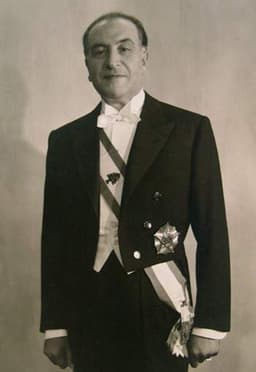
Fuad Chehab
General · Modern
49.9Total
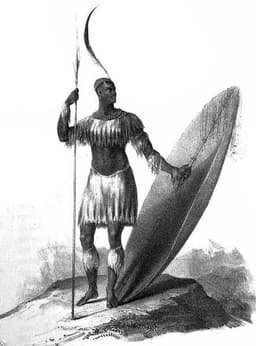
Shaka Zulu
General · Modern
70.2Total
Basic Information
Born
1902
1787
Died
1973
1828
Era
Modern
Modern
Nationality
Lebanon
Zulu Kingdom
Occupation
General
General
Civilization
Middle Eastern
Other
Score Comparison
Military (10%)
10.2
80.0
Political (20%)
70.0
72.0
Influence (20%)
54.1
68.0
Legacy (20%)
44.2
68.0
Leadership (15%)
72.0
62.0
Strategy (15%)
30.3
80.8
TOTAL
49.9
70.2
Fuad Chehab — Complete Timeline
1958 AD
Launched Chehabist reforms and modernizationReform◆ Major
President Chehab implemented a series of reforms known as Chehabism, including administrative modernization, economic planning, and strengthening state institutions. He established the Central Bank of Lebanon and the Civil Service Board.
ReformModernizationState Building
Impact: nationalconstructive
Elected President of LebanonPolitical Action◆ Major
Fuad Chehab was elected President of Lebanon on September 23, 1958, succeeding Camille Chamoun. His election ended the 1958 crisis and was supported by both Christian and Muslim factions seeking stability.
PresidencyElectionStabilization
Impact: nationalconstructive
Created the Deuxième Bureau intelligence agencyPolitical Action
Chehab expanded the role of the Deuxi
IntelligenceSecurityAuthoritarianism
Impact: national
1960 AD
Presided over the 1960s economic boomOther
Under Chehab's presidency, Lebanon experienced a period of economic growth and stability, with Beirut becoming a major financial and tourism hub. His policies attracted foreign investment and expanded the middle class.
Economic GrowthBeirutProsperity
Impact: nationalconstructive
1964 AD
Refused to amend constitution for a second termPolitical Action
Chehab declined to seek a second term as president, respecting the constitutional limit. He retired from politics in 1964, setting a precedent for peaceful transitions of power in Lebanon.
ConstitutionTerm LimitRetirement
Impact: nationalconstructive
Shaka Zulu — Complete Timeline
1816 AD
Introduction of the iklwa and horns of the buffalo formationReform
Shaka introduced the iklwa, a short stabbing spear, and the 'horns of the buffalo' tactical formation to the Zulu army. These innovations replaced the traditional throwing assegai and allowed for close-quarters combat, significantly increasing the Zulu's military effectiveness and enabling rapid conquest.
Military InnovationTacticsZulu Warfare
Impact: regional
1819 AD
Conquest of the Ndwandwe KingdomWar◆ Major
Shaka's Zulu army defeated the Ndwandwe kingdom at the Battle of Gqokli Hill, a decisive victory that eliminated a major rival. This conquest allowed Shaka to consolidate control over a large territory in present-day KwaZulu-Natal, marking the rise of the Zulu as a dominant regional power.
ConquestZulu ExpansionNdwandwe
Impact: regional
1828 AD
Assassination of ShakaPolitical Action◆ Major
Shaka was assassinated by his half-brothers Dingane and Mhlangana, with the support of his aunt Mkabayi. The coup ended his reign of terror and expansionist wars, leading to a period of instability and the eventual rise of Dingane as king.
AssassinationSuccession CrisisZulu Kingdom
Impact: regionaltragic
Expert Analysis
Shaka Zulu vs Fuad Chehab
# The General and the Statesman
On a dusty hill in what is now KwaZulu-Natal in 1828, a king lay dying, stabbed by his own brothers. Half a world away and 130 years later, a general in Beirut would refuse to amend his nation's constitution to stay in power, choosing retirement over the throne. What separates these two fates? Shaka Zulu and Fuad Chehab both commanded armies, both seized moments of crisis, and both sought to build something lasting. Yet one built an empire that crumbled within a decade of his death, while the other built institutions that still shape Lebanon today. The difference lies not in ambition, but in what each man believed power was for.
Origins
Shaka was born an outcast. His father, Senzangakhona, was a minor Zulu chief who refused to acknowledge him, and his mother, Nandi, was forced to flee the clan with her young son. Growing up in exile among the powerful Mthethwa kingdom, Shaka learned warfare from its great king, Dingiswayo, and internalized the brutal logic of a world where small clans survived only by submission or annihilation. The Mfecane—the violent upheaval sweeping southern Africa in the early 1800s—was already reshaping the landscape when Shaka inherited the Zulu chieftaincy in 1816. He was a product of chaos, and he would become its master.
Fuad Chehab was born into Lebanon's Maronite Christian elite in 1902, the nephew of a former president. His Lebanon was a patchwork of seventeen recognized religious sects, a fragile Ottoman inheritance that French Mandate rulers had carved into a state. Chehab trained as a soldier in French military academies, learning not just tactics but the bureaucratic arts of administration and intelligence. While Shaka learned to fight for survival, Chehab learned to balance—between sects, between empires, between tradition and modernity. His Lebanon was not a battlefield but a negotiation.
Rise to Power
Shaka's rise was swift and bloody. Upon becoming chief in 1816, he immediately reformed his small army, replacing the long throwing spear with the *iklwa*—a short, broad-bladed stabbing spear that forced warriors to fight hand-to-hand. He drilled his men relentlessly, forbade sandals to toughen their feet, and introduced the "horns of the buffalo" formation: a center of massed veterans to pin the enemy, while fast-moving flanks swept around to encircle them. By 1819, at the Battle of Gqokli Hill, his army of perhaps 5,000 defeated the Ndwandwe kingdom's 12,000 warriors, despite being surrounded. It was a victory of discipline over numbers, of innovation over tradition. Within a decade, Shaka had unified dozens of clans into the Zulu nation, ruling over a territory of 80,000 square miles.
Chehab's path was quieter but no less decisive. In 1958, Lebanon collapsed into civil conflict when President Camille Chamoun tried to amend the constitution to secure a second term. Muslim factions rebelled; the United States landed Marines. Chehab, as army commander, refused to use the military to crush the rebellion, earning trust from both sides. When a compromise was reached, he was elected president on September 23, 1958. Unlike Shaka, who seized power through conquest, Chehab was handed power precisely because he had not used it.
Leadership and Governance
Here the two men diverge most sharply. Shaka governed through fear and spectacle. He centralized all authority in his own person, executing rivals and even his own mother's mourners for insufficient grief. His military innovations were genius—the *iklwa* and the buffalo horns gave his army a decisive edge—but his political system had no mechanism for succession or stability. The Zulu state was Shaka, and when Shaka fell, so would the state.
Chehab, by contrast, governed through institutions. His "Chehabism" was a philosophy of modernization through state-building: he created a planning council, reformed the civil service, established the Central Bank, and expanded the Deuxième Bureau intelligence agency to monitor sectarian tensions. He presided over Lebanon's 1960s economic boom, when Beirut became the banking and tourism capital of the Middle East. But he was no democrat—the Deuxième Bureau spied on journalists and politicians, and Chehab believed a strong state was necessary to hold Lebanon's fractious sects together. His vision was paternalistic, not participatory.
Triumph and Tragedy
Shaka's greatest moment was also the seed of his destruction. By 1828, he ruled an empire, but his brutality had created a court of terrified survivors. His half-brothers Dingane and Mhlangana, supported by his aunt Mkabayi, assassinated him in September 1828. His final words, according to tradition, were a warning: "You think you will rule the land, but the white people are coming." Within fifty years, the Zulu kingdom would be crushed by British artillery at Isandlwana and Ulundi.
Chehab's tragedy was subtler. His refusal to seek a second term in 1964—respecting the constitution he had defended—left Lebanon without his stabilizing hand. The Deuxième Bureau, which he had built to monitor extremists, became a tool of repression under his successors. The sectarian system he tried to reform only hardened. By 1975, Lebanon would collapse into a fifteen-year civil war that destroyed much of what Chehab had built. His triumph was not in preventing disaster, but in delaying it long enough for a generation to know peace.
Character and Destiny
Shaka was a man of relentless will, unable to imagine a world where his power was not absolute. His military genius was real, but it was a genius for destruction, not construction. He could conquer but could not govern beyond his own person. His character demanded total control, and total control demanded his death.
Chehab was a man of restraint, a soldier who understood that in Lebanon, power was not about winning but about balancing. He could have become a dictator—the army was loyal, the opposition was weak, and the constitution could have been changed. But he chose to leave. His character was shaped by the knowledge that in a divided society, the leader who stays too long becomes the target. He understood that sometimes the greatest act of power is to let it go.
Legacy
Shaka is remembered as a military genius, the African Napoleon, the creator of the Zulu nation. But his legacy is ambiguous: he forged a people but also set them on a path to destruction. Today, he is a symbol of African resistance and pride, but also a warning about the costs of absolute power.
Chehab is remembered as Lebanon's great reformer, the president who could have been a dictator but chose not to be. His legacy is the institutions that survived the civil war—the Central Bank, the civil service, the tradition of a strong army. But he is also criticized for the Deuxième Bureau's abuses and for failing to address Lebanon's deeper sectarian divisions. Today, he is invoked by those who long for a Lebanon that might have been.
Conclusion
Standing at the end of their lives, Shaka and Chehab faced the same question: what do you leave behind? Shaka left an empire without an emperor, a machine of war with no one to guide it. Chehab left a state without a father, institutions that would outlast him but could not save his country from itself. Both men were products of their times—Shaka of a world where power meant conquest, Chehab of a world where power meant balance. Their different fates remind us that the greatest leaders are not those who build the most, but those who build what can last. And sometimes, the hardest thing to build is not an empire, but a future that does not depend on you.
Rankings
🥇
Shaka ZuluLeader
Mil: 80.0Pol: 72.0Inf: 68.0
70.2
🥈
Fuad Chehab
Mil: 10.2Pol: 70.0Inf: 54.1
49.9
+20.3 behind
How This Comparison Works
Algorithm
Each figure is scored on 6 dimensions (0—100 scale) based on structured historical data: Military (10%), Political (20%), Influence (20%), Legacy (20%), Leadership (15%), Strategy (15%). The weighted total produces the final ranking.
Data Sources
Scores are computed from structured sub-indicators in the database. Scale factors adjust for era (Ancient ×0.85, Modern ×1.0) and civilization size (Eastern ×1.05, Other ×0.80) to account for differences in population and military scale.
Maximum 3 Figures
Comparisons are limited to 2—3 figures to ensure readability and statistical meaningfulness.
Error Margins
±5 points per dimension — Sub-scores are derived from historical records with inherent uncertainty. Two figures within 5 points on a dimension should be considered roughly equivalent in that area.
Total Score Accuracy
±3 points overall — The weighted combination of 6 dimensions produces a total score with approximately ±3 points of uncertainty. Differences of less than 3 points are not statistically significant— the figures are effectively tied.
Known Limitations
- Historical records are incomplete and uneven across civilizations
- Figures from oral-tradition societies may be underrepresented
- Occupation labels can misclassify multi-role figures
- Scores measure capability and impact, not moral character
- Quantitative scoring is a comparison tool, not absolute truth
Capability Radar
Military (10%) — Battles & Warfare
Battles
5
85
Win Rate
5
90
Expansion
5
88
Political (20%) — Governance & Reform
Reform
65
85
Diplomacy
60
60
Economy
50
65
Influence (20%) — Cultural & Global Reach
Cultural
30
80
Global
25
70
Legacy (20%) — Historical Impact
Historical
35
85
Longevity
30
75
Leadership (15%) — Power & Stability
Tenure
55
70
Stability
45
55
Strategy (15%) — Tactics & Innovation
Strategy
10
90
Tactics
10
95
Reform
20
98
Similar Comparisons
Comments & Discussion
THE_SPEAR_AND_THE_SCYTHE6/16/2026
"Comparing Shaka to Chehab is like comparing a wildfire to a library fire extinguisher. Shaka militarized every aspect of Zulu society—his iklwa short stabbing spear and the 'buffalo horns' formation revolutionized African warfare and killed hundreds of thousands. Chehab? He literally refused a coup d'état opportunity in 1958. One man built a death machine, the other built a census bureau. Respect the statesman, but don't confuse state-building with butchering your neighbors in the Mfecane."
刺刀与宪法6/16/2026
“拿沙卡和谢哈布比,就像拿猎豹和乌龟赛跑——根本是两个物种。沙卡让祖鲁人十年内从三千人膨胀到二十五万,但靠的是屠杀和劫掠。谢哈布呢?他改革黎巴嫩军队,让基督徒和穆斯林一起扛枪,还建立社保制度。一个留下万人冢,一个留下退休金账户。数据不会撒谎:沙卡的帝国活不过1840年,谢哈布的军队建制至今还在用。”
HELLENIC_EYE6/16/2026
"The real contrast here is hubris versus humility. Shaka’s military innovations were undeniably brilliant—the encircling 'horns' formation was a forerunner of modern pincer movements—but he fatally believed his own myth, isolating himself with a bodyguard of celibate warriors and purging rivals until he had no allies left. Chehab, a Maronite Christian general, studied Lebanon’s sectarian math better than any tactician. He refused a second term because he knew governance requires trust, not spear
历史侦探6/16/2026
“你们都在讲军事,我来说点冷知识。沙卡死后仅仅三个月,他弟弟丁冈就把他亲信和‘牛角’指挥官全部处决。而谢哈布1964年退休时,亲自培养的接班人赫卢成功连任。区别在哪?沙卡把权力缝在自己身上,谢哈布把权力缝在制度里。更讽刺的是:沙卡发明的短刺矛后来让祖鲁人打不过布尔人的步枪,谢哈布设计的黎巴嫩军校课程至今是阿拉伯世界模板。短视的天才,真正的建设者。”
RADICAL_REVISIONIST6/16/2026
"Spare me the 'noble savage vs civilized statesman' framing. Shaka ruled in an era of total war where mercy meant annihilation—the British themselves later used scorched earth in the same region. Chehab governed a fractured post-colonial state propped up by French and US interests. Calling Shaka a failure because his empire 'crumbled' is like calling Spartacus a failure because Rome survived. The Zulu under Shaka doubled their territory