Loading...
This comparison has not been analyzed yet.
One-time AI generation (~1 minute). Scores and timeline are already available below.
Fuheng vs Lansana Conte
Fuheng leads by 7.8 pts · 2 figures compared
…

Fuheng
General · Modern
51.7Total
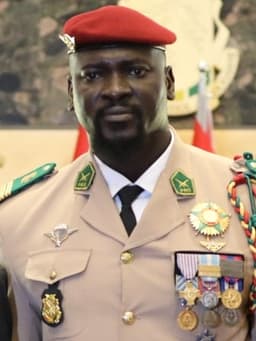
Lansana Conte
General · Modern
43.9Total
Basic Information
Born
1720
1934
Died
1770
—
Era
Modern
Modern
Nationality
China
Guinea
Occupation
General
General
Civilization
Eastern
Other
Score Comparison
Military (10%)
70.0
22.6
Political (20%)
40.8
33.6
Influence (20%)
51.0
50.2
Legacy (20%)
41.7
41.7
Leadership (15%)
64.5
74.0
Strategy (15%)
57.5
25.0
TOTAL
51.7
43.9
Fuheng — Complete Timeline
1747 AD
Led the First Jinchuan CampaignWar◆ Major
Fuheng was appointed commander of Qing forces in the First Jinchuan Campaign against the rebellious Tusi (local chieftains) in Sichuan. The campaign was marked by difficult terrain and fierce resistance, but ultimately resulted in Qing victory and the submission of the Jinchuan region.
Military CampaignJinchuanSichuan
Impact: regional
1750 AD
Appointed Grand SecretaryPolitical Action◆ Major
Fuheng was appointed Grand Secretary of the Qing Empire, recognizing his military successes and administrative abilities. He became a trusted advisor to the Qianlong Emperor and played a key role in shaping military policy.
AppointmentGovernmentQianlong Era
Impact: national
1770 AD
Died in OfficeOther
Fuheng died while still serving as Grand Secretary and military commander. His death occurred during the Second Jinchuan Campaign, which he had been leading. He was posthumously honored by the Qianlong Emperor.
DeathMilitaryQianlong Era
Impact: national
1771 AD
Led the Second Jinchuan CampaignWar◆ Major
Fuheng again led Qing forces in the Second Jinchuan Campaign, a protracted and costly war against the Jinchuan Tusi. The campaign lasted until 1776 and resulted in the complete annexation of the Jinchuan region into the Qing Empire, but at great human and financial cost.
Military CampaignJinchuanAnnexation
Impact: regional
Lansana Conte — Complete Timeline
1984 AD
Seized Power in 1984 Coup d'EtatPolitical Action◆ Major
Lansana Conte led a military coup on April 3, 1984, overthrowing the interim government after the death of President Ahmed Sekou Toure. Conte became head of state, promising to end corruption and improve the economy.
CoupMilitary RuleGuinea
Impact: nationaldestructive
1990 AD
Economic Decline and CorruptionPolitical Action◆ Major
Conte's rule was marked by economic mismanagement, corruption, and declining living standards. Guinea, despite rich mineral resources, remained impoverished. Conte's government was accused of embezzlement and failing to deliver basic services.
CorruptionEconomic DeclineGuinea
Impact: nationaldestructive
1993 AD
Transition to Civilian Rule and ElectionPolitical Action◆ Major
Under pressure from international donors, Conte oversaw a transition to civilian rule. He won the 1993 presidential election, which was marred by allegations of fraud and opposition boycotts. He remained in power through subsequent flawed elections.
ElectionDemocracyGuinea
Impact: national
2008 AD
Death in OfficePolitical Action◆ Major
Conte died on December 22, 2008, after a long illness. His death ended 24 years of authoritarian rule. A military junta led by Captain Moussa Dadis Camara seized power the following day, plunging Guinea into further instability.
DeathSuccession CrisisGuinea
Impact: national
This comparison has not been analyzed yet.
One-time AI generation (~1 minute). Scores and timeline are already available below.
Rankings
🥇
FuhengLeader
Mil: 70.0Pol: 40.8Inf: 51.0
51.7
🥈
Lansana Conte
Mil: 22.6Pol: 33.6Inf: 50.2
43.9
+7.8 behind
How This Comparison Works
Algorithm
Each figure is scored on 6 dimensions (0—100 scale) based on structured historical data: Military (10%), Political (20%), Influence (20%), Legacy (20%), Leadership (15%), Strategy (15%). The weighted total produces the final ranking.
Data Sources
Scores are computed from structured sub-indicators in the database. Scale factors adjust for era (Ancient ×0.85, Modern ×1.0) and civilization size (Eastern ×1.05, Other ×0.80) to account for differences in population and military scale.
Maximum 3 Figures
Comparisons are limited to 2—3 figures to ensure readability and statistical meaningfulness.
Error Margins
±5 points per dimension — Sub-scores are derived from historical records with inherent uncertainty. Two figures within 5 points on a dimension should be considered roughly equivalent in that area.
Total Score Accuracy
±3 points overall — The weighted combination of 6 dimensions produces a total score with approximately ±3 points of uncertainty. Differences of less than 3 points are not statistically significant— the figures are effectively tied.
Known Limitations
- Historical records are incomplete and uneven across civilizations
- Figures from oral-tradition societies may be underrepresented
- Occupation labels can misclassify multi-role figures
- Scores measure capability and impact, not moral character
- Quantitative scoring is a comparison tool, not absolute truth
Capability Radar
Military (10%) — Battles & Warfare
Battles
65
10
Win Rate
60
10
Expansion
50
5
Political (20%) — Governance & Reform
Reform
20
15
Diplomacy
35
30
Economy
25
10
Influence (20%) — Cultural & Global Reach
Cultural
20
15
Global
15
15
Legacy (20%) — Historical Impact
Historical
30
20
Longevity
20
20
Leadership (15%) — Power & Stability
Tenure
40
70
Stability
30
20
Strategy (15%) — Tactics & Innovation
Strategy
60
10
Tactics
55
10
Reform
30
15
Similar Comparisons
Comments & Discussion
No comments yet. Be the first to share your thoughts!