Loading...
Fyodor I vs Hibatullah Akhundzada
Hibatullah Akhundzada leads by 1.5 pts · 2 figures compared
…

Fyodor I
Emperor · Modern
37.2Total
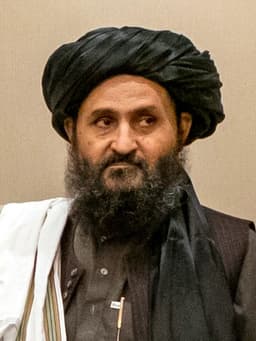
Hibatullah Akhundzada
Emperor · Modern
38.7Total
Basic Information
Born
1557
1961
Died
1598
—
Era
Modern
Modern
Nationality
Russia
Afghanistan
Occupation
Emperor
Emperor
Civilization
Western
Middle Eastern
Score Comparison
Military (10%)
19.6
21.2
Political (20%)
26.4
27.9
Influence (20%)
45.5
52.5
Legacy (20%)
34.2
40.8
Leadership (15%)
38.1
40.0
Strategy (15%)
56.1
30.3
TOTAL
37.2
38.7
Fyodor I — Complete Timeline
1584 AD
Coronation as TsarPolitical Action◆ Major
Fyodor I was crowned Tsar of Russia after the death of his father Ivan IV. Due to his physical and mental frailty, actual governance was handled by a regency council led by Boris Godunov.
CoronationRegencyGodunov
Impact: national
1589 AD
Establishment of the Patriarchate of MoscowCultural◆ Major
Under Fyodor's reign, Boris Godunov secured the establishment of the Moscow Patriarchate from the Ecumenical Patriarch of Constantinople. The Russian Orthodox Church became autocephalous, with Metropolitan Job becoming the first Patriarch.
PatriarchateOrthodox ChurchAutocephaly
Impact: regionalconstructive
1591 AD
Death of Tsarevich DmitryOther◆ Major
Fyodor's younger half-brother Dmitry Ivanovich died under mysterious circumstances in Uglich. An official inquiry ruled it an accident, but rumors of murder by Boris Godunov's agents persisted, fueling later impostor claims.
DmitryUglichSuccession
Impact: nationaltragic
1598 AD
End of the Rurikid DynastyPolitical Action
Fyodor I died without children, ending the Rurikid dynasty that had ruled Russia since the 9th century. His death triggered the Time of Troubles, a period of civil war, famine, and foreign intervention.
RurikidsTime of TroublesDynasty
Impact: nationaltragic
Hibatullah Akhundzada — Complete Timeline
2016 AD
Appointed Supreme Leader of the TalibanPolitical Action
Hibatullah Akhundzada was appointed Supreme Leader of the Taliban in 2016 after the death of Akhtar Mansour. He assumed leadership of the insurgency, guiding the Taliban's military and political strategy during the war against the Afghan government and coalition forces.
AfghanistanTalibanLeadership
Impact: global
2021 AD
Led Taliban to Military Victory in 2021War
Under Hibatullah Akhundzada's leadership, the Taliban launched a major offensive in 2021, capturing Kabul on August 15. This resulted in the collapse of the Afghan government and the Taliban's return to power, ending the 20-year war.
AfghanistanWarTaliban Victory
Impact: global
Imposed Restrictions on Women's RightsPolitical Action◆ Major
Under Hibatullah Akhundzada's leadership, the Taliban imposed severe restrictions on women's rights, including banning girls from secondary education and women from most employment. These policies drew widespread international condemnation.
AfghanistanWomen's RightsHuman Rights
Impact: nationaldestructive
2022 AD
Issued Decree Banning Opium Poppy CultivationReform◆ Major
Hibatullah Akhundzada issued a decree banning the cultivation of opium poppies in Afghanistan. The ban aimed to reduce drug production, but it devastated the rural economy, as poppy farming was a major source of income for many farmers.
AfghanistanDrug PolicyEconomy
Impact: national
Expert Analysis
Origins
Fyodor I Ivanovich was born in 1557 in Moscow, the third son of Ivan the Terrible and his first wife Anastasia Romanovna. He was physically frail and mentally simple, described by contemporaries as "weak-minded" and more interested in church bells than statecraft. His education was minimal, and he was overshadowed by his father's brutal reign. Hibatullah Akhundzada was born around 1961 in Panjwai, Kandahar Province, Afghanistan, into a religious family of the Noorzai tribe. He studied Islamic jurisprudence at local madrasas and later taught at the Darul Uloom Haqqania, a seminary in Pakistan. His formative years were marked by the Soviet-Afghan war and the rise of the Taliban in the 1990s.
Rise to Power
Fyodor became Tsar in 1584 upon Ivan's death, but he was never meant to rule. His elder brother Ivan had been killed by their father in 1581, leaving Fyodor as heir. His coronation was a formality; actual power was wielded by a regency council, initially dominated by his brother-in-law Boris Godunov. Fyodor's reign (1584-1598) was marked by his lack of involvement in governance. Akhundzada rose within the Taliban's judiciary, becoming chief justice of the Islamic Emirate of Afghanistan before 2001. After the Taliban's ouster, he remained a key figure in the Quetta Shura. In 2016, he was appointed Supreme Leader after a U.S. drone strike killed Akhtar Mansour. He consolidated power through religious authority and patronage, leading the insurgency against the Afghan government.
Leadership & Governance
Fyodor's leadership was passive. He left governance to Boris Godunov, who effectively ran the state. Under Godunov, Russia secured the establishment of the Moscow Patriarchate in 1589, a major step in ecclesiastical independence. However, Fyodor's inability to produce an heir led to a succession crisis. His only child, Feodosia, died in infancy. Akhundzada's leadership is authoritarian and ideological. He rarely appears in public, ruling through decrees and religious edicts. Under him, the Taliban banned opium poppy cultivation in 2022, slashing Afghanistan's drug trade but devastating farmers. He also imposed strict restrictions on women's rights, including banning girls from secondary education. His governance score of 27.9 reflects a rigid, theocratic rule with minimal institutional development.
Triumph & Tragedy
Fyodor's greatest triumph was the establishment of the Patriarchate, which elevated the Russian Church's status. His reign was peaceful compared to his father's, with no major wars. The tragedy was his childlessness, which ended the Rurikid dynasty and plunged Russia into the Time of Troubles (1598-1613), a period of famine, civil war, and foreign invasion. His legacy score of 34.2 reflects this collapse. Akhundzada's greatest triumph was leading the Taliban to victory in 2021, capturing Kabul on August 15 and restoring the Islamic Emirate. His tragedy is the humanitarian crisis that followed: economic collapse, international isolation, and widespread poverty. His ban on girls' education has drawn global condemnation. His political score of 27.9 and military score of 21.2 show limited success beyond the 2021 offensive.
Character & Destiny
Fyodor was pious, gentle, and disinterested in power. His character made him a puppet, but his piety endeared him to the church. His destiny was to be a transitional figure, his weakness enabling Godunov's rise but also causing the dynasty's end. Akhundzada is reclusive, dogmatic, and unyielding. His character is shaped by decades of war and religious conviction. His destiny is to lead a movement that, despite military victory, struggles to govern. His total score of 38.7 reflects a leader whose impact is significant but whose methods are controversial.
Legacy
Fyodor's legacy is the end of the Rurikid dynasty and the Time of Troubles. The Patriarchate he established endured, but his reign is often seen as a coda to Ivan's terror. He is remembered as a weak tsar who failed to secure succession. Akhundzada's legacy is being written. He restored Taliban rule, but his policies have isolated Afghanistan. The ban on opium has reduced drug trade but hurt farmers. The restrictions on women have drawn international sanctions. His influence score of 52.5 is higher than Fyodor's 45.5, reflecting his direct impact on millions.
Conclusion
Hibatullah Akhundzada has had a greater impact than Fyodor I, despite a narrow score gap of 1.5 points. Fyodor's reign was a passive interlude that accidentally triggered the Time of Troubles. Akhundzada actively shaped Afghanistan's destiny through the 2021 victory and subsequent policies. While Fyodor's legacy is largely negative (dynasty collapse), Akhundzada's is transformative, albeit destructive. His influence score of 52.5 vs Fyodor's 45.5 and legacy score of 40.8 vs 34.2 confirm this. Both are weak rulers, but Akhundzada's actions have directly changed the lives of 40 million Afghans, whereas Fyodor's inaction changed Russia indirectly. The data supports Akhundzada as the more impactful figure.
Rankings
🥇
Hibatullah AkhundzadaLeader
Mil: 21.2Pol: 27.9Inf: 52.5
38.7
🥈
Fyodor I
Mil: 19.6Pol: 26.4Inf: 45.5
37.2
+1.5 behind
How This Comparison Works
Algorithm
Each figure is scored on 6 dimensions (0—100 scale) based on structured historical data: Military (10%), Political (20%), Influence (20%), Legacy (20%), Leadership (15%), Strategy (15%). The weighted total produces the final ranking.
Data Sources
Scores are computed from structured sub-indicators in the database. Scale factors adjust for era (Ancient ×0.85, Modern ×1.0) and civilization size (Eastern ×1.05, Other ×0.80) to account for differences in population and military scale.
Maximum 3 Figures
Comparisons are limited to 2—3 figures to ensure readability and statistical meaningfulness.
Error Margins
±5 points per dimension — Sub-scores are derived from historical records with inherent uncertainty. Two figures within 5 points on a dimension should be considered roughly equivalent in that area.
Total Score Accuracy
±3 points overall — The weighted combination of 6 dimensions produces a total score with approximately ±3 points of uncertainty. Differences of less than 3 points are not statistically significant— the figures are effectively tied.
Known Limitations
- Historical records are incomplete and uneven across civilizations
- Figures from oral-tradition societies may be underrepresented
- Occupation labels can misclassify multi-role figures
- Scores measure capability and impact, not moral character
- Quantitative scoring is a comparison tool, not absolute truth
Capability Radar
Military (10%) — Battles & Warfare
Battles
34
10
Win Rate
38
15
Expansion
45
15
Political (20%) — Governance & Reform
Reform
5
10
Diplomacy
10
30
Economy
5
10
Influence (20%) — Cultural & Global Reach
Cultural
5
20
Global
5
35
Legacy (20%) — Historical Impact
Historical
10
30
Longevity
5
25
Leadership (15%) — Power & Stability
Tenure
10
55
Stability
15
40
Strategy (15%) — Tactics & Innovation
Strategy
47
25
Tactics
51
20
Reform
51
10
Similar Comparisons
Comments & Discussion
No comments yet. Be the first to share your thoughts!