Loading...
Gaiseric vs Mark Antony
Gaiseric leads by 8.3 pts · 2 figures compared
…

Gaiseric
General · Ancient
63.9Total
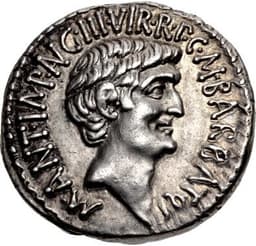
Mark Antony
General · Ancient
55.6Total
Basic Information
Born
389
-83
Died
477
-30
Era
Ancient
Ancient
Nationality
Vandals
Roman Republic
Occupation
General
General
Civilization
Western
Western
Score Comparison
Military (10%)
88.0
85.0
Political (20%)
68.0
36.5
Influence (20%)
55.0
55.0
Legacy (20%)
55.0
58.0
Leadership (15%)
62.0
50.7
Strategy (15%)
80.6
58.0
TOTAL
63.9
55.6
Gaiseric — Complete Timeline
439 AD
Capture of CarthageWar◆ Major
Gaiseric led the Vandals in the capture of Carthage, the most important city in Roman North Africa. He made it the capital of the Vandal Kingdom, establishing a powerful naval base that controlled Mediterranean trade routes.
Vandal ConquestNorth AfricaNaval Power
Impact: regional
455 AD
Sack of RomeWar
Gaiseric led the Vandal fleet to Rome and sacked the city. Unlike Alaric's sack in 410, the Vandals systematically looted treasures, including the spoils from the Temple of Jerusalem. The event gave rise to the term 'vandalism.'
Sack of RomeVandalsLooting
Impact: globaldestructive
468 AD
Battle of Cape BonWar◆ Major
Gaiseric's Vandal fleet defeated a massive combined Roman and Byzantine invasion force at Cape Bon. The victory secured Vandal control over the western Mediterranean and prevented the reconquest of North Africa.
Naval BattleRoman DefeatVandal Kingdom
Impact: regional
476 AD
Treaty with the Byzantine EmpirePolitical Action◆ Major
Gaiseric negotiated a peace treaty with the Byzantine Emperor Zeno, ending decades of conflict. The treaty recognized Vandal control over North Africa, the Balearic Islands, Corsica, Sardinia, and Sicily, solidifying the Vandal Kingdom's borders.
Peace TreatyDiplomacyVandal Kingdom
Impact: regionalconstructive
Mark Antony — Complete Timeline
42 BC
Battle of PhilippiWar◆ Major
Antony, as part of the Second Triumvirate, defeated the assassins of Caesar, Brutus and Cassius, at Philippi in Macedonia. The victory consolidated the Triumvirs' control over the Roman world.
Civil WarTriumvirateCaesar's Assassins
Impact: global
41 BC
Alliance with CleopatraPolitical Action◆ Major
Antony summoned Cleopatra to Tarsus and became her lover, forming a political and personal alliance. He used Egyptian resources for his Parthian campaign and later married her, alienating Octavian.
AllianceEgyptCleopatra
Impact: regional
34 BC
Donations of AlexandriaPolitical Action◆ Major
Antony granted Roman territories to Cleopatra and her children, including Caesarion, in a ceremony in Alexandria. This act was used by Octavian to portray Antony as a traitor to Rome.
Territorial GrantPropagandaEgypt
Impact: regionaldestructive
31 BC
Battle of ActiumWar
Antony and Cleopatra's fleet was decisively defeated by Octavian's navy under Agrippa at Actium in Greece. The defeat forced Antony to flee to Egypt, leading to his downfall.
Civil WarNaval BattleOctavian
Impact: globaltragic
30 BC
Suicide of Mark AntonyOther◆ Major
After Octavian's forces captured Alexandria, Antony attempted suicide by stabbing himself. He died in Cleopatra's arms, ending the civil war and paving the way for Octavian's sole rule.
DeathCivil WarEnd of Republic
Impact: globaltragic
Expert Analysis
Origins
**Gaiseric** (c. 389-477) was born into the Hasdingi dynasty of the Vandals, a Germanic tribe that migrated from the Baltic region. His father was King Godigisel, and Gaiseric likely grew up in a warrior culture. He became king in 428 at about age 39 after his half-brother Gunderic died. Gaiseric was reportedly lame from a horse or battle injury, but he was known for his cunning and strategic mind.
**Mark Antony** (83-30 BC) was born in Rome into a plebeian family of some prestige. His father, Marcus Antonius Creticus, was a praetor, and his mother, Julia Antonia, was a distant cousin of Julius Caesar. Antony received a typical Roman education and served in the cavalry in Syria and Egypt in his youth. He was a close ally of Caesar, which shaped his early career.
Rise to Power
Gaiseric's rise began in 429 when he led the Vandals from Spain to North Africa, crossing the Strait of Gibraltar. In 439, he captured Carthage without a fight by a surprise attack, making it his capital. He then built a formidable fleet and raided Sicily and Italy. His greatest turning point came in 455 when he sacked Rome, looting it systematically over 14 days—unlike Alaric's brief sack in 410. This act cemented his power and wealth.
Mark Antony rose as a lieutenant of Julius Caesar, serving as consul in 44 BC. After Caesar's assassination, he formed the Second Triumvirate with Octavian and Lepidus in 43 BC. They defeated the assassins at Philippi in 42 BC, with Antony as the leading general. Antony then took command of the eastern provinces, where he allied with Cleopatra VII of Egypt. His alliance with Cleopatra and the Donations of Alexandria (34 BC) gave him vast resources but also alienated Rome.
Leadership & Governance
Gaiseric ruled the Vandal Kingdom with absolute authority. He established a stable kingdom in North Africa, with Carthage as a center of Vandal culture. He tolerated Roman Catholicism but favored Arian Christianity, creating religious tension. His leadership was pragmatic: he used his fleet to control the western Mediterranean and negotiated treaties when advantageous. For example, after the Battle of Cape Bon in 468, where he defeated a massive Roman-Byzantine fleet, he secured a favorable peace with Emperor Zeno.
Mark Antony's leadership was charismatic but flawed. He was a skilled orator and popular with his troops, but his governance in the East was dominated by his relationship with Cleopatra. He awarded Roman provinces to Cleopatra's children, a move that Octavian used to portray him as a traitor. Antony's political score of 36.5 reflects his poor judgment in alienating Roman elites. He relied on Egyptian gold for his campaigns, which led to financial dependency.
Triumph & Tragedy
Gaiseric's greatest triumph was the sack of Rome in 455, which brought immense wealth and prestige. He also secured Vandal dominance in North Africa and the western Mediterranean. His fleet defeated the largest Roman armada ever assembled at Cape Bon in 468. His tragedy was that his kingdom did not long outlast him; after his death in 477, Vandal power declined due to internal strife and Byzantine resurgence.
Mark Antony's triumph was his victory at Philippi (42 BC) over the conspirators who killed Caesar. He also had success in the east, reorganizing Roman provinces. His tragedy was the defeat at Actium in 31 BC, where his fleet was routed by Octavian's admiral Agrippa. He fled to Egypt and committed suicide in 30 BC after Octavian's capture of Alexandria. His political ambitions were crushed, and he died as a rebel against Rome.
Character & Destiny
Gaiseric was calculating and patient. He used diplomacy and deception effectively, such as when he pretended to negotiate while preparing his fleet. His character was ruthless but not impulsive; he avoided unnecessary battles. This strategic mindset earned him a military score of 88.0 and a strategy score of 80.6. His destiny was to build a kingdom that lasted a century and to be remembered as the most successful barbarian invader of Rome.
Mark Antony was passionate and impulsive. He was a brave soldier but a poor politician. His love for Cleopatra overrode his judgment, leading to the Donations of Alexandria and his break with Octavian. He was prone to excesses, such as his lavish lifestyle in Egypt. His character was his downfall, as he failed to match Octavian's cold calculation. He scored only 36.5 in political, reflecting his inability to navigate Roman politics.
Legacy
Gaiseric's legacy is the only successful Vandal kingdom, which controlled North Africa and the western Mediterranean for over a century. The term "vandalism" derives from his sack of Rome, though unfairly. His military tactics influenced later naval warfare. However, his kingdom collapsed in 534 under Byzantine attack, limiting his long-term impact. He scores 55.0 in both influence and legacy.
Mark Antony's legacy is complex. He is remembered as Caesar's lieutenant and Cleopatra's lover, immortalized in literature and art. His defeat at Actium ended the Roman Republic and paved the way for the Roman Empire under Augustus. He scored 58.0 in legacy, higher than Gaiseric, because his actions directly shaped the course of Roman history. However, his political failures were catastrophic.
Conclusion
While Gaiseric achieved a higher total score (63.9 vs 55.6), Mark Antony had a greater impact on world history. Gaiseric's Vandal kingdom was a regional power that did not fundamentally alter the trajectory of Europe. In contrast, Antony's defeat at Actium led to the end of the Roman Republic and the establishment of the Roman Empire, which shaped Western civilization for centuries. Antony's legacy, though tarnished, is more influential. Therefore, Mark Antony had greater historical impact despite his lower score.
Rankings
🥇
GaisericLeader
Mil: 88.0Pol: 68.0Inf: 55.0
63.9
🥈
Mark Antony
Mil: 85.0Pol: 36.5Inf: 55.0
55.6
+8.3 behind
How This Comparison Works
Algorithm
Each figure is scored on 6 dimensions (0—100 scale) based on structured historical data: Military (10%), Political (20%), Influence (20%), Legacy (20%), Leadership (15%), Strategy (15%). The weighted total produces the final ranking.
Data Sources
Scores are computed from structured sub-indicators in the database. Scale factors adjust for era (Ancient ×0.85, Modern ×1.0) and civilization size (Eastern ×1.05, Other ×0.80) to account for differences in population and military scale.
Maximum 3 Figures
Comparisons are limited to 2—3 figures to ensure readability and statistical meaningfulness.
Error Margins
±5 points per dimension — Sub-scores are derived from historical records with inherent uncertainty. Two figures within 5 points on a dimension should be considered roughly equivalent in that area.
Total Score Accuracy
±3 points overall — The weighted combination of 6 dimensions produces a total score with approximately ±3 points of uncertainty. Differences of less than 3 points are not statistically significant— the figures are effectively tied.
Known Limitations
- Historical records are incomplete and uneven across civilizations
- Figures from oral-tradition societies may be underrepresented
- Occupation labels can misclassify multi-role figures
- Scores measure capability and impact, not moral character
- Quantitative scoring is a comparison tool, not absolute truth
Capability Radar
Military (10%) — Battles & Warfare
Battles
85
75
Win Rate
90
60
Expansion
88
70
Political (20%) — Governance & Reform
Reform
65
30
Diplomacy
85
70
Economy
75
40
Influence (20%) — Cultural & Global Reach
Cultural
60
65
Global
70
60
Legacy (20%) — Historical Impact
Historical
75
70
Longevity
65
65
Leadership (15%) — Power & Stability
Tenure
80
60
Stability
70
30
Strategy (15%) — Tactics & Innovation
Strategy
92
65
Tactics
88
70
Reform
70
30
Similar Comparisons
Comments & Discussion
No comments yet. Be the first to share your thoughts!