Loading...
This comparison has not been analyzed yet.
One-time AI generation (~1 minute). Scores and timeline are already available below.
Gaius Avidius Cassius vs Guan Xing
Gaius Avidius Cassius leads by 9.9 pts · 2 figures compared
…

Gaius Avidius Cassius
General · Ancient
50.5Total
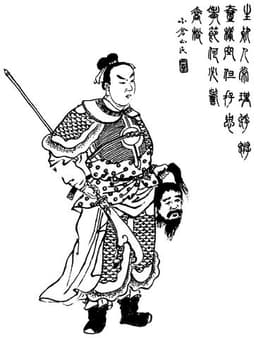
Guan Xing
General · Ancient
40.6Total
Basic Information
Born
130
198
Died
175
234
Era
Ancient
Ancient
Nationality
Roman Empire
China
Occupation
General
General
Civilization
Western
Eastern
Score Comparison
Military (10%)
82.0
38.3
Political (20%)
35.0
39.4
Influence (20%)
47.1
51.0
Legacy (20%)
39.2
33.3
Leadership (15%)
62.6
35.4
Strategy (15%)
61.3
45.0
TOTAL
50.5
40.6
Gaius Avidius Cassius — Complete Timeline
172 AD
Suppression of the Bucolic Revolt in EgyptWar
Gaius Avidius Cassius, as governor of Syria, was dispatched to Egypt to suppress the Bucolic revolt. He defeated the rebel forces, restoring Roman authority and securing the grain supply for Rome.
EgyptRevoltSuppression
Impact: regional
175 AD
Usurpation and Proclamation as EmperorPolitical Action◆ Major
Upon hearing a false report of Marcus Aurelius's death, Avidius Cassius was proclaimed emperor by his legions in Syria. He accepted the title and took control of the eastern provinces, including Egypt, initiating a brief rebellion.
UsurpationRoman EmpireCivil War
Impact: regional
Assassination by CenturionPolitical Action◆ Major
After a reign of three months, Avidius Cassius was assassinated by a centurion. His death ended the rebellion, and the Senate condemned his memory. Marcus Aurelius, however, spared Cassius's family and destroyed his correspondence to avoid further conflict.
UsurpationAssassinationMarcus Aurelius
Impact: regionaltragic
Guan Xing — Complete Timeline
220 AD
Succeeded Guan Yu as GeneralPolitical Action
After Guan Yu's death, Guan Xing inherited his father's title and military command. He was appointed a general in Shu, though his career was cut short by his early death.
InheritanceShu HanMilitary
Impact: national
222 AD
Participated in Yi Ling CampaignWar
Guan Xing fought in the Battle of Yi Ling (Xiaoting) under Liu Bei against Wu. He commanded a unit and survived the disastrous defeat, retreating with the remnants of Shu forces.
Yi LingShu HanBattle
Impact: regional
234 AD
Died Young in Shu ServiceOther
Guan Xing died at a relatively young age, around 36, while still serving Shu. His early death prevented him from achieving the military prominence of his father, Guan Yu.
DeathShu HanGeneral
tragic
This comparison has not been analyzed yet.
One-time AI generation (~1 minute). Scores and timeline are already available below.
Rankings
🥇
Gaius Avidius CassiusLeader
Mil: 82.0Pol: 35.0Inf: 47.1
50.5
🥈
Guan Xing
Mil: 38.3Pol: 39.4Inf: 51.0
40.6
+9.9 behind
How This Comparison Works
Algorithm
Each figure is scored on 6 dimensions (0—100 scale) based on structured historical data: Military (10%), Political (20%), Influence (20%), Legacy (20%), Leadership (15%), Strategy (15%). The weighted total produces the final ranking.
Data Sources
Scores are computed from structured sub-indicators in the database. Scale factors adjust for era (Ancient ×0.85, Modern ×1.0) and civilization size (Eastern ×1.05, Other ×0.80) to account for differences in population and military scale.
Maximum 3 Figures
Comparisons are limited to 2—3 figures to ensure readability and statistical meaningfulness.
Error Margins
±5 points per dimension — Sub-scores are derived from historical records with inherent uncertainty. Two figures within 5 points on a dimension should be considered roughly equivalent in that area.
Total Score Accuracy
±3 points overall — The weighted combination of 6 dimensions produces a total score with approximately ±3 points of uncertainty. Differences of less than 3 points are not statistically significant— the figures are effectively tied.
Known Limitations
- Historical records are incomplete and uneven across civilizations
- Figures from oral-tradition societies may be underrepresented
- Occupation labels can misclassify multi-role figures
- Scores measure capability and impact, not moral character
- Quantitative scoring is a comparison tool, not absolute truth
Capability Radar
Military (10%) — Battles & Warfare
Battles
65
5
Win Rate
70
5
Expansion
40
0
Political (20%) — Governance & Reform
Reform
10
0
Diplomacy
20
0
Economy
10
0
Influence (20%) — Cultural & Global Reach
Cultural
15
5
Global
15
0
Legacy (20%) — Historical Impact
Historical
25
5
Longevity
20
5
Leadership (15%) — Power & Stability
Tenure
15
5
Stability
5
0
Strategy (15%) — Tactics & Innovation
Strategy
70
5
Tactics
75
5
Reform
30
0
Similar Comparisons
Comments & Discussion
No comments yet. Be the first to share your thoughts!