Loading...
Gaius Suetonius Paulinus vs Wei Yan
Gaius Suetonius Paulinus leads by 6.6 pts · 2 figures compared
…

Gaius Suetonius Paulinus
General · Ancient
51.8Total
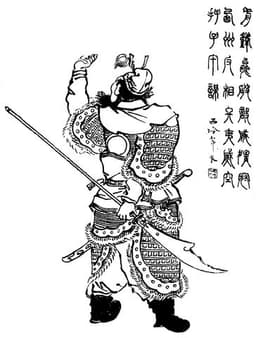
Wei Yan
General · Ancient
45.2Total
Basic Information
Born
10
175
Died
68
234
Era
Ancient
Ancient
Nationality
Roman Empire
China
Occupation
General
General
Civilization
Western
Eastern
Score Comparison
Military (10%)
74.0
52.5
Political (20%)
26.4
35.0
Influence (20%)
55.7
48.6
Legacy (20%)
49.2
42.5
Leadership (15%)
54.2
46.3
Strategy (15%)
61.3
50.0
TOTAL
51.8
45.2
Gaius Suetonius Paulinus — Complete Timeline
60 AD
Sack of Mona (Anglesey)War
Suetonius Paulinus led a campaign against the druid stronghold of Mona (modern Anglesey). Roman forces crossed the Menai Strait, overwhelmed the druids and their supporters, and destroyed the sacred groves, suppressing Celtic religious resistance in Britain.
Roman BritainDruidsCampaign
Impact: regionaldestructive
61 AD
Defeat of Boudica at the Battle of Watling StreetWar◆ Major
Suetonius Paulinus, as governor of Britain, commanded a smaller Roman force against the massive Iceni rebellion led by Boudica. His tactical use of terrain and disciplined legionaries resulted in a decisive Roman victory, ending the revolt and securing Roman control over Britain.
Roman BritainIceni RebellionBattle
Impact: regional
Recall to Rome after Boudica's RevoltPolitical Action
Despite his victory at Watling Street, Suetonius Paulinus was recalled to Rome by Emperor Nero. His harsh punitive measures against the Britons were deemed excessive by the new procurator, leading to his replacement and a more conciliatory policy in the province.
Roman BritainGovernorshipRecall
Impact: regional
66 AD
Consulship under NeroPolitical Action
Suetonius Paulinus served as consul ordinarius for the year 66 AD, a high honor in the Roman state. This appointment recognized his military service and placed him among the senatorial elite during the later years of Nero's reign.
Roman PoliticsConsulshipNero
Impact: national
Wei Yan — Complete Timeline
219 AD
Wei Yan's Appointment as Governor of HanzhongPolitical Action◆ Major
After Liu Bei conquered Hanzhong, he appointed Wei Yan as the governor of this strategic region, bypassing the more senior Zhang Fei. Wei Yan successfully defended Hanzhong against Wei attacks for years, proving his competence.
AppointmentDefenseHanzhong
Impact: regionalconstructive
228 AD
Wei Yan's Northern Expeditions under Zhuge LiangWar◆ Major
Wei Yan served as a frontline commander in Zhuge Liang's Northern Expeditions against Wei. He proposed the risky 'Ziwu Valley' plan to attack Chang'an directly, but Zhuge Liang rejected it. Wei Yan's forces achieved several tactical victories.
ExpeditionMilitary CampaignStrategy
Impact: regional
234 AD
Wei Yan's Rebellion and DeathPolitical Action◆ Major
After Zhuge Liang's death, Wei Yan clashed with the chief of staff Yang Yi over command. Wei Yan burned the retreat route and was accused of rebellion. He was defeated, captured, and executed by Ma Dai. The historical accuracy of his 'rebellion' is debated.
RebellionExecutionPower Struggle
Impact: nationaltragic
Expert Analysis
Origins
Gaius Suetonius Paulinus was born around 10 AD in Italy, likely into a senatorial family. Little is known of his early life, but he likely received the typical education of a Roman aristocrat, including military training. He rose through the ranks as a military tribune and later served as a legate. His early career included service in Mauretania (modern Morocco/Algeria), where he gained experience in frontier warfare.
Wei Yan was born around 175 AD in Yiyang (modern Henan, China) during the late Eastern Han dynasty. He initially served as a soldier under various warlords, including Liu Biao, before joining Liu Bei's forces in 208 AD. Wei Yan came from a humble background and lacked formal education, but his martial prowess earned him rapid promotion. Unlike Suetonius, Wei Yan's early life is poorly documented, but he proved himself in battle during Liu Bei's campaigns.
Rise to Power
Suetonius Paulinus's rise came through his appointment as governor of Britain in 58 AD. His early success included the conquest of the druid stronghold of Mona (Anglesey) in 60 AD, where he destroyed the druidic center and its sacred groves. This campaign demonstrated his tactical skill in crossing the Menai Strait and overwhelming the defenders. The sack of Mona was a significant blow to Celtic resistance. However, his absence from the southeast allowed Boudica's rebellion to erupt, forcing him to rush back.
Wei Yan's rise was more dramatic. In 219 AD, after Liu Bei conquered Hanzhong, he appointed Wei Yan as governor of this strategic region, bypassing the more senior Zhang Fei. This decision shocked the army, but Wei Yan proved his mettle by securing the frontier against Wei forces for years. He also participated in Liu Bei's campaign against Wu in 221-222 AD, though the campaign ended in disaster at Xiaoting. Wei Yan's loyalty and competence earned him a key role in Shu Han's military hierarchy.
Leadership & Governance
Suetonius Paulinus led with discipline and tactical precision. At the Battle of Watling Street in 61 AD, he commanded around 10,000 Roman soldiers against a rebel force estimated at 100,000-230,000. He chose a narrow battlefield flanked by woods, which negated the enemy's numerical advantage. His troops fought in tight formation, and he personally rallied them. After victory, he implemented harsh punitive measures against the Britons, including mass executions and burning of villages. Emperor Nero recalled him for excessive cruelty, showing his governance lacked political nuance. Suetonius scored 54.2 in leadership and 26.4 in political acumen.
Wei Yan's leadership was aggressive and ambitious. He proposed the 'Ziwu Valley' plan to attack Chang'an directly, but Zhuge Liang rejected it as too risky. Wei Yan often chafed under Zhuge Liang's cautious strategy, believing Shu Han needed bold strikes. As governor of Hanzhong, he effectively defended the northern border using fortifications and mobile defense. However, his poor political skills led to conflicts with colleagues like Yang Yi. After Zhuge Liang's death, Wei Yan's refusal to retreat and his burning of supply routes were seen as rebellion. His political score of 35.0 reflects his inability to navigate court intrigue.
Triumph & Tragedy
Suetonius Paulinus's greatest triumph was the victory at Watling Street, where he crushed Boudica's rebellion with a force outnumbered 10:1. His tactical use of terrain and disciplined legionaries resulted in a slaughter: Roman sources claim 80,000 Britons died with only 400 Romans. This victory preserved Roman control of Britain for centuries. His tragedy was his recall: despite winning, his brutal reprisals alienated the province, and Nero replaced him with a more conciliatory governor. He later served as consul in 66 AD but faded from history.
Wei Yan's triumph was his successful defense of Hanzhong for over a decade, deterring Wei invasions. His appointment as governor was a vindication of his ability. His tragedy was his rebellion and death in 234 AD. After Zhuge Liang's death, he clashed with Yang Yi over command. Wei Yan burned the retreat route, an act interpreted as treason, and was killed by Ma Dai. The historical debate remains: was he a loyal general wronged by rivals or a traitor? His military score of 52.5 reflects solid but not exceptional performance.
Character & Destiny
Suetonius Paulinus was a capable but harsh commander. His decision to attack Mona while Boudica's rebellion grew shows strategic prioritization but also overconfidence. He was ruthless in victory, which ensured short-term stability but long-term resentment. His recall suggests he lacked the political flexibility needed for provincial governance. His character was that of a soldier, not a statesman.
Wei Yan was proud and ambitious. His proposal of the Ziwu Valley plan showed strategic imagination but also insubordination. He resented not being given more authority and frequently argued with colleagues. His rebellion after Zhuge Liang's death was likely driven by personal rivalry and a sense of entitlement. His character sealed his fate: he could not accept a subordinate role. Historical assessments often paint him as a victim of factionalism, but his actions were self-destructive.
Legacy
Suetonius Paulinus's legacy is tied to the Boudican revolt. His victory ensured Roman rule in Britain continued until the 5th century. The battle is studied as a classic example of defeating a larger force through terrain and discipline. His score of 49.2 in legacy reflects his limited historical footprint beyond this event. However, his harshness also set a precedent for Roman governance in Britain.
Wei Yan's legacy is more controversial. In Chinese history, he is often portrayed as a tragic figure or a rebel. His story appears in the novel 'Romance of the Three Kingdoms', which popularized his conflict with Yang Yi. His legacy score of 42.5 is lower than Suetonius's, partly because his achievements were overshadowed by Zhuge Liang. The 'Ziwu Valley' plan is debated by historians as a missed opportunity. His defense of Hanzhong, however, is recognized as crucial for Shu Han.
Conclusion
Suetonius Paulinus had a greater impact than Wei Yan, as reflected in his higher total score of 51.8 versus 45.2. His victory at Watling Street directly preserved Roman Britain, a major province of the empire, while Wei Yan's actions were internal to a smaller kingdom. Suetonius's tactical achievement against overwhelming odds is more significant than Wei Yan's defensive record. Moreover, Suetonius's legacy is studied in military history, whereas Wei Yan's is largely confined to the Three Kingdoms period. Thus, Suetonius Paulinus emerges as the more consequential figure.
Rankings
🥇
Gaius Suetonius PaulinusLeader
Mil: 74.0Pol: 26.4Inf: 55.7
51.8
🥈
Wei Yan
Mil: 52.5Pol: 35.0Inf: 48.6
45.2
+6.6 behind
How This Comparison Works
Algorithm
Each figure is scored on 6 dimensions (0—100 scale) based on structured historical data: Military (10%), Political (20%), Influence (20%), Legacy (20%), Leadership (15%), Strategy (15%). The weighted total produces the final ranking.
Data Sources
Scores are computed from structured sub-indicators in the database. Scale factors adjust for era (Ancient ×0.85, Modern ×1.0) and civilization size (Eastern ×1.05, Other ×0.80) to account for differences in population and military scale.
Maximum 3 Figures
Comparisons are limited to 2—3 figures to ensure readability and statistical meaningfulness.
Error Margins
±5 points per dimension — Sub-scores are derived from historical records with inherent uncertainty. Two figures within 5 points on a dimension should be considered roughly equivalent in that area.
Total Score Accuracy
±3 points overall — The weighted combination of 6 dimensions produces a total score with approximately ±3 points of uncertainty. Differences of less than 3 points are not statistically significant— the figures are effectively tied.
Known Limitations
- Historical records are incomplete and uneven across civilizations
- Figures from oral-tradition societies may be underrepresented
- Occupation labels can misclassify multi-role figures
- Scores measure capability and impact, not moral character
- Quantitative scoring is a comparison tool, not absolute truth
Capability Radar
Military (10%) — Battles & Warfare
Battles
65
45
Win Rate
70
40
Expansion
60
30
Political (20%) — Governance & Reform
Reform
30
10
Diplomacy
40
20
Economy
35
10
Influence (20%) — Cultural & Global Reach
Cultural
40
30
Global
35
10
Legacy (20%) — Historical Impact
Historical
55
35
Longevity
40
30
Leadership (15%) — Power & Stability
Tenure
50
30
Stability
45
15
Strategy (15%) — Tactics & Innovation
Strategy
70
50
Tactics
75
55
Reform
30
20
Similar Comparisons
Comments & Discussion
No comments yet. Be the first to share your thoughts!