Loading...
Geng Yan vs Han Sui
Geng Yan leads by 3.3 pts · 2 figures compared
…
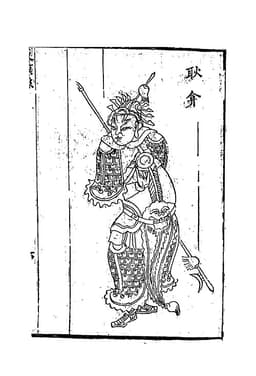
Geng Yan
General · Ancient
46.2Total

Han Sui
General · Ancient
42.9Total
Basic Information
Born
-5
140
Died
58
215
Era
Ancient
Ancient
Nationality
China
China
Occupation
General
General
Civilization
Eastern
Eastern
Score Comparison
Military (10%)
80.0
60.0
Political (20%)
30.7
29.3
Influence (20%)
48.6
47.1
Legacy (20%)
41.7
40.0
Leadership (15%)
36.9
33.5
Strategy (15%)
55.0
57.5
TOTAL
46.2
42.9
Geng Yan — Complete Timeline
26 AD
Appointed General of the VanguardPolitical Action
Geng Yan was appointed General of the Vanguard, a key military post under Emperor Guangwu. He led elite forces in numerous campaigns, earning a reputation as one of the most effective commanders of the Eastern Han restoration.
AppointmentMilitary CommandEastern Han
Impact: nationalconstructive
29 AD
Conquest of QiWar◆ Major
Geng Yan led the Eastern Han campaign to conquer the kingdom of Qi (modern Shandong). He defeated the local ruler Zhang Bu, bringing the wealthy and strategic Qi region under Eastern Han control. This conquest was crucial for the dynasty's consolidation.
ConquestQiEastern Han
Impact: regional
Battle of LinziWar◆ Major
Geng Yan captured the city of Linzi, the capital of Qi, after a decisive battle. He used strategic maneuvers to outflank Zhang Bu's forces. The victory broke Qi's resistance and led to the submission of the entire region.
BattleSiegeQi
Impact: regional
Han Sui — Complete Timeline
184 AD
Rebellion against the Han DynastyWar◆ Major
Han Sui joined the Liang Province rebellion against the Han Dynasty, allying with other Qiang and Han rebels. The uprising destabilized the northwestern frontier and weakened central control over the region.
RebellionLiang ProvinceHan Dynasty
Impact: regionaldestructive
192 AD
Allied with Ma TengPolitical Action
Han Sui formed an alliance with fellow warlord Ma Teng, jointly controlling Liang Province. Their coalition resisted central authority and fought against other regional powers during the collapse of the Han Dynasty.
AllianceWarlord EraLiang Province
Impact: regional
211 AD
Defeated by Cao Cao at the Battle of Tong PassWar◆ Major
Han Sui and Ma Chao led a coalition of northwestern warlords against Cao Cao at Tong Pass. Cao Cao's forces defeated the coalition, forcing Han Sui to flee. This battle solidified Cao Cao's control over northern China.
BattleCao CaoThree Kingdoms
Impact: regionaltragic
215 AD
Killed by his own subordinatesOther◆ Major
After his defeat, Han Sui was killed by his own subordinates who sought to surrender to Cao Cao. His death ended the last major resistance in Liang Province, allowing Cao Cao to consolidate control over the northwest.
DeathBetrayalThree Kingdoms
Impact: regionaltragic
Expert Analysis
Origins
Geng Yan was born in 3 AD in modern Shaanxi, into a family of military officials. His father, Geng Kuang, served as a general under the Xin dynasty, and Geng Yan received a classical education alongside martial training. He joined Emperor Guangwu's forces in 23 AD during the chaos following Wang Mang's downfall.
Han Sui was born around 140 AD in Liang Province (modern Gansu). His family were local Han Chinese gentry who had intermarried with Qiang tribes. Han Sui rose through local militia leadership, gaining influence among both Han settlers and Qiang groups. By 184 AD, he was a minor official when the Yellow Turban Rebellion weakened central control.
Rise to Power
Geng Yan rose quickly under Emperor Guangwu. In 24 AD, he was appointed General of the Vanguard after impressing Guangwu with his strategic proposals. His key turning point came in 29 AD when Guangwu assigned him to conquer the independent kingdom of Qi, ruled by Zhang Bu. Geng Yan built a river fleet and coordinated with other Han generals, capturing the capital Linzi in a decisive battle that year.
Han Sui's rise came through rebellion. In 184 AD, he joined the Liang Province uprising led by Beigong Boyu and Li Wenhou, which seized control of the region. Han Sui soon emerged as a leader, allying with Ma Teng in 187 AD. They jointly controlled Liang Province, resisting central Han authority until 192 AD when they briefly submitted to Dong Zhuo. After Dong Zhuo's death, Han Sui again rebelled, forging a coalition with Ma Chao (Ma Teng's son) in 211 AD.
Leadership & Governance
Geng Yan governed conquered territories with a mix of military force and leniency. After capturing Linzi, he allowed Zhang Bu's soldiers to surrender and integrated them into his army. He implemented a policy of 'pacification through virtue,' distributing food to civilians and rebuilding infrastructure. His military leadership scored 80.0, reflecting his ability to execute complex campaigns, but his political score of 30.7 shows limited administrative reach beyond the campaign.
Han Sui ruled Liang Province through alliances and tribal networks. He allowed Qiang chieftains autonomy in exchange for military support. His governance was decentralized, with no central bureaucracy. Han Sui's political score of 29.3 is slightly lower than Geng Yan's, as he failed to create a stable state. His strategy score of 57.5 exceeds Geng Yan's 55.0, but his military score of 60.0 is significantly lower, indicating less effective field command.
Triumph & Tragedy
Geng Yan's greatest triumph was the conquest of Qi in 29 AD, which added a wealthy province to the Eastern Han. He achieved this with minimal casualties by using psychological warfare—spreading rumors to demoralize Zhang Bu's troops. His tragedy came after the campaign: he was recalled to the capital and died in 58 AD at age 55, never given another major command. His later career was overshadowed by other generals like Wu Han.
Han Sui's triumph was maintaining independence in Liang Province for over two decades, from 184 to 211 AD. He successfully balanced Qiang and Han interests, creating a multi-ethnic coalition. His tragedy was the Battle of Tong Pass in 211 AD, where Cao Cao defeated his coalition with Ma Chao. Han Sui fled and was killed by his own subordinates in 212 AD, who sought to surrender to Cao Cao. His rebellion ultimately failed, and Liang Province fell under Cao Cao's control.
Character & Destiny
Geng Yan was cautious and methodical. He planned campaigns meticulously, as seen in his use of river transport and feigned retreats. His caution meant he never overreached, but also limited his ambition. He remained loyal to Emperor Guangwu, which secured his legacy but curtailed his independence. Historians note his 'strategic prudence' as his defining trait.
Han Sui was pragmatic and adaptable, shifting alliances as needed. He allied with Ma Teng, then Ma Chao, and even submitted to Dong Zhuo temporarily. However, his pragmatism became a liability—coalition partners distrusted him. At Tong Pass, Cao Cao exploited this by sending a fake letter to Han Sui, making Ma Chao suspect betrayal. Han Sui's indecisiveness during the battle led to defeat. His character—opportunistic but untrustworthy—determined his downfall.
Legacy
Geng Yan is remembered as a competent general of the Eastern Han restoration. His conquest of Qi stabilized the northeast, allowing Guangwu to focus on other fronts. His military tactics influenced later Chinese warfare, particularly riverine operations. However, his legacy score of 41.7 is moderate, as he remains obscure compared to other Han generals like Han Xin or Huo Qubing.
Han Sui's legacy lies in demonstrating the fragility of the Han dynasty's northwestern frontier. His rebellion, along with others, contributed to the Han's decline. He is often cited as an example of a warlord who failed due to lack of central authority. His influence score of 47.1 is slightly higher than Geng Yan's 48.6, reflecting his role in the Three Kingdoms period's backdrop. But his legacy score of 40.0 is lower.
Conclusion
Geng Yan had greater overall impact than Han Sui. His conquest of Qi directly served the Eastern Han restoration, a pivotal event in Chinese history. Han Sui's rebellion, while significant, ultimately failed and did not alter the course of the Han dynasty's collapse. Geng Yan's total score of 46.2 edges out Han Sui's 42.9, a 3.3-point gap. In military effectiveness, Geng Yan's 80.0 far exceeds Han Sui's 60.0. While Han Sui was a more influential figure in the northwest, his achievements were temporary. Geng Yan's campaign had lasting territorial impact. Therefore, Geng Yan holds the higher historical standing.
Rankings
🥇
Geng YanLeader
Mil: 80.0Pol: 30.7Inf: 48.6
46.2
🥈
Han Sui
Mil: 60.0Pol: 29.3Inf: 47.1
42.9
+3.3 behind
How This Comparison Works
Algorithm
Each figure is scored on 6 dimensions (0—100 scale) based on structured historical data: Military (10%), Political (20%), Influence (20%), Legacy (20%), Leadership (15%), Strategy (15%). The weighted total produces the final ranking.
Data Sources
Scores are computed from structured sub-indicators in the database. Scale factors adjust for era (Ancient ×0.85, Modern ×1.0) and civilization size (Eastern ×1.05, Other ×0.80) to account for differences in population and military scale.
Maximum 3 Figures
Comparisons are limited to 2—3 figures to ensure readability and statistical meaningfulness.
Error Margins
±5 points per dimension — Sub-scores are derived from historical records with inherent uncertainty. Two figures within 5 points on a dimension should be considered roughly equivalent in that area.
Total Score Accuracy
±3 points overall — The weighted combination of 6 dimensions produces a total score with approximately ±3 points of uncertainty. Differences of less than 3 points are not statistically significant— the figures are effectively tied.
Known Limitations
- Historical records are incomplete and uneven across civilizations
- Figures from oral-tradition societies may be underrepresented
- Occupation labels can misclassify multi-role figures
- Scores measure capability and impact, not moral character
- Quantitative scoring is a comparison tool, not absolute truth
Capability Radar
Military (10%) — Battles & Warfare
Battles
65
45
Win Rate
70
40
Expansion
55
35
Political (20%) — Governance & Reform
Reform
20
15
Diplomacy
35
50
Economy
25
20
Influence (20%) — Cultural & Global Reach
Cultural
30
20
Global
20
10
Legacy (20%) — Historical Impact
Historical
35
30
Longevity
25
20
Leadership (15%) — Power & Stability
Tenure
40
40
Stability
30
25
Strategy (15%) — Tactics & Innovation
Strategy
65
45
Tactics
60
50
Reform
30
20
Similar Comparisons
Comments & Discussion
No comments yet. Be the first to share your thoughts!