Loading...
Geng Yan vs Yu Jin
Geng Yan leads by 2.3 pts · 2 figures compared
…
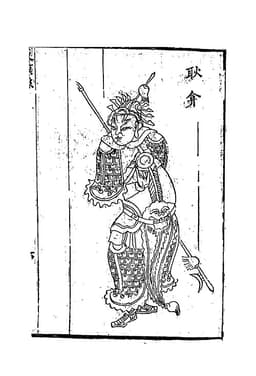
Geng Yan
General · Ancient
46.2Total
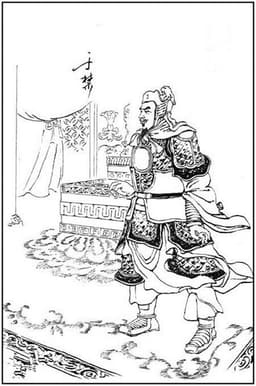
Yu Jin
General · Ancient
43.9Total
Basic Information
Born
-5
166
Died
58
221
Era
Ancient
Ancient
Nationality
China
China
Occupation
General
General
Civilization
Eastern
Eastern
Score Comparison
Military (10%)
80.0
47.5
Political (20%)
30.7
35.0
Influence (20%)
48.6
47.1
Legacy (20%)
41.7
40.0
Leadership (15%)
36.9
40.9
Strategy (15%)
55.0
60.0
TOTAL
46.2
43.9
Geng Yan — Complete Timeline
26 AD
Appointed General of the VanguardPolitical Action
Geng Yan was appointed General of the Vanguard, a key military post under Emperor Guangwu. He led elite forces in numerous campaigns, earning a reputation as one of the most effective commanders of the Eastern Han restoration.
AppointmentMilitary CommandEastern Han
Impact: nationalconstructive
29 AD
Conquest of QiWar◆ Major
Geng Yan led the Eastern Han campaign to conquer the kingdom of Qi (modern Shandong). He defeated the local ruler Zhang Bu, bringing the wealthy and strategic Qi region under Eastern Han control. This conquest was crucial for the dynasty's consolidation.
ConquestQiEastern Han
Impact: regional
Battle of LinziWar◆ Major
Geng Yan captured the city of Linzi, the capital of Qi, after a decisive battle. He used strategic maneuvers to outflank Zhang Bu's forces. The victory broke Qi's resistance and led to the submission of the entire region.
BattleSiegeQi
Impact: regional
Yu Jin — Complete Timeline
200 AD
Battle of GuanduWar◆ Major
Yu Jin served under Cao Cao at Guandu. He commanded the rear guard and maintained discipline, executing deserters to keep morale.
Three KingdomsBattleDiscipline
Impact: national
219 AD
Battle of FanchengWar
Yu Jin was sent to relieve Fancheng but was defeated by Guan Yu. His army was trapped by flooding, and he surrendered to Guan Yu, a major disgrace.
Three KingdomsDefeatSurrender
Impact: nationaltragic
220 AD
Capture by Sun QuanWar
After Guan Yu's death, Yu Jin was captured by Sun Quan's forces. He was held prisoner in Wu for several years.
Three KingdomsCaptureSun Quan
Impact: nationaltragic
221 AD
Return to Wei and DeathOther
Yu Jin was returned to Wei after negotiations. Cao Pi humiliated him by showing a painting of his surrender, and Yu Jin died of shame shortly after.
Three KingdomsDeathDisgrace
Impact: nationaltragic
Expert Analysis
Origins
Geng Yan (born 3 AD) was a native of Maoling, Fufeng (modern Xingping, Shaanxi). His family had a military tradition; his father Geng Kuang served as a general under Emperor Guangwu. Geng Yan grew up in a turbulent period of the late Xin dynasty and the ensuing civil war. He received military training from a young age and joined the forces of Liu Xiu (later Emperor Guangwu) early in the campaign to restore the Han dynasty. His early experiences included minor commands where he demonstrated tactical acumen.
Yu Jin (born 165 AD) hailed from Julu (modern Xingtai, Hebei). He rose from a humble background and joined the army of Bao Xin, a minor warlord. After Bao Xin's death, he transferred to Cao Cao's service around 192 AD. Yu Jin was known for his strict discipline and loyalty, earning promotions through his performance in early campaigns against Lü Bu and Zhang Xiu. By 200 AD, he had become a trusted commander of Cao Cao.
Rise to Power
Geng Yan's rise came during Emperor Guangwu's unification campaigns. In 29 AD, he was appointed General of the Vanguard and tasked with conquering the kingdom of Qi, ruled by Zhang Bu. Geng Yan's campaign was methodical: he first secured the surrounding territories, then advanced on the capital Linzi. The Battle of Linzi (30 AD) was a decisive victory where Geng Yan used feigned retreats to draw Zhang Bu's forces into a trap. He captured Linzi and pacified Qi within two years, earning the title "Conqueror of Qi." His success made him one of the key generals of the Eastern Han.
Yu Jin's rise was gradual. He distinguished himself at the Battle of Guandu (200 AD) by commanding the rear guard and executing deserters to maintain discipline. Cao Cao praised his severity, saying, "Yu Jin is more formidable than an enemy army." He participated in campaigns against Yuan Tan and Liu Bei, earning a reputation as a reliable, if not brilliant, commander. By 219 AD, he was one of Cao Cao's senior generals, commanding the relief force at Fancheng.
Leadership & Governance
Geng Yan led by personal example and strategic planning. He was known for his meticulous preparation, often spending months gathering intelligence before engaging. His governance of Qi was pragmatic: he integrated local elites into the Han administration and reduced taxes to win support. He scored 36.9 in leadership, reflecting a style that emphasized discipline but not charisma. In contrast, Yu Jin scored 40.9 in leadership, slightly higher, due to his strict enforcement of military law. He maintained order through fear, executing deserters without hesitation. However, his rigid approach alienated subordinates, and he lacked the flexibility shown by Geng Yan.
Triumph & Tragedy
Geng Yan's greatest triumph was the conquest of Qi, which added a wealthy province to the Eastern Han and secured the empire's eastern flank. His military score of 80.0 reflects this success. However, his later career was less distinguished; he did not achieve similar victories in other campaigns, and his influence waned after Emperor Guangwu's death. His political score of 30.7 indicates a lack of courtly maneuvering.
Yu Jin's greatest triumph was his service at Guandu, where his discipline helped Cao Cao's army survive a critical battle. His strategy score of 60.0 shows competence in planning. But his tragedy was the surrender at Fancheng in 219 AD. Trapped by flooding, he chose to surrender to Guan Yu rather than fight to the death. This act was considered a disgrace in Confucian military ethics. After Guan Yu's death, Yu Jin was captured by Sun Quan and later returned to Wei, where Cao Pi humiliated him by displaying a painting of his surrender. Yu Jin died of shame shortly after, his reputation ruined.
Character & Destiny
Geng Yan was cautious and methodical, a general who avoided risks. His character suited the consolidation phase of the Eastern Han, where steady conquest was valued. He died in 58 AD of natural causes, having lived a relatively quiet post-campaign life. His destiny was shaped by being in the right place at the right time.
Yu Jin's character was defined by severity and a need for control. His surrender at Fancheng was a break from his usual rigidity, perhaps driven by panic. His destiny was tragic: his one moment of weakness erased decades of service. Historical assessments by Chen Shou in the Records of the Three Kingdoms criticize Yu Jin for lacking the courage to die in battle, contrasting him with other Wei generals who chose death over surrender.
Legacy
Geng Yan's legacy is that of a successful conqueror who expanded the Han empire. His conquest of Qi is recorded in the Book of the Later Han, and he is remembered as one of the "Twenty-Eight Generals" of the Eastern Han. However, his influence score of 48.6 and legacy score of 41.7 indicate limited long-term impact; he did not found a dynasty or create lasting institutions.
Yu Jin's legacy is mixed. He is remembered as a competent but flawed general. His surrender at Fancheng is a cautionary tale in Chinese military history. His legacy score of 40.0 reflects this ambivalence. In popular culture, he appears in the Romance of the Three Kingdoms as a foil to the more heroic Guan Yu.
Conclusion
Geng Yan had a greater impact than Yu Jin. His military score of 80.0 versus Yu Jin's 47.5 demonstrates a clear advantage in battlefield success. While Yu Jin's strategy score of 60.0 is higher than Geng Yan's 55.0, strategy alone does not outweigh the concrete achievement of conquering a major kingdom. Geng Yan's conquest of Qi was a decisive contribution to the Eastern Han's consolidation, whereas Yu Jin's career ended in disgrace. The score gap of 2.3 points in the overall total (46.2 vs 43.9) understates the difference in actual historical significance. Geng Yan's actions had lasting territorial consequences; Yu Jin's surrender only provided a temporary setback for Wei. Therefore, Geng Yan is the more impactful figure.
Rankings
🥇
Geng YanLeader
Mil: 80.0Pol: 30.7Inf: 48.6
46.2
🥈
Yu Jin
Mil: 47.5Pol: 35.0Inf: 47.1
43.9
+2.3 behind
How This Comparison Works
Algorithm
Each figure is scored on 6 dimensions (0—100 scale) based on structured historical data: Military (10%), Political (20%), Influence (20%), Legacy (20%), Leadership (15%), Strategy (15%). The weighted total produces the final ranking.
Data Sources
Scores are computed from structured sub-indicators in the database. Scale factors adjust for era (Ancient ×0.85, Modern ×1.0) and civilization size (Eastern ×1.05, Other ×0.80) to account for differences in population and military scale.
Maximum 3 Figures
Comparisons are limited to 2—3 figures to ensure readability and statistical meaningfulness.
Error Margins
±5 points per dimension — Sub-scores are derived from historical records with inherent uncertainty. Two figures within 5 points on a dimension should be considered roughly equivalent in that area.
Total Score Accuracy
±3 points overall — The weighted combination of 6 dimensions produces a total score with approximately ±3 points of uncertainty. Differences of less than 3 points are not statistically significant— the figures are effectively tied.
Known Limitations
- Historical records are incomplete and uneven across civilizations
- Figures from oral-tradition societies may be underrepresented
- Occupation labels can misclassify multi-role figures
- Scores measure capability and impact, not moral character
- Quantitative scoring is a comparison tool, not absolute truth
Capability Radar
Military (10%) — Battles & Warfare
Battles
65
45
Win Rate
70
40
Expansion
55
20
Political (20%) — Governance & Reform
Reform
20
10
Diplomacy
35
25
Economy
25
15
Influence (20%) — Cultural & Global Reach
Cultural
30
20
Global
20
10
Legacy (20%) — Historical Impact
Historical
35
30
Longevity
25
20
Leadership (15%) — Power & Stability
Tenure
40
30
Stability
30
20
Strategy (15%) — Tactics & Innovation
Strategy
65
45
Tactics
60
50
Reform
30
10
Similar Comparisons
Comments & Discussion
No comments yet. Be the first to share your thoughts!