Loading...
This comparison has not been analyzed yet.
One-time AI generation (~1 minute). Scores and timeline are already available below.
George Fernandes vs Juan Manuel Santos
Juan Manuel Santos leads by 7.6 pts · 2 figures compared
…
George Fernandes
Politician · Modern
50.7Total
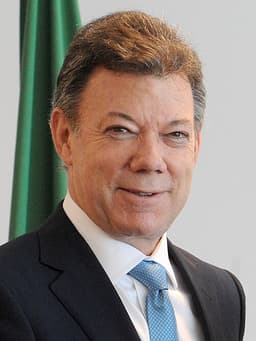
Juan Manuel Santos
Politician · Modern
58.3Total
Basic Information
Born
1930
1951
Died
—
—
Era
Modern
Modern
Nationality
India
Colombia
Occupation
Politician
Politician
Civilization
Indian
Western
Score Comparison
Military (10%)
10.0
49.8
Political (20%)
68.0
62.7
Influence (20%)
54.1
56.7
Legacy (20%)
45.0
55.0
Leadership (15%)
68.0
78.0
Strategy (15%)
45.0
43.2
TOTAL
50.7
58.3
George Fernandes — Complete Timeline
1974 AD
Leadership of the 1974 Railway StrikePolitical Action◆ Major
George Fernandes led the All India Railwaymen's Federation in a nationwide railway strike, demanding better wages and working conditions. The strike, involving 1.7 million workers, was crushed by the government, leading to his arrest.
Labour StrikeRailwaysTrade Union
Impact: nationaltragic
1975 AD
Imprisonment During the EmergencyPolitical Action◆ Major
George Fernandes was arrested and imprisoned during the Emergency imposed by Indira Gandhi. He was held for 19 months, much of it in solitary confinement, for his opposition to the government.
EmergencyImprisonmentOpposition
Impact: nationaltragic
1977 AD
Election to Lok Sabha from MuzaffarpurPolitical Action
George Fernandes was elected to the Lok Sabha from Muzaffarpur, Bihar, as a member of the Janata Party. This election followed the end of the Emergency and the defeat of Indira Gandhi's Congress.
Lok SabhaElectionJanata Party
Impact: national
1998 AD
Appointment as Defence Minister of IndiaPolitical Action◆ Major
George Fernandes was appointed Union Minister of Defence in the Vajpayee government, serving until 2004. He oversaw the Kargil War (1999) and the 2001 Indian Parliament attack, as well as defense modernization.
Defence MinisterKargil WarSecurity
Impact: national
2001 AD
Resignation as Defence Minister Over Tehelka ScandalPolitical Action◆ Major
George Fernandes resigned as Defence Minister after the Tehelka sting operation alleged corruption in defense deals. He was later cleared of wrongdoing by a parliamentary committee, but the scandal damaged his reputation.
ResignationTehelkaCorruption Allegations
Impact: nationaltragic
Juan Manuel Santos — Complete Timeline
2010 AD
Elected President of ColombiaPolitical Action◆ Major
Juan Manuel Santos won the Colombian presidential election as the candidate of the National Unity Party. He was the former Defense Minister under Uribe and initially continued the hardline security policy.
ElectionPresidencyColombia
Impact: national
2012 AD
Launched Formal Peace Talks with FARCPolitical Action◆ Major
Santos announced the start of formal peace negotiations with the FARC in Havana, Cuba. The talks were held in secret for six months before being made public, with Norway and Cuba as guarantors.
Peace ProcessFARCColombian Conflict
Impact: nationalconstructive
2016 AD
Signed Final Peace Agreement with FARCPolitical Action
Santos signed a historic peace agreement with FARC commander Rodrigo Londo
Peace AgreementFARCColombian Conflict
Impact: nationalconstructive
Awarded Nobel Peace PrizeCultural◆ Major
Santos was awarded the Nobel Peace Prize for his efforts to end the Colombian civil war. The Nobel Committee recognized his leadership in the peace process despite the narrow rejection of the initial peace deal in a referendum.
Nobel PrizePeaceRecognition
Impact: globalconstructive
Peace Referendum RejectedPolitical Action◆ Major
The initial peace agreement with the FARC was narrowly rejected by Colombian voters in a referendum by 50.2% to 49.8%. The result was a major setback for Santos, who had campaigned heavily for approval.
ReferendumPeace ProcessSetback
Impact: nationaltragic
This comparison has not been analyzed yet.
One-time AI generation (~1 minute). Scores and timeline are already available below.
Rankings
🥇
Juan Manuel SantosLeader
Mil: 49.8Pol: 62.7Inf: 56.7
58.3
🥈
George Fernandes
Mil: 10.0Pol: 68.0Inf: 54.1
50.7
+7.6 behind
How This Comparison Works
Algorithm
Each figure is scored on 6 dimensions (0—100 scale) based on structured historical data: Military (10%), Political (20%), Influence (20%), Legacy (20%), Leadership (15%), Strategy (15%). The weighted total produces the final ranking.
Data Sources
Scores are computed from structured sub-indicators in the database. Scale factors adjust for era (Ancient ×0.85, Modern ×1.0) and civilization size (Eastern ×1.05, Other ×0.80) to account for differences in population and military scale.
Maximum 3 Figures
Comparisons are limited to 2—3 figures to ensure readability and statistical meaningfulness.
Error Margins
±5 points per dimension — Sub-scores are derived from historical records with inherent uncertainty. Two figures within 5 points on a dimension should be considered roughly equivalent in that area.
Total Score Accuracy
±3 points overall — The weighted combination of 6 dimensions produces a total score with approximately ±3 points of uncertainty. Differences of less than 3 points are not statistically significant— the figures are effectively tied.
Known Limitations
- Historical records are incomplete and uneven across civilizations
- Figures from oral-tradition societies may be underrepresented
- Occupation labels can misclassify multi-role figures
- Scores measure capability and impact, not moral character
- Quantitative scoring is a comparison tool, not absolute truth
Capability Radar
Military (10%) — Battles & Warfare
Battles
0
28
Win Rate
0
33
Expansion
0
34
Political (20%) — Governance & Reform
Reform
55
85
Diplomacy
50
90
Economy
40
60
Influence (20%) — Cultural & Global Reach
Cultural
30
55
Global
35
70
Legacy (20%) — Historical Impact
Historical
40
75
Longevity
30
65
Leadership (15%) — Power & Stability
Tenure
60
70
Stability
45
75
Strategy (15%) — Tactics & Innovation
Strategy
0
40
Tactics
0
40
Reform
30
46
Similar Comparisons
Comments & Discussion
No comments yet. Be the first to share your thoughts!