Loading...
George II of Great Britain vs Vasili IV of Russia
George II of Great Britain leads by 19.2 pts · 2 figures compared
…

George II of Great Britain
Emperor · Modern
57.6Total
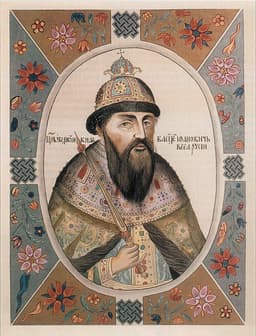
Vasili IV of Russia
Emperor · Modern
38.4Total
Basic Information
Born
1683
1552
Died
1760
1612
Era
Modern
Modern
Nationality
United Kingdom
Russia
Occupation
Emperor
Emperor
Civilization
Western
Western
Score Comparison
Military (10%)
47.5
25.9
Political (20%)
53.8
27.9
Influence (20%)
59.0
47.9
Legacy (20%)
48.3
36.7
Leadership (15%)
80.0
45.0
Strategy (15%)
60.0
36.8
TOTAL
57.6
38.4
George II of Great Britain — Complete Timeline
1740 AD
War of the Austrian SuccessionWar◆ Major
George II involved Britain in the War of the Austrian Succession, fighting against France and Spain. British forces achieved victories at Dettingen and Fontenoy. The war ended with the Treaty of Aix-la-Chapelle in 1748, which returned conquered territories.
WarEuropean ConflictTreaty
Impact: global
1743 AD
Battle of DettingenWar◆ Major
George II personally led British and allied forces to victory over the French at Dettingen in Bavaria. He was the last British monarch to command troops in battle. This victory was part of the War of the Austrian Succession.
BattleWar of Austrian SuccessionPersonal Command
Impact: regional
1745 AD
Jacobite Rising of 1745War◆ Major
George II faced a major Jacobite rebellion led by Charles Edward Stuart (Bonnie Prince Charlie). The rebels advanced into England but were defeated at the Battle of Culloden in 1746. This ended the Stuart threat to the Hanoverian throne.
Jacobite RebellionCullodenStuart Claimant
Impact: national
1760 AD
Death from Aortic DissectionOther
George II died of an aortic dissection at Kensington Palace at age 76. He was buried in Westminster Abbey. His death passed the throne to his grandson George III. His reign saw the expansion of British colonial power.
DeathSuccessionMonarchy
Impact: national
Vasili IV of Russia — Complete Timeline
1606 AD
Elected Tsar of RussiaPolitical Action◆ Major
Vasili IV was elected Tsar by a hastily assembled Zemsky Sobor after the overthrow and murder of False Dmitry I. His election ended the brief reign of the first pretender but failed to stabilize Russia, as the country descended into the Time of Troubles.
ElectionTsarTime of Troubles
Impact: national
1607 AD
Defeated the Bolotnikov RebellionWar◆ Major
Vasili IV's forces, led by Prince Mikhail Skopin-Shuisky, defeated the rebel army of Ivan Bolotnikov near Moscow. The rebellion, which combined Cossacks, peasants, and nobles, threatened the capital but was crushed, though it weakened the tsar's authority.
RebellionBolotnikovCivil War
Impact: nationaldestructive
1609 AD
Signed the Treaty of Vyborg with SwedenPolitical Action◆ Major
Vasili IV signed the Treaty of Vyborg, ceding the fortress of Korela to Sweden in exchange for military aid against the Polish-Lithuanian Commonwealth and False Dmitry II. The treaty brought Swedish intervention into the Time of Troubles but failed to secure his throne.
TreatySwedenTime of Troubles
Impact: regionaldestructive
1610 AD
Deposed and forcibly tonsured as a monkPolitical Action◆ Major
Vasili IV was deposed by a coalition of boyars and forced to become a monk, ending his reign. He was later handed over to the Polish-Lithuanian Commonwealth and died in captivity in 1612, the last Rurikid tsar to rule Russia.
DepositionMonkCaptivity
Impact: nationaltragic
Expert Analysis
Origins
George II (1683–1760) was born in Hanover, Germany, as the son of George I, the first Hanoverian king of Great Britain. His mother, Sophia Dorothea of Celle, was imprisoned for adultery when he was 11. George II grew up in a fractured family, speaking French and German, learning English later. He married Caroline of Ansbach in 1705, a union that proved politically and personally supportive. His father's accession to the British throne in 1714 brought him to England, where he chafed under his father's control.
Vasili IV (1552–1612) was born into the prominent Shuisky family, one of the oldest Rurikid lines. He grew up in the turbulent court of Ivan the Terrible, witnessing the tsar's paranoia and violence. Vasili served as a boyar under Ivan and later under Boris Godunov. His family was periodically disgraced; he himself was exiled briefly in 1587. He learned the arts of court intrigue and military command, but lacked a broad education.
Rise to Power
George II became king in 1727 upon his father's death. He had been Prince of Wales and maintained a contentious relationship with George I, even forming a rival court. As king, he relied heavily on his wife Caroline and the prime minister Robert Walpole, who effectively managed the government. George II's early reign saw stability under Walpole's pacific policies, avoiding major wars until the 1740s.
Vasili IV rose amid the chaos of the Time of Troubles. After the death of Boris Godunov in 1605, a series of pretenders and usurpers fought for power. Vasili initially supported False Dmitry I, then switched sides. After Dmitry's murder in 1606, Vasili was elected tsar by a hastily assembled Zemsky Sobor, largely controlled by his supporters. His legitimacy was weak, contested by boyars and foreign powers.
Leadership & Governance
George II was a constitutional monarch who left most governance to Parliament and his ministers. He focused on foreign policy and military matters, especially Hanoverian interests. He was known for his stubbornness and short temper, but also for his courage. He scored 80.0 in leadership, reflecting his personal bravery at Dettingen, but only 53.8 in political skill, as he often clashed with ministers.
Vasili IV ruled autocratically but ineffectively. He tried to consolidate power by executing rivals and distributing lands to supporters. He struggled to maintain control over a divided court and a realm ravaged by civil war. His political score of 27.9 reflects his inability to forge lasting alliances. He signed the Treaty of Vyborg (1609) ceding Korela to Sweden for military aid, a desperate move that weakened Russia's borders.
Triumph & Tragedy
George II's greatest triumph was the Battle of Dettingen (1743), where he personally led British and allied forces to victory over the French, the last British monarch to command troops in battle. He also successfully suppressed the Jacobite Rising of 1745, with the decisive defeat at Culloden (1746) under his son Cumberland. His tragedies include the loss of Minorca to the French in 1756, which triggered a political crisis, and his strained relationship with his son Frederick.
Vasili IV's triumph was the defeat of the Bolotnikov Rebellion (1606–1607), a massive uprising of Cossacks and peasants. His general Skopin-Shuisky crushed the rebels, temporarily stabilizing his rule. However, his tragedy was his deposition and death in Polish captivity. In 1610, he was overthrown by boyars, forcibly tonsured a monk, and handed to the Polish king Sigismund III, dying in prison in 1612. His reign ended the Rurikid dynasty.
Character & Destiny
George II was brave, obstinate, and devoted to his wife Caroline. His courage on the battlefield was genuine, but his political judgment was often poor. He favored Hanoverian interests over British ones, causing friction. His character shaped a reign that saw Britain's rise as a global power despite his personal limitations. He scored 60.0 in strategy, reflecting his military instincts but overall mediocre statecraft.
Vasili IV was cunning but indecisive, a product of the treacherous court of Ivan the Terrible. He lacked the vision to unite Russia. His reliance on foreign troops and his willingness to cede territory eroded his support. His character, shaped by survival instincts rather than statesmanship, led him to a tragic end. His strategy score of 36.8 reflects poor long-term planning.
Legacy
George II's legacy is mixed. He was the last British monarch to lead troops in battle, a symbol of personal monarchy. His reign saw the expansion of the British Empire through wars and colonization. The capture of Quebec (1759) occurred just before his death. His total score of 57.6 places him as a moderately effective ruler. He is remembered for his role in the War of Austrian Succession and the Jacobite defeat.
Vasili IV is a footnote in Russian history, the last Rurikid tsar. His reign was a failure, contributing to the Time of Troubles. He scored 38.4 total, with particularly low military (25.9) and political (27.9) scores. His legacy is negative: his policies weakened Russia and led to foreign intervention. He is remembered as a tragic figure who could not stem the chaos.
Conclusion
George II had a greater impact than Vasili IV, both in scope and duration. George II scored 57.6 overall against Vasili's 38.4, a gap of 19.2 points. While George II was not a great king, his reign saw Britain become a dominant power. Vasili IV's reign was a disaster that deepened Russia's crisis. George II's personal bravery and constitutional role provided stability; Vasili's incompetence and betrayal led to his downfall. Clearly, George II of Great Britain had the greater impact on history.
Rankings
🥇
George II of Great BritainLeader
Mil: 47.5Pol: 53.8Inf: 59.0
57.6
🥈
Vasili IV of Russia
Mil: 25.9Pol: 27.9Inf: 47.9
38.4
+19.2 behind
How This Comparison Works
Algorithm
Each figure is scored on 6 dimensions (0—100 scale) based on structured historical data: Military (10%), Political (20%), Influence (20%), Legacy (20%), Leadership (15%), Strategy (15%). The weighted total produces the final ranking.
Data Sources
Scores are computed from structured sub-indicators in the database. Scale factors adjust for era (Ancient ×0.85, Modern ×1.0) and civilization size (Eastern ×1.05, Other ×0.80) to account for differences in population and military scale.
Maximum 3 Figures
Comparisons are limited to 2—3 figures to ensure readability and statistical meaningfulness.
Error Margins
±5 points per dimension — Sub-scores are derived from historical records with inherent uncertainty. Two figures within 5 points on a dimension should be considered roughly equivalent in that area.
Total Score Accuracy
±3 points overall — The weighted combination of 6 dimensions produces a total score with approximately ±3 points of uncertainty. Differences of less than 3 points are not statistically significant— the figures are effectively tied.
Known Limitations
- Historical records are incomplete and uneven across civilizations
- Figures from oral-tradition societies may be underrepresented
- Occupation labels can misclassify multi-role figures
- Scores measure capability and impact, not moral character
- Quantitative scoring is a comparison tool, not absolute truth
Capability Radar
Military (10%) — Battles & Warfare
Battles
55
20
Win Rate
60
15
Expansion
40
5
Political (20%) — Governance & Reform
Reform
45
10
Diplomacy
60
15
Economy
55
10
Influence (20%) — Cultural & Global Reach
Cultural
40
15
Global
45
10
Legacy (20%) — Historical Impact
Historical
50
20
Longevity
40
10
Leadership (15%) — Power & Stability
Tenure
70
30
Stability
65
5
Strategy (15%) — Tactics & Innovation
Strategy
50
15
Tactics
45
20
Reform
30
10
Similar Comparisons
Comments & Discussion
No comments yet. Be the first to share your thoughts!