Loading...
George S. Patton vs Georgy Zhukov
Georgy Zhukov leads by 5.3 pts · 2 figures compared
…
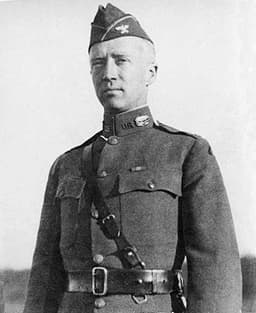
George S. Patton
General · Modern
60.7Total

Georgy Zhukov
General · Modern
66.0Total
Basic Information
Born
1885
1896
Died
1945
1974
Era
Modern
Modern
Nationality
United States
Russia
Occupation
General
General
Civilization
Western
Western
Score Comparison
Military (10%)
79.9
80.0
Political (20%)
26.4
68.0
Influence (20%)
75.0
40.0
Legacy (20%)
72.0
90.0
Leadership (15%)
30.0
48.8
Strategy (15%)
75.0
80.1
TOTAL
60.7
66.0
George S. Patton — Complete Timeline
1943 AD
Command of II Corps in North AfricaWar◆ Major
Patton assumed command of II Corps after the U.S. defeat at Kasserine Pass. He restored discipline and led the corps to victory at El Guettar, his first major engagement against German forces in World War II.
World War IINorth AfricaCommand
Impact: regional
Liberation of SicilyWar◆ Major
Patton commanded the U.S. Seventh Army during the invasion of Sicily. His forces captured Palermo and raced to Messina, beating the British to the port. The campaign secured the island for the Allies.
World War IISicilyCampaign
Impact: regional
Slapping incident in SicilyPolitical Action◆ Major
Patton visited a field hospital and slapped a soldier diagnosed with battle fatigue, accusing him of cowardice. The incident caused a public scandal, nearly ended his career, and forced him to apologize publicly.
World War IIScandalDiscipline
Impact: nationaldestructive
1944 AD
Relief of BastogneWar
During the Battle of the Bulge, Patton rapidly turned his Third Army north and broke through German lines to relieve the besieged 101st Airborne Division at Bastogne. This action was critical to the Allied victory.
World War IIBattle of the BulgeRelief
Impact: regional
1945 AD
Crossing of the Rhine at OppenheimWar◆ Major
Patton's Third Army crossed the Rhine River at Oppenheim without aerial bombardment or a preliminary artillery barrage, achieving a surprise crossing. This allowed Allied forces to advance deep into Germany.
World War IIRhine CrossingAdvance
Impact: regional
Georgy Zhukov — Complete Timeline
1939 AD
Battle of Khalkhin GolWar
Zhukov commanded Soviet and Mongolian forces against the Japanese Kwantung Army at Khalkhin Gol. His use of combined arms tactics, including encirclement and artillery, resulted in a decisive Soviet victory that secured the Soviet eastern border.
Soviet-Japanese Border ConflictsCombined ArmsDecisive Victory
Impact: regional
1941 AD
Battle of MoscowWar
Zhukov took command of the defense of Moscow in October 1941. He organized a counteroffensive in December, pushing German forces back 100-250 miles from the capital. The victory was the first major defeat of the German army in World War II.
World War IIEastern FrontFirst German Defeat
Impact: global
1942 AD
Battle of StalingradWar
Zhukov planned and coordinated Operation Uranus, the Soviet counteroffensive that encircled the German 6th Army at Stalingrad. The operation led to the surrender of German forces in February 1943, a turning point in the war.
World War IIEastern FrontTurning Point
Impact: global
1943 AD
Battle of KurskWar◆ Major
Zhukov coordinated the Soviet defense at Kursk, the largest tank battle in history. The Soviet victory halted the German offensive and allowed the Red Army to launch a counteroffensive that pushed German forces back to the Dnieper River.
World War IIEastern FrontTank Battle
Impact: global
1945 AD
Battle of BerlinWar
Zhukov commanded the 1st Belorussian Front in the assault on Berlin. His forces captured the Reichstag and accepted the German surrender on May 8, 1945. The victory ended World War II in Europe and made Zhukov a national hero.
World War IIEastern FrontFall of Berlin
Impact: global
Expert Analysis
Origins
George Smith Patton Jr. was born on November 11, 1885, in San Gabriel, California, into a wealthy military family with a long tradition of service. He attended the Virginia Military Institute and later West Point, graduating in 1909. Patton struggled with dyslexia but compensated through intense determination. He competed in the pentathlon at the 1912 Olympics and later designed the M1913 Cavalry Saber. His early career included service in the Punitive Expedition against Pancho Villa, where he killed Julio Cárdenas, a notable Villa commander.
Georgy Konstantinovich Zhukov was born on December 1, 1896, in Strelkovka, Kaluga Governorate, into a poor peasant family. He had only a basic education, finishing three years of primary school. Zhukov apprenticed as a furrier in Moscow before being conscripted into the Imperial Russian Army in 1915. He served in the 10th Dragoon Novgorod Regiment, earning two St. George Crosses for bravery. After the Revolution, he joined the Red Army and the Communist Party in 1919, fighting in the Russian Civil War.
Rise to Power
Patton's rise began in World War I, where he served as the first officer assigned to the U.S. Tank Corps. He trained tank crews and led the 304th Tank Brigade in the Meuse-Argonne Offensive, earning the Distinguished Service Cross. Between wars, Patton advocated for armored warfare, though the U.S. military was slow to adopt tanks. His big break came in World War II when he commanded the Western Task Force in Operation Torch, the invasion of North Africa in November 1942. After the U.S. defeat at Kasserine Pass in February 1943, Patton took command of II Corps, restoring discipline and leading a victory at El Guettar on March 23, 1943. He then commanded the Seventh Army in the invasion of Sicily, capturing Palermo and Messina in a race against the British.
Zhukov's rise was meteoric. He first gained Stalin's attention in 1939 by defeating Japanese forces at Khalkhin Gol, a decisive victory that secured the Soviet Far East. In January 1941, Zhukov became Chief of the General Staff, but after the German invasion in June, he was demoted to command the Reserve Front. However, his strategic acumen was recognized when he organized the defense of Leningrad in September 1941, preventing the city's capture. In October, he took command of the Western Front defending Moscow, orchestrating a counteroffensive in December that pushed German forces back 100-250 miles. This victory made him Stalin's most trusted general.
Leadership & Governance
Patton led by personal example and strict discipline. He believed in aggressive, rapid movement and never allowing the enemy to rest. His leadership style was theatrical: he gave profanity-laced speeches, wore polished helmets and ivory-handled pistols, and insisted on impeccable uniforms. He enforced strict standards, fining soldiers for minor infractions. However, his temper could be destructive, as seen in the slapping incident in Sicily on August 3, 1943, when he struck a soldier diagnosed with battle fatigue, calling him a coward. This nearly ended his career. Patton's governance was focused on combat effectiveness; he was less concerned with long-term occupation or politics.
Zhukov led with iron discipline and meticulous planning. He was known for his stern demeanor and willingness to accept enormous casualties to achieve objectives. Unlike Patton, Zhukov operated in a system where failure could mean execution. He demanded detailed reports and punished incompetence harshly. His command style was methodical: he concentrated overwhelming force at decisive points, as at Stalingrad and Kursk. Zhukov also managed complex logistics and coordinated multiple fronts. After the war, he served as the Soviet commander in Germany and later as Minister of Defense, but his political influence was limited by Stalin's suspicion. He was purged in 1946 but rehabilitated after Stalin's death.
Triumph & Tragedy
Patton's greatest triumph was the relief of Bastogne during the Battle of the Bulge in December 1944. In a remarkable feat of logistics and planning, he turned his Third Army 90 degrees north and drove through blizzard conditions to break the German siege of the 101st Airborne Division. He later crossed the Rhine at Oppenheim on March 22, 1945, without prior bombardment, achieving a strategic surprise. However, his failures include the slapping incident, which cost him command of the Seventh Army and likely prevented him from leading an army group. He also underestimated the Soviet threat, arguing for a quick war against the USSR in 1945, a view that was politically untenable.
Zhukov's triumphs include commanding the defense of Moscow, planning Operation Uranus at Stalingrad, coordinating the Battle of Kursk, and leading the final assault on Berlin. His defeat of the Japanese at Khalkhin Gol is a textbook example of combined arms warfare. His tragedies include the enormous casualties under his command: the Battle of Berlin alone cost the Red Army 81,000 dead. He also failed to prevent the German advance in 1941, though this was largely due to Stalin's interference. After the war, Stalin demoted him to command the Odessa Military District, a backwater post, and he was humiliated in the 1950s before Khrushchev restored him.
Character & Destiny
Patton was a complex figure: a romantic who believed in reincarnation and wrote poetry, yet a ruthless warrior who loved battle. He was outspoken and politically naive, often making controversial statements that damaged his career. His destiny was to be a wartime general, not a peacetime leader. He died on December 21, 1945, from injuries sustained in a car accident, just months after the war ended. Historians score him 79.9 in military and 75.0 in influence, but only 26.4 in political acumen.
Zhukov was stoic, pragmatic, and deeply loyal to the Soviet system, though he clashed with Stalin. He was a master of operational art but lacked Patton's charisma. His destiny was to be the savior of the Soviet Union, but he was never fully trusted by Stalin. He died on June 18, 1974, at age 77. Historians rate him 80.0 in military and 90.0 in legacy, reflecting his impact on Soviet history.
Legacy
Patton's legacy is that of an iconic American warrior. He shaped U.S. armored doctrine and inspired generations of soldiers. The Patton Museum at Fort Knox and his portrayal in film (e.g., "Patton", 1970) cement his place in popular culture. However, his tactical innovations were less influential than his example of aggressive leadership.
Zhukov's legacy is immense: he is credited with defeating Nazi Germany. His operational plans, such as Operation Uranus, are studied in military academies. He was awarded the Order of Victory four times, more than any other commander. His memoir, "Reminiscences and Reflections," remains a key source on the Eastern Front. In Russia, he is a national hero with monuments and streets named after him.
Conclusion
While Patton was a brilliant tactician and motivator, Zhukov's impact on the war was greater. Zhukov commanded larger forces, faced more formidable enemies, and achieved victories that directly led to the defeat of the Third Reich. His military score of 80.0 slightly edges Patton's 79.9, but his legacy score of 90.0 far surpasses Patton's 72.0. Zhukov's contributions at Moscow, Stalingrad, Kursk, and Berlin were decisive for the Allied victory. Patton, though effective in the European Theater, operated on a smaller scale and his strategic influence was limited. Therefore, Zhukov stands as the more consequential commander.
Rankings
🥇
Georgy ZhukovLeader
Mil: 80.0Pol: 68.0Inf: 40.0
66.0
🥈
George S. Patton
Mil: 79.9Pol: 26.4Inf: 75.0
60.7
+5.3 behind
How This Comparison Works
Algorithm
Each figure is scored on 6 dimensions (0—100 scale) based on structured historical data: Military (10%), Political (20%), Influence (20%), Legacy (20%), Leadership (15%), Strategy (15%). The weighted total produces the final ranking.
Data Sources
Scores are computed from structured sub-indicators in the database. Scale factors adjust for era (Ancient ×0.85, Modern ×1.0) and civilization size (Eastern ×1.05, Other ×0.80) to account for differences in population and military scale.
Maximum 3 Figures
Comparisons are limited to 2—3 figures to ensure readability and statistical meaningfulness.
Error Margins
±5 points per dimension — Sub-scores are derived from historical records with inherent uncertainty. Two figures within 5 points on a dimension should be considered roughly equivalent in that area.
Total Score Accuracy
±3 points overall — The weighted combination of 6 dimensions produces a total score with approximately ±3 points of uncertainty. Differences of less than 3 points are not statistically significant— the figures are effectively tied.
Known Limitations
- Historical records are incomplete and uneven across civilizations
- Figures from oral-tradition societies may be underrepresented
- Occupation labels can misclassify multi-role figures
- Scores measure capability and impact, not moral character
- Quantitative scoring is a comparison tool, not absolute truth
Capability Radar
Military (10%) — Battles & Warfare
Battles
85
95
Win Rate
88
90
Expansion
80
90
Political (20%) — Governance & Reform
Reform
5
40
Diplomacy
20
55
Economy
5
30
Influence (20%) — Cultural & Global Reach
Cultural
65
65
Global
65
80
Legacy (20%) — Historical Impact
Historical
70
85
Longevity
60
75
Leadership (15%) — Power & Stability
Tenure
10
60
Stability
10
45
Strategy (15%) — Tactics & Innovation
Strategy
78
95
Tactics
92
92
Reform
75
85
Similar Comparisons
Comments & Discussion
No comments yet. Be the first to share your thoughts!