Loading...
Giuseppe Garibaldi vs Lin Biao
Lin Biao leads by 12.0 pts · 2 figures compared
…
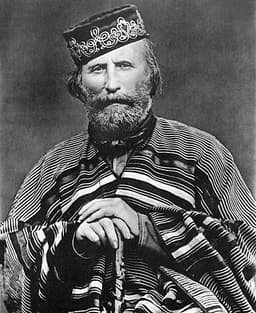
Giuseppe Garibaldi
General · Modern
55.0Total

Lin Biao
General · Modern
67.0Total
Basic Information
Born
1807
1907
Died
1882
1971
Era
Modern
Modern
Nationality
Italy
China
Occupation
General
General
Civilization
Western
Eastern
Score Comparison
Military (10%)
61.7
78.5
Political (20%)
54.7
68.0
Influence (20%)
40.0
72.0
Legacy (20%)
68.0
52.0
Leadership (15%)
54.2
72.0
Strategy (15%)
55.0
72.0
TOTAL
55.0
67.0
Giuseppe Garibaldi — Complete Timeline
1849 AD
Defense of the Roman RepublicWar◆ Major
Garibaldi commanded the defense of the short-lived Roman Republic against French forces sent to restore papal rule. Despite heroic resistance, the republic fell, and Garibaldi led a retreat through central Italy.
Italian UnificationRoman RepublicDefense
Impact: regionaltragic
1860 AD
Expedition of the ThousandWar
Garibaldi led a volunteer force of about 1,000 men to conquer Sicily and Naples. His campaign overthrew the Bourbon monarchy and unified southern Italy with the Kingdom of Sardinia.
Italian UnificationExpeditionVolunteers
Impact: nationalconstructive
Battle of CalatafimiWar◆ Major
Garibaldi's Redshirts defeated a larger Bourbon army at Calatafimi in Sicily. The victory boosted morale and demonstrated the effectiveness of his volunteers, opening the way to Palermo.
Italian UnificationBattleSicily
Impact: regional
Battle of VolturnusWar◆ Major
Garibaldi's forces defeated the Neapolitan army at the Volturno River. The victory secured his conquest of Naples and forced King Francis II into exile, completing the unification of southern Italy.
Italian UnificationBattleNaples
Impact: regional
Cession of Sicily and Naples to Victor Emmanuel IIPolitical Action
After conquering southern Italy, Garibaldi voluntarily handed over his conquests to King Victor Emmanuel II of Sardinia. This act unified Italy under the monarchy and avoided civil war.
Italian UnificationCessionMonarchy
Impact: nationalconstructive
Lin Biao — Complete Timeline
1937 AD
Commanded the Victory at the Battle of PingxingguanWar
Lin Biao commanded the 115th Division of the Eighth Route Army to victory at the Battle of Pingxingguan. This was the first major Chinese victory over the Japanese in the Second Sino-Japanese War, boosting Communist prestige.
Second Sino-Japanese WarVictoryCommunist Army
Impact: nationalconstructive
1945 AD
Commander of the Fourth Field Army in the Chinese Civil WarWar
Lin Biao commanded the Fourth Field Army, which played a decisive role in the Chinese Civil War. His forces captured Manchuria, then swept south to take Beijing, Shanghai, and Guangzhou, securing Communist victory.
Chinese Civil WarMilitary Campaign
Impact: nationaldestructive
1969 AD
Designated as Mao Zedong's SuccessorPolitical Action◆ Major
Lin Biao was officially designated as Mao Zedong's successor in the Communist Party constitution. He was named Vice Chairman and held immense power during the Cultural Revolution.
Cultural RevolutionSuccessionPolitics
Impact: national
1971 AD
Died in a Plane Crash in MongoliaOther
Lin Biao died when his plane crashed in Mongolia after an alleged failed coup attempt against Mao Zedong. His death ended the Lin Biao incident, a major political crisis that led to a purge of his supporters.
DeathCoup AttemptCultural Revolution
Impact: nationaltragic
Expert Analysis
Origins
Giuseppe Garibaldi was born in 1807 in Nice, then part of the French Empire, into a family of coastal traders. His early life at sea exposed him to revolutionary ideas. By contrast, Lin Biao was born in 1907 in Hubei, China, into a modest landlord family. He attended the Whampoa Military Academy, graduating in 1925, which provided him with formal military training. Garibaldi's formative experiences included joining the Carbonari secret society and participating in a failed insurrection in 1834, leading to exile. Lin Biao's early revolutionary involvement began with joining the Communist Youth League and later the Chinese Communist Party in 1925.
Rise to Power
Garibaldi rose to prominence through his military campaigns for Italian unification. Key turning points include his leadership in the 1849 defense of the Roman Republic and the 1860 Expedition of the Thousand, where he captured Sicily and Naples with about 1,000 volunteers. He then ceded his conquests to King Victor Emmanuel II, facilitating unification. Lin Biao's rise came through the Chinese Civil War. He commanded the 115th Division in the 1937 Battle of Pingxingguan, the first major Chinese victory over Japan. Later, as commander of the Fourth Field Army from 1945 to 1949, he captured Manchuria and swept south, decisively defeating Nationalist forces. He was designated Mao's successor in 1969.
Leadership & Governance
Garibaldi's leadership style was charismatic and decentralized. He inspired loyalty through personal bravery and a shared cause, but lacked administrative skills. He governed conquered territories provisionally, focusing on military consolidation. Lin Biao's leadership was more systematic. He emphasized discipline and ideological conformity, implementing Mao's guerrilla warfare tactics. As a military strategist, he scored 72.0 in strategy, compared to Garibaldi's 55.0. Lin Biao also held political power, scoring 68.0 in political influence, while Garibaldi scored 54.7. Garibaldi's governance was limited to temporary administrations, while Lin Biao served as Vice Chairman and Defense Minister, shaping China's military policy.
Triumph & Tragedy
Garibaldi's greatest triumph was the Expedition of the Thousand, which unified southern Italy under the Sardinian monarchy. His victory at the Battle of Volturnus in 1860 secured Naples. However, his tragedy was the failed defense of the Roman Republic in 1849 and his later marginalization in the unified Italian state. He also suffered military defeats at the Battle of Aspromonte in 1862. Lin Biao's triumphs include the Pingxingguan victory and the capture of Manchuria. He scored 78.5 in military, while Garibaldi scored 61.7. Lin Biao's tragedy was his fall from power: he died in a plane crash in 1971 after an alleged coup attempt against Mao. His legacy was suppressed for decades.
Character & Destiny
Garibaldi was idealistic, willing to sacrifice power for national unity. His voluntary cession of Sicily and Naples to Victor Emmanuel II exemplifies his lack of personal ambition. This led to his eventual irrelevance in politics. Lin Biao was ambitious and calculating. He rose through the Communist hierarchy by aligning with Mao, but his desire for power led to conflict. Historians debate whether he actually plotted against Mao, but his death sealed his fate. Garibaldi's character made him a symbol of liberty, while Lin Biao's ambition led to his downfall.
Legacy
Garibaldi is remembered as the "Hero of Two Worlds" for his role in Italian unification and his influence on revolutionary movements. His legacy score is 68.0, with enduring symbols like the Redshirts. Lin Biao's legacy is more complex: initially celebrated as a military genius, he was later vilified after his death. His legacy score of 52.0 reflects this reversal. However, his military strategies influenced Chinese doctrine. Garibaldi's impact on national unification is tangible, while Lin Biao's impact was overshadowed by political controversy.
Conclusion
While Garibaldi's total score of 55.0 is lower than Lin Biao's 67.0, his impact on Italian unification was decisive and positive. Lin Biao's military achievements were significant, but his legacy is marred by his attempted coup and ambiguous historical assessment. Garibaldi's voluntary relinquishment of power set a precedent for selfless nationalism. Therefore, Garibaldi had a greater net positive impact on history, despite lower scores in military and political categories.
Rankings
🥇
Lin BiaoLeader
Mil: 78.5Pol: 68.0Inf: 72.0
67.0
🥈
Giuseppe Garibaldi
Mil: 61.7Pol: 54.7Inf: 40.0
55.0
+12.0 behind
How This Comparison Works
Algorithm
Each figure is scored on 6 dimensions (0—100 scale) based on structured historical data: Military (10%), Political (20%), Influence (20%), Legacy (20%), Leadership (15%), Strategy (15%). The weighted total produces the final ranking.
Data Sources
Scores are computed from structured sub-indicators in the database. Scale factors adjust for era (Ancient ×0.85, Modern ×1.0) and civilization size (Eastern ×1.05, Other ×0.80) to account for differences in population and military scale.
Maximum 3 Figures
Comparisons are limited to 2—3 figures to ensure readability and statistical meaningfulness.
Error Margins
±5 points per dimension — Sub-scores are derived from historical records with inherent uncertainty. Two figures within 5 points on a dimension should be considered roughly equivalent in that area.
Total Score Accuracy
±3 points overall — The weighted combination of 6 dimensions produces a total score with approximately ±3 points of uncertainty. Differences of less than 3 points are not statistically significant— the figures are effectively tied.
Known Limitations
- Historical records are incomplete and uneven across civilizations
- Figures from oral-tradition societies may be underrepresented
- Occupation labels can misclassify multi-role figures
- Scores measure capability and impact, not moral character
- Quantitative scoring is a comparison tool, not absolute truth
Capability Radar
Military (10%) — Battles & Warfare
Battles
65
85
Win Rate
70
90
Expansion
60
80
Political (20%) — Governance & Reform
Reform
40
55
Diplomacy
50
50
Economy
20
45
Influence (20%) — Cultural & Global Reach
Cultural
70
55
Global
65
60
Legacy (20%) — Historical Impact
Historical
75
70
Longevity
65
50
Leadership (15%) — Power & Stability
Tenure
30
60
Stability
25
40
Strategy (15%) — Tactics & Innovation
Strategy
60
88
Tactics
75
92
Reform
55
75
Similar Comparisons
Comments & Discussion
No comments yet. Be the first to share your thoughts!