Loading...
Gnassingbe Eyadema vs Yitzhak Rabin
Yitzhak Rabin leads by 17.5 pts · 2 figures compared
…

Gnassingbe Eyadema
General · Modern
48.9Total
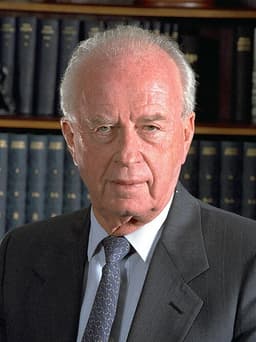
Yitzhak Rabin
General · Modern
66.4Total
Basic Information
Born
1935
1922
Died
—
—
Era
Modern
Modern
Nationality
Togo
Israel
Occupation
General
General
Civilization
Other
Middle Eastern
Score Comparison
Military (10%)
50.0
61.7
Political (20%)
42.2
82.0
Influence (20%)
51.0
68.0
Legacy (20%)
40.8
55.0
Leadership (15%)
72.0
78.0
Strategy (15%)
38.6
55.0
TOTAL
48.9
66.4
Gnassingbe Eyadema — Complete Timeline
1967 AD
Seized Power in Military CoupPolitical Action◆ Major
Eyadema led a military coup that overthrew President Nicolas Grunitzky, establishing himself as head of state. He was then 32 years old, becoming one of Africa's youngest leaders at the time.
CoupTogoMilitary
Impact: nationaldestructive
1969 AD
Established One-Party StatePolitical Action◆ Major
Eyadema established the Rally of the Togolese People as the sole legal party, creating a one-party state. He suppressed political opposition, controlled the media, and ruled with an iron fist for decades.
One-Party StateRepressionTogo
Impact: nationaldestructive
1970 AD
Survived Assassination AttemptPolitical Action
Eyadema survived an assassination attempt when his plane was attacked by a group of Togolese exiles. The attack failed, and Eyadema used it to consolidate power and crack down on opposition.
Assassination AttemptTogoSurvival
Impact: national
1991 AD
Transitioned to Multiparty PoliticsReform◆ Major
Under pressure from pro-democracy movements and international donors, Eyadema allowed multiparty elections. However, he manipulated the process to retain power, winning disputed elections in 1993, 1998, 2003, and 2005.
MultipartyElectionTogo
Impact: national
2005 AD
Died in OfficeOther◆ Major
Eyadema died of a heart attack on February 5, 2005, after 38 years in power. His death ended one of Africa's longest-serving presidencies. He was succeeded by his son, Faure Gnassingb
DeathTogoDynastic Succession
Impact: national
Yitzhak Rabin — Complete Timeline
1967 AD
Chief of Staff during the Six-Day WarWar
As Chief of Staff of the Israel Defense Forces, Rabin commanded the Israeli military during the Six-Day War against Egypt, Jordan, and Syria. Israel captured the Sinai Peninsula, Gaza Strip, West Bank, East Jerusalem, and Golan Heights, reshaping the region.
Six-Day WarTerritorial ExpansionMilitary Victory
Impact: global
1993 AD
Signing of the Oslo AccordsPolitical Action
As prime minister, Rabin signed the Oslo Accords with PLO Chairman Yasser Arafat on the White House lawn. The agreement established the Palestinian Authority and set a framework for Palestinian self-governance in the West Bank and Gaza Strip.
Peace ProcessPalestiniansOslo
Impact: globalconstructive
1995 AD
Assassination at Peace RallyPolitical Action
Rabin was assassinated by Israeli extremist Yigal Amir after a peace rally in Tel Aviv. The assassination shocked Israel and the world, derailing the Oslo peace process and leading to a period of political instability.
AssassinationPeace ProcessPolitical Violence
Impact: globaltragic
Expert Analysis
Origins
Gnassingbe Eyadema was born on December 26, 1935, in Pya, a small village in northern Togo, to a peasant family. He received minimal formal education and joined the French colonial army in 1953, serving in Indochina and Algeria. This military background shaped his authoritarian approach. Yitzhak Rabin was born on March 1, 1922, in Jerusalem to secular Zionist parents. He attended agricultural school and joined the Palmach, the elite strike force of the Haganah, in 1941. His early experiences in the pre-state Jewish defense forces laid the foundation for his military and political career.
Rise to Power
Eyadema rose through the ranks of the Togolese army after independence. On January 13, 1963, he participated in a coup that assassinated President Sylvanus Olympio. After a brief period under Nicolas Grunitzky, Eyadema seized power in a bloodless coup on January 13, 1967, at age 32. He immediately suspended the constitution and banned political parties. Rabin's rise was more gradual. He became Chief of Staff of the Israel Defense Forces in 1964 and led Israel to a decisive victory in the Six-Day War of June 1967. After retiring from the military, he served as ambassador to the United States (1968-1973) and entered politics, becoming Prime Minister in 1974 for the first time.
Leadership & Governance
Eyadema established a one-party state under the Rally of the Togolese People (RPT) in 1969. He suppressed dissent through secret police and torture, but also maintained stability in a country divided between north and south. He manipulated elections, winning 99% of the vote in 1979 and 1986. In 1991, under international pressure, he allowed a transition to multiparty politics but rigged subsequent elections to retain power. His governance score of 72.0 reflects his longevity but not democratic legitimacy. Rabin's leadership style was pragmatic and security-focused. As Prime Minister, he prioritized Israel's security while pursuing peace. He launched Operation Entebbe in 1976, rescuing hostages from Uganda. In his second term (1992-1995), he froze settlements and signed the Oslo Accords in 1993, establishing the Palestinian Authority. His leadership score of 78.0 stems from his ability to balance military strength with diplomatic engagement.
Triumph & Tragedy
Eyadema's greatest triumph was surviving in power for 38 years, making him one of Africa's longest-serving rulers. He also maintained Togo's sovereignty during the Cold War. His greatest failure was his repressive regime, which left Togo impoverished and politically stunted. He scored 38.6 in strategy due to his inability to develop the economy or build lasting institutions. Rabin's triumph was the Oslo Accords, which earned him the 1994 Nobel Peace Prize alongside Shimon Peres and Yasser Arafat. His tragedy was his assassination on November 4, 1995, by an Israeli extremist opposed to the peace process. This event derailed the Oslo process and led to a resurgence of violence. Rabin scored 61.7 in military and 82.0 in political, reflecting his dual expertise.
Character & Destiny
Eyadema was ruthless and cunning, using violence and patronage to stay in power. He believed in strongman rule and treated Togo as his personal fiefdom. His character led to a stable but stagnant nation. Rabin was a reserved, analytical leader who evolved from a hawkish general to a peace-seeking statesman. His willingness to take risks for peace, despite opposition, defined his destiny. His assassination made him a martyr for peace but also halted the progress he championed.
Legacy
Eyadema's legacy is mixed: he is remembered as a dictator who held Togo together but at the cost of democracy and development. His son Faure Gnassingbé succeeded him after a controversial election, perpetuating the family's rule. Rabin's legacy is that of a peacemaker who changed Israel's trajectory. The Oslo Accords remain a cornerstone of Israeli-Palestinian diplomacy, though the peace process collapsed after his death. Rabin is revered in Israel as a symbol of courage and compromise. His total score of 66.4 far exceeds Eyadema's 48.9, indicating greater historical impact.
Conclusion
Yitzhak Rabin had a greater impact on history than Gnassingbe Eyadema. Rabin's military achievements in the Six-Day War and his political courage in signing the Oslo Accords reshaped the Middle East, even if the peace process faltered. Eyadema, despite his long rule, left Togo no better off than when he started, with a score of 48.9 reflecting limited positive influence. Rabin's 66.4 total score and his enduring legacy as a peacemaker make him the more significant figure.
Rankings
🥇
Yitzhak RabinLeader
Mil: 61.7Pol: 82.0Inf: 68.0
66.4
🥈
Gnassingbe Eyadema
Mil: 50.0Pol: 42.2Inf: 51.0
48.9
+17.5 behind
How This Comparison Works
Algorithm
Each figure is scored on 6 dimensions (0—100 scale) based on structured historical data: Military (10%), Political (20%), Influence (20%), Legacy (20%), Leadership (15%), Strategy (15%). The weighted total produces the final ranking.
Data Sources
Scores are computed from structured sub-indicators in the database. Scale factors adjust for era (Ancient ×0.85, Modern ×1.0) and civilization size (Eastern ×1.05, Other ×0.80) to account for differences in population and military scale.
Maximum 3 Figures
Comparisons are limited to 2—3 figures to ensure readability and statistical meaningfulness.
Error Margins
±5 points per dimension — Sub-scores are derived from historical records with inherent uncertainty. Two figures within 5 points on a dimension should be considered roughly equivalent in that area.
Total Score Accuracy
±3 points overall — The weighted combination of 6 dimensions produces a total score with approximately ±3 points of uncertainty. Differences of less than 3 points are not statistically significant— the figures are effectively tied.
Known Limitations
- Historical records are incomplete and uneven across civilizations
- Figures from oral-tradition societies may be underrepresented
- Occupation labels can misclassify multi-role figures
- Scores measure capability and impact, not moral character
- Quantitative scoring is a comparison tool, not absolute truth
Capability Radar
Military (10%) — Battles & Warfare
Battles
15
65
Win Rate
10
70
Expansion
10
50
Political (20%) — Governance & Reform
Reform
20
65
Diplomacy
40
85
Economy
25
60
Influence (20%) — Cultural & Global Reach
Cultural
20
55
Global
15
70
Legacy (20%) — Historical Impact
Historical
25
75
Longevity
20
60
Leadership (15%) — Power & Stability
Tenure
80
70
Stability
30
40
Strategy (15%) — Tactics & Innovation
Strategy
15
75
Tactics
20
60
Reform
25
55
Similar Comparisons
Comments & Discussion
No comments yet. Be the first to share your thoughts!