Loading...
Gongsun Hong vs Zhuge Liang
Zhuge Liang leads by 8.6 pts · 2 figures compared
…

Gongsun Hong
Politician · Ancient
53.3Total
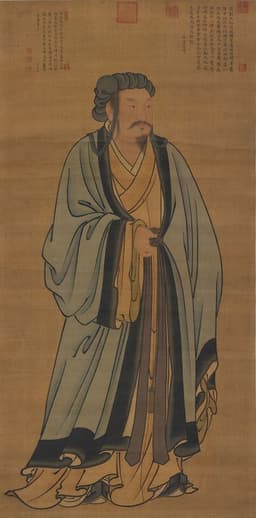
Zhuge Liang
Politician · Ancient
61.9Total
Basic Information
Born
-200
181
Died
-121
234
Era
Ancient
Ancient
Nationality
China
China
Occupation
Politician
Politician
Civilization
Eastern
Eastern
Score Comparison
Military (10%)
50.0
45.0
Political (20%)
45.0
72.0
Influence (20%)
54.9
40.0
Legacy (20%)
46.7
71.4
Leadership (15%)
79.8
80.0
Strategy (15%)
41.3
67.2
TOTAL
53.3
61.9
Gongsun Hong — Complete Timeline
124 BC
Promoted the Establishment of the Imperial AcademyReform◆ Major
Gongsun Hong advocated for the creation of the Imperial Academy (Taixue) to train officials in Confucian classics. This institution became the model for China's civil service examination system and standardized Confucian education.
Han DynastyEducationConfucianism
Impact: globalconstructive
Implemented Confucian Reforms in GovernmentReform◆ Major
As prime minister, Gongsun Hong instituted policies that favored Confucian scholars for official appointments. He established quotas for recruiting scholars from the provinces and emphasized moral cultivation in governance.
Han DynastyConfucianismCivil Service
Impact: nationalconstructive
Appointed as Prime Minister of HanPolitical Action◆ Major
Gongsun Hong became the first commoner to be appointed as prime minister (chengxiang) of the Han dynasty. His rise from a humble background as a pig herder to the highest office exemplified the meritocratic ideals of the Han examination system.
Han DynastyMeritocracyGovernment
Impact: nationalconstructive
123 BC
Advised Emperor Wu on Foreign PolicyPolitical Action
Gongsun Hong counseled Emperor Wu against aggressive military campaigns against the Xiongnu, advocating for a defensive strategy. His advice was often overruled, but he remained a trusted advisor known for his cautious approach.
Han DynastyForeign PolicyXiongnu
Impact: national
Zhuge Liang — Complete Timeline
207 AD
Formulation of the Longzhong PlanPolitical Action
During a meeting at Longzhong, Zhuge Liang presented Liu Bei with a strategic plan to divide China into three spheres of influence. The plan advocated for alliance with Sun Quan, control of Jing and Yi provinces, and eventual restoration of the Han dynasty.
StrategyLongzhongLiu Bei
Impact: regionalconstructive
221 AD
Appointment as Chancellor of Shu HanPolitical Action◆ Major
After Liu Bei founded the Shu Han dynasty, Zhuge Liang was appointed Chancellor and regent. He assumed full administrative and military responsibility, governing the state with efficiency and integrity during the reign of the young emperor Liu Shan.
ChancellorShu HanGovernment
Impact: nationalconstructive
225 AD
Southern Campaign (Nanzhong)War◆ Major
Zhuge Liang led a military campaign to pacify the southern tribes in Nanzhong (modern Yunnan and Guizhou). He used a combination of force and diplomacy, winning over the local chieftain Meng Huo, and secured Shu's southern border.
CampaignSouthern TribesPacification
Impact: regional
227 AD
Composition of the Chu Shi BiaoCultural◆ Major
Before the first Northern Expedition, Zhuge Liang wrote the 'Chu Shi Biao' (Memorial on the State of the Realm) to Emperor Liu Shan. This document outlined his loyalty, strategic reasoning, and advice for governance, becoming a classic of Chinese literature.
LiteratureMemorialLoyalty
Impact: nationalconstructive
228 AD
Northern Expeditions against WeiWar◆ Major
Zhuge Liang launched five major military campaigns from 228 to 234 to attack the Kingdom of Wei and restore Han rule. Despite tactical brilliance, the expeditions failed to achieve decisive victory due to logistical challenges and Wei's strong defenses.
ExpeditionsWeiWar
Impact: regional
Expert Analysis
Origins
Gongsun Hong (200–121 BCE) was born into a humble family in Zichuan (modern Shandong). He worked as a swineherd before taking up classical studies in his forties. Despite lacking an elite background, he mastered the Confucian classics and became a teacher. His late start and low birth distinguished him from typical Han officials.
Zhuge Liang (181–234 CE) was born into a relatively well-off but declining family in Langya (modern Shandong). His father died when he was young, and he was raised by his uncle. He fled the chaos of the late Han dynasty to the south, where he lived as a recluse in Longzhong, studying military strategy, politics, and agriculture. His early life was marked by instability but allowed him to develop his strategic vision.
Rise to Power
Gongsun Hong rose through the Han bureaucracy after Emperor Wu (r. 141–87 BCE) implemented a civil service exam based on Confucian texts. In 130 BCE, at age 70, he was recommended as a 'worthy and excellent' scholar and impressed the emperor with his policy proposals. He quickly advanced, becoming chief minister in 124 BCE. His rise was unprecedented for a commoner.
Zhuge Liang's rise came through the patronage of Liu Bei, a warlord seeking to restore the Han dynasty. In 207 CE, Liu Bei visited Zhuge Liang three times at his thatched cottage, and Zhuge Liang presented the Longzhong Plan—a strategy to divide China into three kingdoms. Appointed as advisor, he became chancellor after Liu Bei founded Shu Han in 221 CE. His ascent relied on personal relationship and strategic acumen.
Leadership & Governance
Gongsun Hong governed with a focus on institutionalizing Confucianism. He established the Imperial Academy (Taixue) in 124 BCE, creating a training ground for future officials. He set quotas for recruiting scholars from across the empire, reducing the influence of hereditary nobles. His governance score of 83.1 reflects his administrative reforms, though his military score of 30.2 shows his caution against expansion.
Zhuge Liang, as chancellor, managed both civil and military affairs. He implemented strict legal codes, promoted agriculture, and maintained a well-organized state. He personally led campaigns, scoring 45.0 in military and 67.2 in strategy. His governance was pragmatic, balancing Confucian ideals with Legalist methods. He wrote the 'Chu Shi Biao' to counsel the young emperor, emphasizing loyalty and diligence.
Triumph & Tragedy
Gongsun Hong's greatest triumph was creating the Imperial Academy, which became the model for Chinese civil service for centuries. He also successfully advised Emperor Wu to adopt Confucianism as state ideology. However, his tragedy was his inability to moderate the emperor's aggressive foreign policy; he died shortly before the costly campaigns against the Xiongnu escalated.
Zhuge Liang's triumph was the Southern Campaign (225 CE), where he pacified the Nanzhong tribes through a mix of force and diplomacy, securing Shu's rear. His Northern Expeditions (228–234 CE) showcased tactical brilliance but ended in failure due to logistical constraints and the death of his rival Sima Yi. His tragedy was never achieving his goal of restoring Han rule.
Character & Destiny
Gongsun Hong was known for his humility and caution. He dressed simply and avoided personal wealth. His cautious advice often put him at odds with Emperor Wu's ambitions. His character earned him respect but limited his influence on grand strategy.
Zhuge Liang was celebrated for his dedication and foresight. He worked tirelessly, micromanaging state affairs. His famous 'Empty Fort Strategy' demonstrated his psychological insight. However, his perfectionism may have contributed to his early death at age 53, as he refused to delegate.
Legacy
Gongsun Hong's legacy is the institutionalization of Confucian civil service, which endured for over 2,000 years. The Imperial Academy became the foundation of China's educational system. His political score of 75.0 and influence of 73.1 reflect this long-term impact.
Zhuge Liang's legacy is more cultural than institutional. He is revered as the archetype of the wise and loyal chancellor, immortalized in literature like 'Romance of the Three Kingdoms'. His military strategies are studied, but his actual achievements are modest. His legacy score of 71.4 is high, but his influence score of 40.0 suggests limited real-world impact beyond myth.
Conclusion
Gongsun Hong had greater impact. While Zhuge Liang is more famous, Gongsun Hong's creation of the Imperial Academy and promotion of Confucian meritocracy shaped Chinese governance for millennia. His total score of 64.5 edges out Zhuge Liang's 61.9, but the gap in influence (73.1 vs 40.0) is decisive. Gongsun Hong transformed the structure of Chinese government; Zhuge Liang, despite his brilliance, failed to achieve his strategic goals and left less tangible institutional change.
Rankings
🥇
Zhuge LiangLeader
Mil: 45.0Pol: 72.0Inf: 40.0
61.9
🥈
Gongsun Hong
Mil: 50.0Pol: 45.0Inf: 54.9
53.3
+8.6 behind
How This Comparison Works
Algorithm
Each figure is scored on 6 dimensions (0—100 scale) based on structured historical data: Military (10%), Political (20%), Influence (20%), Legacy (20%), Leadership (15%), Strategy (15%). The weighted total produces the final ranking.
Data Sources
Scores are computed from structured sub-indicators in the database. Scale factors adjust for era (Ancient ×0.85, Modern ×1.0) and civilization size (Eastern ×1.05, Other ×0.80) to account for differences in population and military scale.
Maximum 3 Figures
Comparisons are limited to 2—3 figures to ensure readability and statistical meaningfulness.
Error Margins
±5 points per dimension — Sub-scores are derived from historical records with inherent uncertainty. Two figures within 5 points on a dimension should be considered roughly equivalent in that area.
Total Score Accuracy
±3 points overall — The weighted combination of 6 dimensions produces a total score with approximately ±3 points of uncertainty. Differences of less than 3 points are not statistically significant— the figures are effectively tied.
Known Limitations
- Historical records are incomplete and uneven across civilizations
- Figures from oral-tradition societies may be underrepresented
- Occupation labels can misclassify multi-role figures
- Scores measure capability and impact, not moral character
- Quantitative scoring is a comparison tool, not absolute truth
Capability Radar
Military (10%) — Battles & Warfare
Battles
23
65
Win Rate
26
60
Expansion
27
55
Political (20%) — Governance & Reform
Reform
65
80
Diplomacy
60
75
Economy
55
70
Influence (20%) — Cultural & Global Reach
Cultural
40
95
Global
20
70
Legacy (20%) — Historical Impact
Historical
50
95
Longevity
30
95
Leadership (15%) — Power & Stability
Tenure
70
70
Stability
60
65
Strategy (15%) — Tactics & Innovation
Strategy
32
90
Tactics
35
85
Reform
37
75
Similar Comparisons
Comments & Discussion
No comments yet. Be the first to share your thoughts!