Loading...
This comparison has not been analyzed yet.
One-time AI generation (~1 minute). Scores and timeline are already available below.
Gopal Krishna Gokhale vs Tony Abbott
Gopal Krishna Gokhale leads by 8.9 pts · 2 figures compared
…
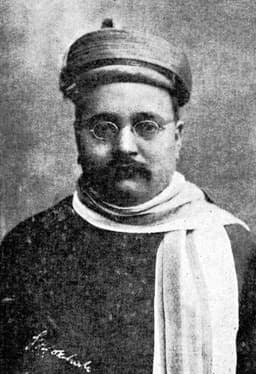
Gopal Krishna Gokhale
Politician · Modern
56.1Total

Tony Abbott
Politician · Modern
47.2Total
Basic Information
Born
1866
1957
Died
1915
—
Era
Modern
Modern
Nationality
India
Australia
Occupation
Politician
Politician
Civilization
Indian
Western
Score Comparison
Military (10%)
35.2
50.0
Political (20%)
53.8
40.8
Influence (20%)
61.0
50.2
Legacy (20%)
54.0
38.3
Leadership (15%)
65.0
65.7
Strategy (15%)
60.0
40.6
TOTAL
56.1
47.2
Gopal Krishna Gokhale — Complete Timeline
1905 AD
Founding of the Servants of India SocietyPolitical Action◆ Major
Gopal Krishna Gokhale founded the Servants of India Society in Pune. The organization aimed to train Indians for social and political service, promoting education, sanitation, and national unity.
Indian Independence MovementSocial Reform
Impact: nationalconstructive
Presidency of the Indian National CongressPolitical Action◆ Major
Gopal Krishna Gokhale served as President of the Indian National Congress at its Benares session. He advocated for constitutional reforms and self-government within the British Empire, influencing moderate nationalist politics.
Indian Independence MovementCongress
Impact: nationalconstructive
1915 AD
Mentorship of Mahatma GandhiPolitical Action◆ Major
Gopal Krishna Gokhale mentored Mahatma Gandhi upon his return from South Africa. He guided Gandhi's entry into Indian politics and encouraged his work on social issues, shaping Gandhi's early political approach.
Indian Independence MovementMentorship
Impact: nationalconstructive
Tony Abbott — Complete Timeline
1994 AD
Elected to the House of RepresentativesPolitical Action
Abbott was elected to the Australian House of Representatives as the Liberal member for Warringah. He entered politics after a career in journalism and law.
ParliamentLiberal Party
Impact: national
2003 AD
Appointed Minister for Health and AgeingPolitical Action◆ Major
Abbott was appointed Minister for Health and Ageing in the Howard government. He oversaw health policy, including the introduction of the Medicare Safety Net and controversial changes to the Pharmaceutical Benefits Scheme.
Health PolicyMedicare
Impact: nationalconstructive
2013 AD
Became Prime Minister of AustraliaPolitical Action◆ Major
Abbott became Prime Minister on 18 September 2013 after leading the Liberal-National coalition to victory in the federal election. He defeated Kevin Rudd's Labor government.
Prime MinisterElection Victory
Impact: national
2015 AD
Lost Liberal Party Leadership SpillPolitical Action◆ Major
Abbott lost the Liberal Party leadership to Malcolm Turnbull in a party room vote on 14 September 2015. He was subsequently replaced as Prime Minister, ending his tenure after two years.
Leadership DefeatParty Coup
Impact: nationaldestructive
This comparison has not been analyzed yet.
One-time AI generation (~1 minute). Scores and timeline are already available below.
Rankings
🥇
Gopal Krishna GokhaleLeader
Mil: 35.2Pol: 53.8Inf: 61.0
56.1
🥈
Tony Abbott
Mil: 50.0Pol: 40.8Inf: 50.2
47.2
+8.9 behind
How This Comparison Works
Algorithm
Each figure is scored on 6 dimensions (0—100 scale) based on structured historical data: Military (10%), Political (20%), Influence (20%), Legacy (20%), Leadership (15%), Strategy (15%). The weighted total produces the final ranking.
Data Sources
Scores are computed from structured sub-indicators in the database. Scale factors adjust for era (Ancient ×0.85, Modern ×1.0) and civilization size (Eastern ×1.05, Other ×0.80) to account for differences in population and military scale.
Maximum 3 Figures
Comparisons are limited to 2—3 figures to ensure readability and statistical meaningfulness.
Error Margins
±5 points per dimension — Sub-scores are derived from historical records with inherent uncertainty. Two figures within 5 points on a dimension should be considered roughly equivalent in that area.
Total Score Accuracy
±3 points overall — The weighted combination of 6 dimensions produces a total score with approximately ±3 points of uncertainty. Differences of less than 3 points are not statistically significant— the figures are effectively tied.
Known Limitations
- Historical records are incomplete and uneven across civilizations
- Figures from oral-tradition societies may be underrepresented
- Occupation labels can misclassify multi-role figures
- Scores measure capability and impact, not moral character
- Quantitative scoring is a comparison tool, not absolute truth
Capability Radar
Military (10%) — Battles & Warfare
Battles
42
27
Win Rate
49
29
Expansion
51
32
Political (20%) — Governance & Reform
Reform
70
35
Diplomacy
65
30
Economy
40
30
Influence (20%) — Cultural & Global Reach
Cultural
55
20
Global
50
20
Legacy (20%) — Historical Impact
Historical
60
20
Longevity
55
10
Leadership (15%) — Power & Stability
Tenure
30
40
Stability
50
25
Strategy (15%) — Tactics & Innovation
Strategy
53
37
Tactics
56
39
Reform
58
42
Similar Comparisons
Comments & Discussion
No comments yet. Be the first to share your thoughts!