Loading...
This comparison has not been analyzed yet.
One-time AI generation (~1 minute). Scores and timeline are already available below.
Gotarzes II of Parthia vs Seti II
Seti II leads by 0.4 pts · 2 figures compared
…

Gotarzes II of Parthia
Emperor · Ancient
35.8Total
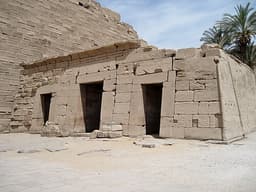
Seti II
Emperor · Ancient
36.2Total
Basic Information
Born
20
-1203
Died
51
-1197
Era
Ancient
Ancient
Nationality
Parthian Empire
New Kingdom Egypt
Occupation
Emperor
Emperor
Civilization
Middle Eastern
Middle Eastern
Score Comparison
Military (10%)
25.0
22.6
Political (20%)
30.7
32.1
Influence (20%)
43.2
43.2
Legacy (20%)
34.2
34.2
Leadership (15%)
34.6
39.0
Strategy (15%)
41.7
39.6
TOTAL
35.8
36.2
Gotarzes II of Parthia — Complete Timeline
40 AD
Usurpation of the ThronePolitical Action◆ Major
Gotarzes II seized the Parthian throne by force, overthrowing the legitimate king Artabanus II's successor. His usurpation triggered a period of civil war and instability in Parthia.
UsurpationCivil WarDynastic Crisis
Impact: nationaldestructive
42 AD
War with Vardanes IWar
Gotarzes II fought a civil war against his rival Vardanes I, who also claimed the throne. The conflict ended with Vardanes' assassination, leaving Gotarzes as the sole ruler of Parthia.
Civil WarRival ClaimantVardanes I
Impact: national
49 AD
Murder of MeherdatesPolitical Action◆ Major
Gotarzes II murdered his brother Meherdates, who had been sent by Rome to claim the Parthian throne. This act eliminated a rival and consolidated Gotarzes' power, but deepened the rift with Rome.
FratricideDynastic StruggleRoman Intervention
Impact: nationaldestructive
50 AD
Conflict with Rome over ArmeniaWar
Gotarzes II attempted to assert Parthian control over Armenia, leading to conflict with Rome. The dispute was unresolved at his death, contributing to the ongoing Roman-Parthian rivalry.
Roman-Parthian WarsArmenian QuestionImperial Rivalry
Impact: regional
Seti II — Complete Timeline
1203 BC
Usurpation by AmenmessePolitical Action◆ Major
Early in Seti II's reign, a rival named Amenmesse seized control of Upper Egypt and Nubia, claiming the throne. Seti II was forced to contend with this usurpation, which divided the kingdom and weakened central authority. The conflict lasted several years before Seti II regained control.
UsurpationCivil WarDynasty XIX
Impact: nationaldestructive
1200 BC
Restoration of Order in ThebesPolitical Action
After suppressing Amenmesse's revolt, Seti II reasserted his authority over Thebes. He ordered the erasure of Amenmesse's name from monuments and restored the power of the priesthood. This action stabilized the region but did not fully reverse the decline of Dynasty XIX.
RestorationThebesPriesthood
Impact: nationalconstructive
Construction of Tomb KV15Cultural
Seti II commissioned his tomb in the Valley of the Kings (KV15). The tomb's decoration was left incomplete, reflecting the troubled times. It was later usurped by later pharaohs. The tomb provides archaeological evidence of the period's artistic and political instability.
TombValley of the KingsArchaeology
This comparison has not been analyzed yet.
One-time AI generation (~1 minute). Scores and timeline are already available below.
Rankings
🥇
Seti IILeader
Mil: 22.6Pol: 32.1Inf: 43.2
36.2
🥈
Gotarzes II of Parthia
Mil: 25.0Pol: 30.7Inf: 43.2
35.8
+0.4 behind
How This Comparison Works
Algorithm
Each figure is scored on 6 dimensions (0—100 scale) based on structured historical data: Military (10%), Political (20%), Influence (20%), Legacy (20%), Leadership (15%), Strategy (15%). The weighted total produces the final ranking.
Data Sources
Scores are computed from structured sub-indicators in the database. Scale factors adjust for era (Ancient ×0.85, Modern ×1.0) and civilization size (Eastern ×1.05, Other ×0.80) to account for differences in population and military scale.
Maximum 3 Figures
Comparisons are limited to 2—3 figures to ensure readability and statistical meaningfulness.
Error Margins
±5 points per dimension — Sub-scores are derived from historical records with inherent uncertainty. Two figures within 5 points on a dimension should be considered roughly equivalent in that area.
Total Score Accuracy
±3 points overall — The weighted combination of 6 dimensions produces a total score with approximately ±3 points of uncertainty. Differences of less than 3 points are not statistically significant— the figures are effectively tied.
Known Limitations
- Historical records are incomplete and uneven across civilizations
- Figures from oral-tradition societies may be underrepresented
- Occupation labels can misclassify multi-role figures
- Scores measure capability and impact, not moral character
- Quantitative scoring is a comparison tool, not absolute truth
Capability Radar
Military (10%) — Battles & Warfare
Battles
40
10
Win Rate
45
10
Expansion
20
5
Political (20%) — Governance & Reform
Reform
10
10
Diplomacy
15
10
Economy
10
10
Influence (20%) — Cultural & Global Reach
Cultural
10
10
Global
5
5
Legacy (20%) — Historical Impact
Historical
15
15
Longevity
10
10
Leadership (15%) — Power & Stability
Tenure
30
15
Stability
10
10
Strategy (15%) — Tactics & Innovation
Strategy
30
10
Tactics
35
10
Reform
10
5
Similar Comparisons
Comments & Discussion
No comments yet. Be the first to share your thoughts!