Loading...
Gulbuddin Hekmatyar vs Lech Walesa
Lech Walesa leads by 14.1 pts · 2 figures compared
…
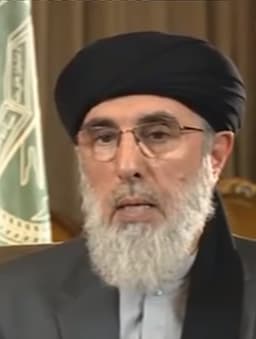
Gulbuddin Hekmatyar
Revolutionary · Modern
38.3Total

Lech Walesa
Revolutionary · Modern
52.4Total
Basic Information
Born
1947
1943
Died
—
—
Era
Modern
Modern
Nationality
Afghanistan
Poland
Occupation
Revolutionary
Revolutionary
Civilization
Middle Eastern
Western
Score Comparison
Military (10%)
35.0
14.2
Political (20%)
26.4
72.0
Influence (20%)
47.1
62.0
Legacy (20%)
36.7
56.0
Leadership (15%)
40.4
48.8
Strategy (15%)
38.3
33.6
TOTAL
38.3
52.4
Gulbuddin Hekmatyar — Complete Timeline
1975 AD
Founding of Hezb-e Islami (1975)Political Action◆ Major
Gulbuddin Hekmatyar founded the Hezb-e Islami political party, an Islamist faction that became one of the most powerful mujahideen groups during the Soviet-Afghan War. The party received significant support from Pakistan's ISI and foreign Islamist donors.
MujahideenIslamist PartyCold War
Impact: national
1993 AD
Prime Minister during Civil War (1993-1994)Political Action◆ Major
Hekmatyar served as Prime Minister of Afghanistan from 1993 to 1994 under President Burhanuddin Rabbani. His tenure was marked by intense factional fighting, including rocket attacks on Kabul that caused thousands of civilian casualties, contributing to the devastation of the city.
Civil WarKabulRocket Attacks
Impact: nationaldestructive
1996 AD
Alliance with Taliban (1996-2001)Political Action
After the Taliban captured Kabul in 1996, Hekmatyar initially fled to Iran. He later aligned with the Taliban regime, though his influence waned. He remained in Afghanistan until the US-led invasion in 2001, after which he fled to Pakistan.
TalibanExileAlliance
Impact: national
2016 AD
Peace Agreement with Afghan Government (2016)Political Action◆ Major
Hekmatyar signed a peace agreement with the Afghan government of President Ashraf Ghani in 2016. The deal allowed him to return to Afghanistan from exile, with his party recognized as a political entity and his fighters integrated into state security forces.
Peace DealReconciliationGhani
Impact: nationalconstructive
Lech Walesa — Complete Timeline
1980 AD
Founding of SolidarityPolitical Action
Walesa co-founded the Solidarity trade union in August 1980 after leading the Gda
SolidarityLabor Movement
Impact: globalprogressive
1981 AD
Martial Law and ImprisonmentPolitical Action◆ Major
Walesa was arrested and interned on December 13, 1981, when General Jaruzelski imposed martial law in Poland. He was held for 11 months, while Solidarity was banned and its leaders suppressed.
Martial LawRepression
Impact: nationaltragic
1983 AD
Nobel Peace PrizeCultural◆ Major
Walesa was awarded the Nobel Peace Prize on December 10, 1983, for his nonviolent struggle for workers' rights and democracy. He was unable to collect it in person due to travel restrictions.
Nobel PrizePeace
Impact: globalconstructive
1989 AD
Round Table TalksPolitical Action
Walesa led Solidarity in the Round Table Talks with the communist government from February to April 1989. The agreements led to partially free elections, which Solidarity won, ending communist rule in Poland.
TransitionDemocracy
Impact: globalconstructive
1990 AD
President of PolandPolitical Action◆ Major
Walesa was elected President of Poland on December 22, 1990, in the first direct presidential election. His presidency focused on economic reform and NATO integration, but was marked by political conflicts and declining popularity.
PresidencyDemocracy
Impact: national
Expert Analysis
Gulbuddin Hekmatyar vs Lech Walesa
### The Shipyard Electrician and the Engineer of Chaos
On a winter morning in 1981, two men on opposite sides of the world faced the turning points of their lives. In Gdańsk, Poland, Lech Walesa was being bundled into a black car by security police, his face defiant even as martial law descended like a curtain. In Peshawar, Pakistan, Gulbuddin Hekmatyar was distributing Kalashnikovs to his fighters, his eyes burning with the certainty that only violence could cleanse his homeland. Both were revolutionaries. Both sought to tear down an old order. But one would become a symbol of peaceful transformation, the other a byword for destruction. What made the difference? The answer lies not in their goals, but in their souls.
### Origins: The Factory Floor and the Fractured Clan
Lech Walesa was born in 1943 in the village of Popowo, Poland, the son of a carpenter who had been forced into a Nazi labor camp. He grew up in a country that had been carved up, occupied, and brutalized for centuries. But Poland also had a deep Catholic faith, a tradition of resistance, and a memory of democracy from the interwar years. Walesa learned to fix things with his hands, and he learned that workers had dignity. He became an electrician at the Gdańsk Shipyard, a job that gave him access to the machinery of industry and the grievances of the men who ran it.
Gulbuddin Hekmatyar was born in 1947 in the northern Afghan province of Kunduz, into the Kharoti tribe of the Pashtun ethnic group. Afghanistan had never been colonized, but it had never been truly unified either. Its society was a web of tribal loyalties, Islamic piety, and a deep suspicion of central authority. Hekmatyar studied engineering at Kabul University, but he was expelled for political agitation. He did not learn to build; he learned to scheme. Where Walesa saw solidarity among workers, Hekmatyar saw only factions to be conquered.
### Rise to Power: The Strike and the Sword
Walesa’s path was forged in August 1980, when he climbed over the fence of the Gdańsk Shipyard to join striking workers. He was not a trained politician, but he had a voice that carried, a mind that cut through complexity, and a instinct for the dramatic. He co-founded Solidarity, a trade union that grew to ten million members—a third of Poland’s population. It was a movement of workers, intellectuals, and priests, all demanding the right to speak freely. Walesa’s power came from the people, and he knew it.
Hekmatyar’s rise was different. He founded Hezb-e Islami in 1975, a party that blended Islamist ideology with a ruthless desire for control. His power came from weapons and money, first from the CIA and Pakistan’s intelligence service, later from drug trafficking and extortion. During the Soviet-Afghan War, he became one of the most feared mujahideen commanders, but he was equally feared by other Afghan factions. He preferred to attack rival resistance groups rather than Soviet troops, earning a reputation as a man who would burn his own house to spite the enemy.
### Leadership & Governance: The Round Table and the Rocket
Walesa’s greatest achievement was the Round Table Talks of 1989. Imprisoned for eleven months during martial law, he emerged not with a thirst for revenge, but with a strategy for negotiation. He understood that the communist regime was weak and that the West was watching. He pushed for elections, knowing that Solidarity could win. When it did, he became President of Poland in 1990, the first directly elected president in the country’s post-war history. His style was rough, often combative, but he governed with a sense of limits. He knew that democracy required compromise, and that the economy needed reform, not revolution.
Hekmatyar’s moment came in 1993, when he became Prime Minister of Afghanistan during the civil war that followed the Soviet withdrawal. But he did not govern; he besieged. From his stronghold outside Kabul, he rained rockets down on the capital, killing thousands of civilians, simply because he could not control the government. His tenure was a disaster of incompetence and cruelty. He could not build roads, hospitals, or schools. He could only destroy. When the Taliban took Kabul in 1996, he fled to Iran, then later allied with the very regime that had ousted him. His loyalty was not to a nation, but to his own ambition.
### Triumph & Tragedy: The Nobel and the Warlord
Walesa’s triumph was the Nobel Peace Prize of 1983, awarded while he was still under surveillance. It was a global recognition that nonviolence could defeat tyranny. His tragedy came later, as President. He struggled with the transition from revolutionary to statesman, alienating allies with his autocratic tendencies. He lost the 1995 election, but he accepted defeat. That was his final lesson: power is temporary, but principles endure.
Hekmatyar’s triumph was surviving. He outlasted the Soviets, the Taliban, and the Americans. In 2016, he signed a peace agreement with the Afghan government and returned to Kabul, a gray-bearded old man with blood on his hands. His tragedy was that he had no legacy but chaos. He had fought for thirty years, and what had he built? Nothing.
### Character & Destiny: The Solidarity of the Soul
Walesa’s character was shaped by the Catholic concept of solidarity—the idea that individuals are bound together in a common humanity. He believed that freedom was a gift, not a weapon. Hekmatyar’s character was shaped by the tribal code of *badal*—revenge. He saw the world as a zero-sum game where one man’s gain was another’s loss. He could not share power, and so he could never have peace.
Their destinies were written in their choices. Walesa chose the shipyard, the union, the Nobel. Hekmatyar chose the rocket, the alliance, the endless war. One built a movement; the other built a prison.
### Legacy: The Statue and the Shadow
Today, Lech Walesa is remembered as a founding father of Poland’s democracy. His statue stands in Gdańsk, his name is taught in schools, and his struggle inspired millions across Eastern Europe. Gulbuddin Hekmatyar is remembered as a warlord who sold his soul for power. His name is spoken with bitterness in Afghanistan, a symbol of the civil war that paved the way for the Taliban. One legacy is a monument; the other is a warning.
### Conclusion: The Electrician’s Question
In the end, the difference between Walesa and Hekmatyar is not about ideology or circumstance. It is about the answer to a single question: *What do you want to leave behind?* Walesa wanted a country where his children could speak freely. Hekmatyar wanted a country where he could speak alone. One man built a ladder; the other dug a grave. The world remembers which one climbed.
Rankings
🥇
Lech WalesaLeader
Mil: 14.2Pol: 72.0Inf: 62.0
52.4
🥈
Gulbuddin Hekmatyar
Mil: 35.0Pol: 26.4Inf: 47.1
38.3
+14.1 behind
How This Comparison Works
Algorithm
Each figure is scored on 6 dimensions (0—100 scale) based on structured historical data: Military (10%), Political (20%), Influence (20%), Legacy (20%), Leadership (15%), Strategy (15%). The weighted total produces the final ranking.
Data Sources
Scores are computed from structured sub-indicators in the database. Scale factors adjust for era (Ancient ×0.85, Modern ×1.0) and civilization size (Eastern ×1.05, Other ×0.80) to account for differences in population and military scale.
Maximum 3 Figures
Comparisons are limited to 2—3 figures to ensure readability and statistical meaningfulness.
Error Margins
±5 points per dimension — Sub-scores are derived from historical records with inherent uncertainty. Two figures within 5 points on a dimension should be considered roughly equivalent in that area.
Total Score Accuracy
±3 points overall — The weighted combination of 6 dimensions produces a total score with approximately ±3 points of uncertainty. Differences of less than 3 points are not statistically significant— the figures are effectively tied.
Known Limitations
- Historical records are incomplete and uneven across civilizations
- Figures from oral-tradition societies may be underrepresented
- Occupation labels can misclassify multi-role figures
- Scores measure capability and impact, not moral character
- Quantitative scoring is a comparison tool, not absolute truth
Capability Radar
Military (10%) — Battles & Warfare
Battles
45
9
Win Rate
30
14
Expansion
25
17
Political (20%) — Governance & Reform
Reform
15
85
Diplomacy
20
80
Economy
10
55
Influence (20%) — Cultural & Global Reach
Cultural
25
70
Global
25
70
Legacy (20%) — Historical Impact
Historical
30
75
Longevity
20
65
Leadership (15%) — Power & Stability
Tenure
30
65
Stability
5
60
Strategy (15%) — Tactics & Innovation
Strategy
35
21
Tactics
40
24
Reform
20
27
Similar Comparisons
Comments & Discussion
IronObelisk6/16/2026
Walesa’s Nobel Peace Prize is a sham compared to Hekmatyar’s raw honesty. Walesa was a union boss who played nice with the Church and the CIA, then sold out his workers for a presidency. Hekmatyar never pretended to be anything but a warlord. He killed his own rivals in cold blood, yes, but he didn’t dress it up as democracy. Walesa’s “peaceful transformation” was just a softer brand of betrayal.
废墟观察者6/16/2026
Wałęsa是造船厂的工会头子,靠团结工会拿诺贝尔奖,后来当总统却跟社会主义时代一样官僚。Hekmatyar至少没装模作样,他就是喀布尔的榴弹炮,炸遍美国人和苏联人。Wałęsa的微笑底下是把工人卖给资本主义,Hekmatyar的枪口对准敌人,不管死多少人。你说谁的灵魂更干净?Wałęsa的灵魂是拿教宗和团结工会的旗子糊墙的。
ThirdRomeCrow6/16/2026
Walesa mastered the art of resistance without destroying the nation’s soul—a feat Hekmatyar never considered. In 1983, Walesa won the Peace Prize while under house arrest, his movement spreading through factory floors like a slow fire. Hekmatyar, by contrast, shelled Kabul in the 1990s, killing thousands to gain power. One man built a ladder for democracy; the other burned the city to frame his enemies. There’s no comparison.
冷枪观察员6/16/2026
Hekmatyar是伊斯兰主义的毒瘤,Wałęsa是东欧民主仪式的真传。Wałęsa在格但斯克造船厂领导罢工,1980年21条要求至今屹立不倒。Hekmatyar呢?他在1992年用火箭弹轰喀布尔,一夜间把城市变墓地,然后投靠塔利班当叛徒。Wałęsa的牺牲是工会的地下组织,Hekmatyar的牺牲是别人的头颅。前者有希望,后者只有灰烬。
FactGrenade6/16/2026
The real difference is scale: Walesa led a movement with millions on his side, Hekmatyar commanded at most a few thousand fanatics. But let’s not canonize Walesa—he ran a corrupt government post-1989 and hoarded power. Hekmatyar, for all his brutality, was a product of CIA and ISI abandonment. Post-2001, he returned to Afghanistan with a verbal peace deal. Walesa never had to fight a real war; Hekmatyar lived one.