Loading...
Analysis will be generated on first visit.
Scores and timeline are available below. The page will refresh automatically when ready.
Guru Hargobind vs Julius Caesar
Julius Caesar leads by 19.2 pts · 2 figures compared
…

Guru Hargobind
Emperor · Modern
64.1Total
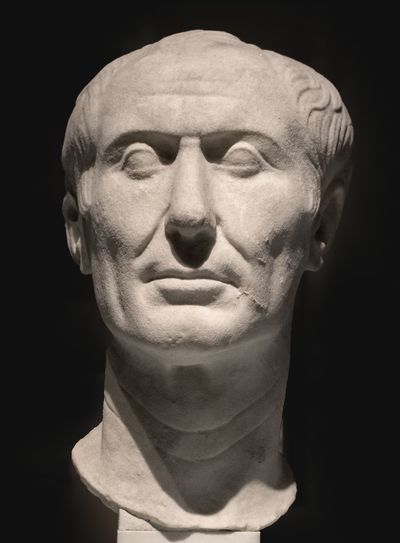
Julius Caesar
General · Ancient
83.3Total
Basic Information
Born
1595
-100
Died
1644
-44
Era
Modern
Ancient
Nationality
India
Roman Republic
Occupation
Emperor
General
Civilization
Indian
Western
Score Comparison
Military (10%)
25.4
88.0
Political (20%)
73.2
78.0
Influence (20%)
72.2
85.0
Legacy (20%)
66.9
82.0
Leadership (15%)
72.0
82.0
Strategy (15%)
55.4
88.0
TOTAL
64.1
83.3
Rankings
🥇
Julius CaesarLeader
Mil: 88.0Pol: 78.0Inf: 85.0
83.3
🥈
Guru Hargobind
Mil: 25.4Pol: 73.2Inf: 72.2
64.1
+19.2 behind
How This Comparison Works
Algorithm
Each figure is scored on 6 dimensions (0—100 scale) based on structured historical data: Military (10%), Political (20%), Influence (20%), Legacy (20%), Leadership (15%), Strategy (15%). The weighted total produces the final ranking.
Data Sources
Scores are computed from structured sub-indicators in the database. Scale factors adjust for era (Ancient ×0.85, Modern ×1.0) and civilization size (Eastern ×1.05, Other ×0.80) to account for differences in population and military scale.
Maximum 3 Figures
Comparisons are limited to 2—3 figures to ensure readability and statistical meaningfulness.
Error Margins
±5 points per dimension — Sub-scores are derived from historical records with inherent uncertainty. Two figures within 5 points on a dimension should be considered roughly equivalent in that area.
Total Score Accuracy
±3 points overall — The weighted combination of 6 dimensions produces a total score with approximately ±3 points of uncertainty. Differences of less than 3 points are not statistically significant— the figures are effectively tied.
Known Limitations
- Historical records are incomplete and uneven across civilizations
- Figures from oral-tradition societies may be underrepresented
- Occupation labels can misclassify multi-role figures
- Scores measure capability and impact, not moral character
- Quantitative scoring is a comparison tool, not absolute truth
Capability Radar
Military (10%) — Battles & Warfare
Battles
45
95
Win Rate
50
92
Expansion
40
97
Political (20%) — Governance & Reform
Reform
60
90
Diplomacy
50
85
Economy
30
82
Influence (20%) — Cultural & Global Reach
Cultural
60
88
Global
45
94
Legacy (20%) — Historical Impact
Historical
65
95
Longevity
70
96
Leadership (15%) — Power & Stability
Tenure
55
75
Stability
45
60
Strategy (15%) — Tactics & Innovation
Strategy
50
94
Tactics
55
96
Reform
65
88
Analysis will be generated on first visit.
Scores and timeline are available below. The page will refresh automatically when ready.
Guru Hargobind — Complete Timeline
1606 AD
Militarized the Sikh CommunityReform◆ Major
Guru Hargobind adopted the symbols of sovereignty, wearing two swords (Miri and Piri) representing temporal and spiritual authority. He built the Akal Takht and began training Sikhs in warfare, transforming them into a martial community.
MilitarizationSikhismAkal Takht
Impact: globalconstructive
Appointed Sixth Sikh GuruPolitical Action
Guru Arjan Dev appointed Hargobind as his successor, making him the sixth Sikh Guru. This occurred shortly before Arjan's martyrdom, and Hargobind inherited a community under Mughal persecution.
SikhismGuru SuccessionLeadership
Impact: globalconstructive
1612 AD
Released 52 Hindu Kings from Gwalior FortPolitical Action◆ Major
Guru Hargobind secured the release of 52 Hindu princes imprisoned by Emperor Jahangir at Gwalior Fort. He refused to leave without them, and they were freed together, earning him the title 'Bandi Chhor' (Liberator).
ReleasePrisonersGwalior
Impact: regionalconstructive
1628 AD
Battle of Amritsar (1628)War◆ Major
Guru Hargobind's forces repelled a Mughal attack near Amritsar. This was the first major armed conflict between Sikhs and the Mughal Empire, establishing Sikh military resistance.
BattleMughal ConflictSikh Resistance
Impact: regional
1635 AD
Battle of Kartarpur (1635)War◆ Major
Guru Hargobind's forces defeated a Mughal army at Kartarpur. This victory solidified Sikh military strength and demonstrated the effectiveness of his martial policies.
BattleMughal ConflictSikh Victory
Impact: regional
Similar Comparisons
Comments & Discussion
No comments yet. Be the first to share your thoughts!