Loading...
This comparison has not been analyzed yet.
One-time AI generation (~1 minute). Scores and timeline are already available below.
Guy Parmelin vs Mehmed Talat
Mehmed Talat leads by 13.1 pts · 2 figures compared
…

Guy Parmelin
Politician · Modern
42.4Total
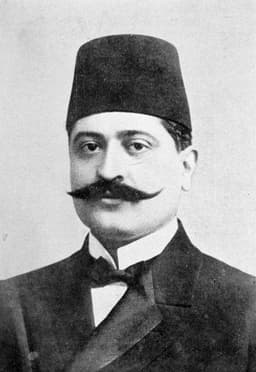
Mehmed Talat
Politician · Modern
55.5Total
Basic Information
Born
1959
1874
Died
—
1921
Era
Modern
Modern
Nationality
Switzerland
Ottoman Empire
Occupation
Politician
Politician
Civilization
Western
Middle Eastern
Score Comparison
Military (10%)
48.5
50.0
Political (20%)
43.7
68.0
Influence (20%)
47.1
56.4
Legacy (20%)
36.7
49.2
Leadership (15%)
40.0
65.0
Strategy (15%)
40.8
41.4
TOTAL
42.4
55.5
Guy Parmelin — Complete Timeline
2015 AD
Election to Federal CouncilPolitical Action◆ Major
Parmelin was elected to the Swiss Federal Council on December 9, 2015, representing the Swiss People's Party (SVP). He took over the Federal Department of Defence, Civil Protection and Sports, later moving to the Department of Economic Affairs, Education and Research in 2019.
Federal CouncilSVPElection
Impact: nationalconstructive
2020 AD
Leadership of economic affairs during pandemicPolitical Action
As head of the Federal Department of Economic Affairs, Education and Research from 2019, Parmelin managed Switzerland's economic response to the COVID-19 pandemic, including short-time work schemes, business loans, and support for research and innovation to mitigate economic damage.
Economic PolicyCOVID-19Short-time Work
Impact: nationalconstructive
2021 AD
Presidency of the Swiss ConfederationPolitical Action◆ Major
Guy Parmelin served as President of the Swiss Confederation in 2021, during the COVID-19 pandemic. He chaired the Federal Council and represented Switzerland abroad, while continuing his role as head of the Federal Department of Economic Affairs, Education and Research.
Swiss PresidencyCOVID-19Rotating Presidency
Impact: national
Mehmed Talat — Complete Timeline
1913 AD
Appointed Minister of InteriorPolitical Action◆ Major
Mehmed Talat was appointed Minister of Interior in the CUP government. He became the de facto strongman of the empire, controlling internal security and implementing policies of Turkification and population transfers.
CUPInterior MinisterTurkification
Impact: national
1915 AD
Ordered the Armenian DeportationsPolitical Action
As Interior Minister, Mehmed Talat issued the orders for the mass deportation of Armenians from eastern Anatolia. He personally directed the implementation, which resulted in the Armenian Genocide. His role made him the primary architect of the genocide.
Armenian GenocideDeportationWar Crimes
Impact: globaldestructive
1917 AD
Appointed Grand VizierPolitical Action◆ Major
Mehmed Talat was appointed Grand Vizier, succeeding Said Halim Pasha. He led the Ottoman government during the final years of World War I, overseeing the empire's war effort and the continuation of genocidal policies.
Grand VizierWorld War ICUP
Impact: national
1918 AD
Fled to GermanyPolitical Action◆ Major
After the Ottoman defeat in World War I, Mehmed Talat fled to Germany along with other CUP leaders. He was tried in absentia by an Ottoman military court and sentenced to death for his role in the Armenian Genocide.
ExileWar Crimes TrialArmenian Genocide
Impact: nationaltragic
1921 AD
Assassinated in BerlinPolitical Action◆ Major
Mehmed Talat was assassinated in Berlin by Armenian student Soghomon Tehlirian as an act of vengeance for the Armenian Genocide. His assassination was part of Operation Nemesis, a covert Armenian retribution campaign.
AssassinationOperation NemesisArmenian Genocide
Impact: globaltragic
This comparison has not been analyzed yet.
One-time AI generation (~1 minute). Scores and timeline are already available below.
Rankings
🥇
Mehmed TalatLeader
Mil: 50.0Pol: 68.0Inf: 56.4
55.5
🥈
Guy Parmelin
Mil: 48.5Pol: 43.7Inf: 47.1
42.4
+13.1 behind
How This Comparison Works
Algorithm
Each figure is scored on 6 dimensions (0—100 scale) based on structured historical data: Military (10%), Political (20%), Influence (20%), Legacy (20%), Leadership (15%), Strategy (15%). The weighted total produces the final ranking.
Data Sources
Scores are computed from structured sub-indicators in the database. Scale factors adjust for era (Ancient ×0.85, Modern ×1.0) and civilization size (Eastern ×1.05, Other ×0.80) to account for differences in population and military scale.
Maximum 3 Figures
Comparisons are limited to 2—3 figures to ensure readability and statistical meaningfulness.
Error Margins
±5 points per dimension — Sub-scores are derived from historical records with inherent uncertainty. Two figures within 5 points on a dimension should be considered roughly equivalent in that area.
Total Score Accuracy
±3 points overall — The weighted combination of 6 dimensions produces a total score with approximately ±3 points of uncertainty. Differences of less than 3 points are not statistically significant— the figures are effectively tied.
Known Limitations
- Historical records are incomplete and uneven across civilizations
- Figures from oral-tradition societies may be underrepresented
- Occupation labels can misclassify multi-role figures
- Scores measure capability and impact, not moral character
- Quantitative scoring is a comparison tool, not absolute truth
Capability Radar
Military (10%) — Battles & Warfare
Battles
29
22
Win Rate
34
23
Expansion
35
30
Political (20%) — Governance & Reform
Reform
30
65
Diplomacy
40
55
Economy
35
40
Influence (20%) — Cultural & Global Reach
Cultural
10
30
Global
10
50
Legacy (20%) — Historical Impact
Historical
10
55
Longevity
10
40
Leadership (15%) — Power & Stability
Tenure
50
60
Stability
45
20
Strategy (15%) — Tactics & Innovation
Strategy
36
28
Tactics
38
36
Reform
44
39
Similar Comparisons
Comments & Discussion
No comments yet. Be the first to share your thoughts!