Loading...
This comparison has not been analyzed yet.
One-time AI generation (~1 minute). Scores and timeline are already available below.
Guy Verhofstadt vs Okuma Shigenobu
Guy Verhofstadt leads by 1.9 pts · 2 figures compared
…
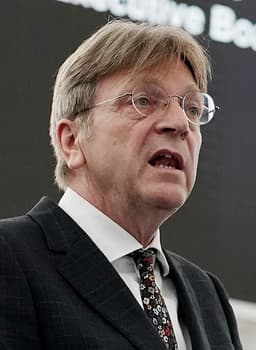
Guy Verhofstadt
Politician · Modern
54.8Total
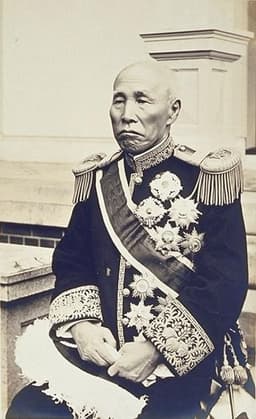
Okuma Shigenobu
Politician · Modern
52.9Total
Basic Information
Born
1953
1838
Died
—
1922
Era
Modern
Modern
Nationality
Belgium
Japan
Occupation
Politician
Politician
Civilization
Western
Eastern
Score Comparison
Military (10%)
49.4
19.3
Political (20%)
60.0
72.0
Influence (20%)
59.0
55.0
Legacy (20%)
48.3
52.0
Leadership (15%)
66.0
66.0
Strategy (15%)
41.0
35.2
TOTAL
54.8
52.9
Guy Verhofstadt — Complete Timeline
1999 AD
Prime Minister of Belgium (first term)Political Action◆ Major
Guy Verhofstadt became Prime Minister of Belgium, leading a coalition government of liberals, socialists, and greens. His tenure focused on economic liberalization, social reforms, and European integration.
Prime MinisterBelgian Politics
Impact: national
2001 AD
Belgian presidency of the European UnionPolitical Action◆ Major
As Prime Minister, Guy Verhofstadt led Belgium's presidency of the European Union. The presidency focused on the Laeken Declaration, which launched the European Convention that drafted the EU Constitution. Verhofstadt was a vocal advocate for a federal Europe.
European UnionPresidencyFederalism
Impact: regionalconstructive
2003 AD
Legalization of same-sex marriageReform◆ Major
Under Prime Minister Guy Verhofstadt, Belgium became the second country in the world to legalize same-sex marriage. The law granted same-sex couples the same rights as heterosexual couples, including adoption rights later extended.
LGBTQ RightsSocial ReformMarriage Equality
Impact: nationalprogressive
2009 AD
Member of the European ParliamentPolitical Action
After leaving the Belgian premiership, Guy Verhofstadt became a Member of the European Parliament. He led the Alliance of Liberals and Democrats for Europe (ALDE) group and became a prominent voice for European federalism and reform.
European ParliamentFederalism
Impact: regionalconstructive
Okuma Shigenobu — Complete Timeline
1881 AD
Advocacy for constitutional governmentPolitical Action
Okuma Shigenobu advocated for a British-style parliamentary system and the establishment of a national assembly. He was forced out of the government for his views, but his advocacy contributed to the eventual creation of the Diet.
Political reformDemocracy
Impact: nationalprogressive
1882 AD
Founding of Waseda UniversityCultural◆ Major
Okuma Shigenobu founded Tokyo Senmon Gakko, later renamed Waseda University. The institution became one of Japan's leading private universities, emphasizing liberal arts and practical learning.
EducationUniversity
Impact: nationalconstructive
1898 AD
First term as Prime MinisterPolitical Action◆ Major
Okuma Shigenobu became Prime Minister of Japan in 1898, leading the first party cabinet under the Kenseito party. His government lasted only four months due to internal party conflicts, but it marked a step toward parliamentary democracy.
GovernmentDemocracy
Impact: national
1914 AD
Second term as Prime Minister and Twenty-One DemandsPolitical Action◆ Major
Okuma Shigenobu served as Prime Minister again from 1914 to 1916. His government issued the Twenty-One Demands to China, seeking to expand Japanese influence. The demands caused international controversy and strained Sino-Japanese relations.
Foreign policyImperialism
Impact: regionaldestructive
This comparison has not been analyzed yet.
One-time AI generation (~1 minute). Scores and timeline are already available below.
Rankings
🥇
Guy VerhofstadtLeader
Mil: 49.4Pol: 60.0Inf: 59.0
54.8
🥈
Okuma Shigenobu
Mil: 19.3Pol: 72.0Inf: 55.0
52.9
+1.9 behind
How This Comparison Works
Algorithm
Each figure is scored on 6 dimensions (0—100 scale) based on structured historical data: Military (10%), Political (20%), Influence (20%), Legacy (20%), Leadership (15%), Strategy (15%). The weighted total produces the final ranking.
Data Sources
Scores are computed from structured sub-indicators in the database. Scale factors adjust for era (Ancient ×0.85, Modern ×1.0) and civilization size (Eastern ×1.05, Other ×0.80) to account for differences in population and military scale.
Maximum 3 Figures
Comparisons are limited to 2—3 figures to ensure readability and statistical meaningfulness.
Error Margins
±5 points per dimension — Sub-scores are derived from historical records with inherent uncertainty. Two figures within 5 points on a dimension should be considered roughly equivalent in that area.
Total Score Accuracy
±3 points overall — The weighted combination of 6 dimensions produces a total score with approximately ±3 points of uncertainty. Differences of less than 3 points are not statistically significant— the figures are effectively tied.
Known Limitations
- Historical records are incomplete and uneven across civilizations
- Figures from oral-tradition societies may be underrepresented
- Occupation labels can misclassify multi-role figures
- Scores measure capability and impact, not moral character
- Quantitative scoring is a comparison tool, not absolute truth
Capability Radar
Military (10%) — Battles & Warfare
Battles
27
12
Win Rate
32
15
Expansion
37
19
Political (20%) — Governance & Reform
Reform
65
75
Diplomacy
70
70
Economy
60
65
Influence (20%) — Cultural & Global Reach
Cultural
40
65
Global
55
55
Legacy (20%) — Historical Impact
Historical
50
70
Longevity
40
60
Leadership (15%) — Power & Stability
Tenure
60
60
Stability
55
55
Strategy (15%) — Tactics & Innovation
Strategy
36
25
Tactics
39
26
Reform
44
27
Similar Comparisons
Comments & Discussion
No comments yet. Be the first to share your thoughts!