Loading...
Analysis will be generated on first visit.
Scores and timeline are available below. The page will refresh automatically when ready.
Guyuk Khan vs Napoleon Bonaparte
Napoleon Bonaparte leads by 34.9 pts · 2 figures compared
…
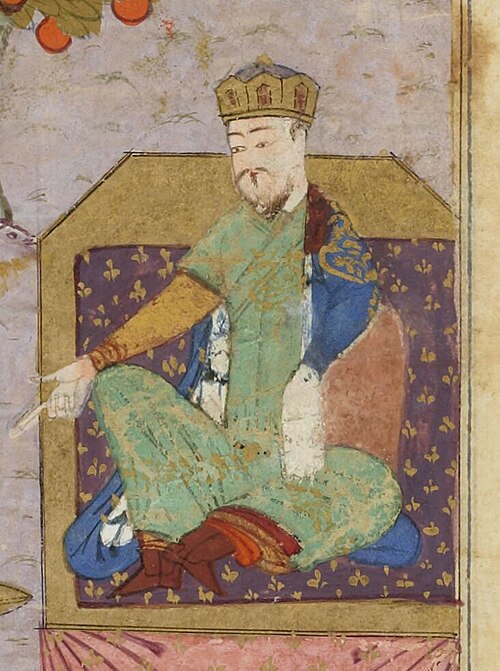
Guyuk Khan
Emperor · Medieval
47.5Total
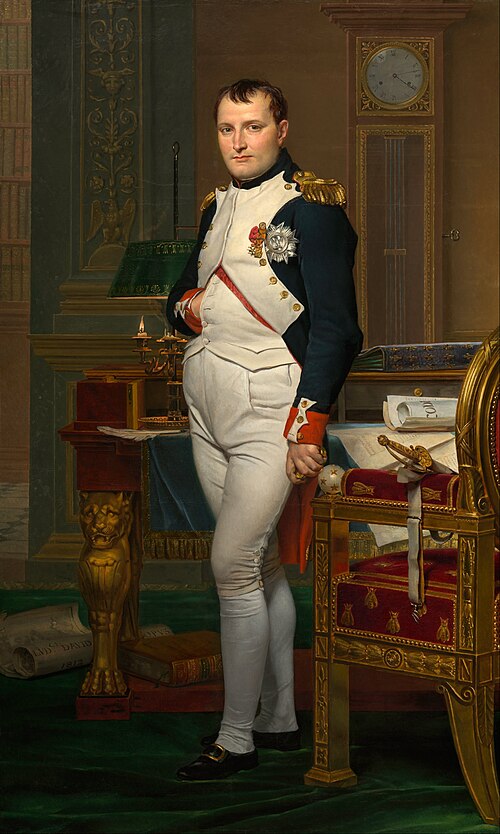
Napoleon Bonaparte
General · Modern
82.4Total
Basic Information
Born
1206
1769
Died
1248
1821
Era
Medieval
Modern
Nationality
Mongol Empire
France
Occupation
Emperor
General
Civilization
Eastern
Western
Score Comparison
Military (10%)
35.0
94.0
Political (20%)
38.9
75.0
Influence (20%)
66.1
82.0
Legacy (20%)
50.5
78.0
Leadership (15%)
33.3
80.0
Strategy (15%)
53.0
93.0
TOTAL
47.5
82.4
Rankings
🥇
Napoleon BonaparteLeader
Mil: 94.0Pol: 75.0Inf: 82.0
82.4
🥈
Guyuk Khan
Mil: 35.0Pol: 38.9Inf: 66.1
47.5
+34.9 behind
How This Comparison Works
Algorithm
Each figure is scored on 6 dimensions (0—100 scale) based on structured historical data: Military (10%), Political (20%), Influence (20%), Legacy (20%), Leadership (15%), Strategy (15%). The weighted total produces the final ranking.
Data Sources
Scores are computed from structured sub-indicators in the database. Scale factors adjust for era (Ancient ×0.85, Modern ×1.0) and civilization size (Eastern ×1.05, Other ×0.80) to account for differences in population and military scale.
Maximum 3 Figures
Comparisons are limited to 2—3 figures to ensure readability and statistical meaningfulness.
Error Margins
±5 points per dimension — Sub-scores are derived from historical records with inherent uncertainty. Two figures within 5 points on a dimension should be considered roughly equivalent in that area.
Total Score Accuracy
±3 points overall — The weighted combination of 6 dimensions produces a total score with approximately ±3 points of uncertainty. Differences of less than 3 points are not statistically significant— the figures are effectively tied.
Known Limitations
- Historical records are incomplete and uneven across civilizations
- Figures from oral-tradition societies may be underrepresented
- Occupation labels can misclassify multi-role figures
- Scores measure capability and impact, not moral character
- Quantitative scoring is a comparison tool, not absolute truth
Capability Radar
Military (10%) — Battles & Warfare
Battles
20
95
Win Rate
20
90
Expansion
10
95
Political (20%) — Governance & Reform
Reform
10
95
Diplomacy
20
80
Economy
10
85
Influence (20%) — Cultural & Global Reach
Cultural
10
85
Global
10
90
Legacy (20%) — Historical Impact
Historical
15
95
Longevity
10
90
Leadership (15%) — Power & Stability
Tenure
15
85
Stability
10
70
Strategy (15%) — Tactics & Innovation
Strategy
15
95
Tactics
15
98
Reform
10
92
Analysis will be generated on first visit.
Scores and timeline are available below. The page will refresh automatically when ready.
Guyuk Khan — Complete Timeline
1246 AD
Election as Great KhanPolitical Action
Güyük was elected as the third Great Khan of the Mongol Empire at a kurultai near the Mongol capital Karakorum. His election was supported by his mother Töregene, who had served as regent, but was opposed by Batu, leading to tensions.
SuccessionMongol EmpireKurultai
Impact: global
Reception of Papal Envoy John of Plano CarpiniCultural
Güyük received the Franciscan envoy John of Plano Carpini at his court, who delivered a letter from Pope Innocent IV demanding the Mongols cease their invasions. Güyük's reply demanded the Pope's submission to Mongol authority, reflecting Mongol imperial ideology.
DiplomacyPapacyMongol Empire
Impact: regional
1247 AD
Conflict with Batu KhanPolitical Action◆ Major
Güyük planned a military campaign against his cousin Batu, ruler of the Golden Horde, due to Batu's refusal to recognize his authority. The conflict was averted when Güyük died in 1248, but it deepened the rift between the Toluid and Jochid lines.
Mongol Civil WarSuccessionGolden Horde
Impact: regionaldestructive
1248 AD
Death and Succession CrisisPolitical Action◆ Major
Güyük died suddenly in 1248 while marching west to confront Batu, possibly poisoned. His death left the empire without a clear successor, leading to a regency by his widow Oghul Qaimish and eventually the election of Möngke in 1251.
DeathSuccessionMongol Empire
Impact: globaltragic
Similar Comparisons
Comments & Discussion
No comments yet. Be the first to share your thoughts!