Loading...
Gyeon Hwon vs Henry III
Henry III leads by 9.1 pts · 2 figures compared
…

Gyeon Hwon
Emperor · Medieval
53.3Total
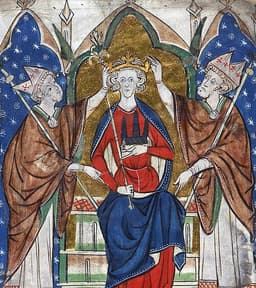
Henry III
Emperor · Medieval
62.4Total
Basic Information
Born
867
1016
Died
936
1056
Era
Medieval
Medieval
Nationality
Korea
Holy Roman Empire
Occupation
Emperor
Emperor
Civilization
Eastern
Western
Score Comparison
Military (10%)
72.5
65.0
Political (20%)
39.4
70.0
Influence (20%)
53.3
62.0
Legacy (20%)
45.0
52.0
Leadership (15%)
65.7
72.0
Strategy (15%)
57.5
60.7
TOTAL
53.3
62.4
Gyeon Hwon — Complete Timeline
892 AD
Foundation of Later BaekjePolitical Action
Gyeon Hwon, a former Silla general, led a rebellion and established the kingdom of Later Baekje in southwestern Korea. He declared himself king, reviving the name of the ancient Baekje kingdom and initiating the Later Three Kingdoms period.
FoundationLater Three KingdomsRebellion
Impact: regional
930 AD
Battle of GochangWar◆ Major
Gyeon Hwon's forces were defeated by the Goryeo army under King Taejo at Gochang. This battle marked a turning point in the Later Three Kingdoms period, weakening Later Baekje and strengthening Goryeo's position.
BattleGoryeo WarTurning Point
Impact: regional
935 AD
Deposition by His SonPolitical Action◆ Major
Gyeon Hwon was deposed by his son, Gyeon Singeom, who seized the throne in a coup. The rebellion was fueled by Gyeon Hwon's favoritism toward his youngest son, leading to internal strife within Later Baekje.
CoupSuccession CrisisFamily Conflict
Impact: nationaldestructive
Defection to GoryeoPolitical Action◆ Major
After being deposed, Gyeon Hwon defected to Goryeo and was welcomed by King Taejo. He provided military intelligence and assistance to Goryeo, contributing to the eventual conquest of Later Baekje in 936.
DefectionGoryeo AllianceBetrayal
Impact: regional
936 AD
Death in GoryeoOther
Gyeon Hwon died in Goryeo shortly after the fall of Later Baekje. His death marked the end of the Later Three Kingdoms period and the unification of Korea under Goryeo.
DeathUnificationEnd of Era
Impact: regional
Henry III — Complete Timeline
1039 AD
Election as King of GermanyPolitical Action◆ Major
Henry III was elected King of Germany in 1039 upon the death of his father Conrad II. He succeeded without opposition, inheriting a stable realm and continuing Salian rule.
SuccessionSalian Dynasty
Impact: regional
1041 AD
Campaigns in HungaryWar
Henry III led multiple campaigns against Hungary between 1041 and 1044 to enforce imperial suzerainty. He defeated King Samuel Aba at the Battle of M
Hungarian CampaignImperial Expansion
Impact: regional
1046 AD
Coronation as Holy Roman EmperorPolitical Action◆ Major
Pope Clement II crowned Henry III Holy Roman Emperor in Rome on December 25, 1046. This followed Henry's intervention in the papal schism, where he deposed three rival popes and installed Clement II.
CoronationPapal Intervention
Impact: regionalconstructive
Deposition of Three Rival PopesPolitical Action◆ Major
At the Synod of Sutri in December 1046, Henry III deposed Popes Benedict IX, Sylvester III, and Gregory VI, who were competing for the papacy. He then appointed Clement II, asserting imperial control over the Church.
Papal ReformImperial Authority
Impact: regionalconstructive
1049 AD
Council of MainzCultural
Henry III convened the Council of Mainz in 1049, which addressed Church reform, including simony and clerical marriage. The council strengthened the alliance between the Empire and the reform papacy under Leo IX.
Church ReformCouncil
Impact: regionalconstructive
Expert Analysis
Origins
Gyeon Hwon was born in 867 as a son of a local chief in present-day South Jeolla Province, Korea. His family background was aristocratic but not royal. He served as a general in the Silla kingdom before leading a rebellion. Henry III was born on October 28, 1017, the son of Emperor Conrad II and Gisela of Swabia. He was raised in the Salian dynasty and educated in governance and warfare, inheriting a stable empire.
Rise to Power
Gyeon Hwon rose by exploiting Silla's decline. In 892, he gathered followers and captured Wansanju (modern Jeonju), declaring himself king of Later Baekje in 900. His military campaigns expanded territory but lacked political consolidation. Henry III was elected King of Germany in 1039 upon his father's death without opposition. He was crowned Holy Roman Emperor in 1046 after intervening in the papal schism, deposing three rival popes at the Synod of Sutri.
Leadership & Governance
Gyeon Hwon's leadership was military-focused. He scored 72.5 in military but only 39.4 in political skill. He failed to build alliances, leading to his deposition by his son in 935. Henry III scored 70.0 in political skill and 72.0 in leadership. He reformed the Church, appointing reform-minded popes like Clement II and Leo IX, and convened synods to combat simony and clerical marriage. His governance strengthened imperial authority.
Triumph & Tragedy
Gyeon Hwon's triumph was founding Later Baekje and initially resisting Goryeo. However, his tragedy was his deposition by his son Gyeon Singeom in 935 and subsequent defection to Goryeo. He died in 936, witnessing his kingdom's fall. Henry III's triumph was ending the papal schism and initiating Church reform. His tragedy was his early death at age 38 in 1056, leaving a young son Henry IV, leading to a regency crisis that weakened the empire.
Character & Destiny
Gyeon Hwon was ambitious but politically inept. His favoritism toward his younger son caused familial revolt. His character led to isolation and betrayal. Henry III was pious and decisive, using his power to impose order. His strong will enabled Church reform but also created resentment among nobles. Historians note his effective rule but also the fragility of his legacy due to his premature death.
Legacy
Gyeon Hwon's legacy is limited: Later Baekje fell shortly after his death, and he is remembered as a regional rebel. His total score of 53.3 reflects minimal lasting impact. Henry III's legacy is substantial: his Church reforms laid groundwork for the Gregorian Reform. He scored 62.0 in influence and 52.0 in legacy. The Synod of Sutri and subsequent papal appointments shaped medieval Church-state relations for centuries.
Conclusion
Henry III had greater impact. His political and leadership scores (70.0 and 72.0) exceed Gyeon Hwon's (39.4 and 65.7). While Gyeon Hwon's military score (72.5) is higher than Henry's (65.0), Henry's reforms affected Western Christendom for generations. Gyeon Hwon's kingdom vanished with him; Henry's reforms endured. Thus, Henry III's total score of 62.4 versus 53.3 reflects a more significant historical footprint.
Rankings
🥇
Henry IIILeader
Mil: 65.0Pol: 70.0Inf: 62.0
62.4
🥈
Gyeon Hwon
Mil: 72.5Pol: 39.4Inf: 53.3
53.3
+9.1 behind
How This Comparison Works
Algorithm
Each figure is scored on 6 dimensions (0—100 scale) based on structured historical data: Military (10%), Political (20%), Influence (20%), Legacy (20%), Leadership (15%), Strategy (15%). The weighted total produces the final ranking.
Data Sources
Scores are computed from structured sub-indicators in the database. Scale factors adjust for era (Ancient ×0.85, Modern ×1.0) and civilization size (Eastern ×1.05, Other ×0.80) to account for differences in population and military scale.
Maximum 3 Figures
Comparisons are limited to 2—3 figures to ensure readability and statistical meaningfulness.
Error Margins
±5 points per dimension — Sub-scores are derived from historical records with inherent uncertainty. Two figures within 5 points on a dimension should be considered roughly equivalent in that area.
Total Score Accuracy
±3 points overall — The weighted combination of 6 dimensions produces a total score with approximately ±3 points of uncertainty. Differences of less than 3 points are not statistically significant— the figures are effectively tied.
Known Limitations
- Historical records are incomplete and uneven across civilizations
- Figures from oral-tradition societies may be underrepresented
- Occupation labels can misclassify multi-role figures
- Scores measure capability and impact, not moral character
- Quantitative scoring is a comparison tool, not absolute truth
Capability Radar
Military (10%) — Battles & Warfare
Battles
65
65
Win Rate
60
70
Expansion
55
60
Political (20%) — Governance & Reform
Reform
30
80
Diplomacy
40
85
Economy
35
70
Influence (20%) — Cultural & Global Reach
Cultural
30
55
Global
20
55
Legacy (20%) — Historical Impact
Historical
40
70
Longevity
30
60
Leadership (15%) — Power & Stability
Tenure
50
75
Stability
35
70
Strategy (15%) — Tactics & Innovation
Strategy
60
65
Tactics
55
60
Reform
30
55
Similar Comparisons
Comments & Discussion
No comments yet. Be the first to share your thoughts!