Loading...
Hadrian vs Vakhtang I of Iberia
Hadrian leads by 7.9 pts · 2 figures compared
…

Hadrian
Emperor · Ancient
65.4Total
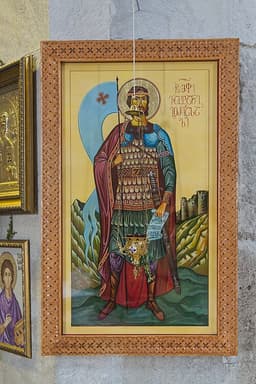
Vakhtang I of Iberia
Emperor · Ancient
57.5Total
Basic Information
Born
76
440
Died
138
502
Era
Ancient
Ancient
Nationality
Roman Empire
Georgia
Occupation
Emperor
Emperor
Civilization
Western
Western
Score Comparison
Military (10%)
50.0
67.5
Political (20%)
72.0
45.0
Influence (20%)
72.0
58.0
Legacy (20%)
55.0
54.0
Leadership (15%)
78.0
68.0
Strategy (15%)
61.2
58.0
TOTAL
65.4
57.5
Hadrian — Complete Timeline
121 AD
Travels and Provincial ReformsPolitical Action◆ Major
Hadrian spent more than half his reign traveling through the provinces, inspecting troops and administration. He reformed provincial governance, improved infrastructure, and promoted cultural unity.
TravelProvincial AdministrationReform
Impact: globalconstructive
122 AD
Construction of Hadrian's WallOther
Hadrian ordered the construction of a defensive wall across northern Britain, from the Tyne to the Solway Firth. The wall marked the northern limit of Roman Britain and served as a military barrier and customs post.
FrontierBritainDefense
Impact: regionalconstructive
125 AD
Construction of the Pantheon (Reconstruction)Cultural◆ Major
Hadrian rebuilt the Pantheon in Rome, replacing an earlier structure. The new building featured a massive concrete dome with an oculus, a masterpiece of Roman engineering still standing today.
ArchitectureEngineeringRome
Impact: globalconstructive
132 AD
Bar Kokhba RevoltWar
Hadrian's decision to rebuild Jerusalem as Aelia Capitolina with a temple to Jupiter sparked the Bar Kokhba revolt. The revolt was brutally suppressed, resulting in the destruction of hundreds of Jewish settlements and the exile of Jews from Judea.
Jewish RevoltSuppressionDiaspora
Impact: regionaldestructive
138 AD
Adoption of Antoninus PiusPolitical Action◆ Major
Hadrian adopted Antoninus Pius as his successor, requiring Antoninus to adopt Marcus Aurelius and Lucius Verus. This ensured a stable succession and the era of the Five Good Emperors.
SuccessionAdoptionFive Good Emperors
Impact: globalconstructive
Vakhtang I of Iberia — Complete Timeline
479 AD
Founding of TbilisiPolitical Action
Vakhtang I is credited with founding the city of Tbilisi, which became the capital of Georgia. According to tradition, he ordered the construction of a fortress and settlement around the hot springs.
FoundingTbilisiGeorgia
Impact: nationalconstructive
482 AD
War against the Sassanid EmpireWar◆ Major
Vakhtang I led a rebellion against Sassanid Persian rule, seeking to restore Iberian independence. The war ended in defeat, and Vakhtang was forced into exile, but it inspired later resistance.
WarPersiaGeorgia
Impact: regionaldestructive
490 AD
Church ReformsReform◆ Major
Vakhtang I reorganized the Georgian Orthodox Church, establishing it as an autocephalous entity under the Patriarchate of Antioch. This strengthened Christianity's role in Iberia.
ChurchReligionGeorgia
Impact: nationalconstructive
Expert Analysis
Origins
Hadrian was born in 76 AD in Italica, Spain, into a wealthy Roman family with strong ties to Emperor Trajan. His father died when he was ten, and Trajan became his guardian. Hadrian received a thorough education in Greek and Latin literature, and he developed a lifelong passion for Hellenic culture, earning the nickname "Graeculus" (little Greek). He entered military service early, serving as a tribune in several legions, and later held key administrative posts under Trajan.
Vakhtang I, also known as Vakhtang Gorgasali ("wolf-head"), was born around 440 AD in Mtskheta, the ancient capital of Iberia (eastern Georgia). He was the son of King Mithridates V of Iberia and a Sassanid Persian princess. Raised in a court influenced by both Zoroastrianism and Christianity, Vakhtang was trained in martial skills and statecraft. He ascended to the throne at age seven after his father's death, with his mother serving as regent.
Rise to Power
Hadrian's rise was marked by his close relationship with Trajan. He married Trajan's grandniece, Vibia Sabina, and was appointed governor of Syria and later commander of the army in the east. When Trajan died in 117 AD, it was announced that he had adopted Hadrian on his deathbed—a claim some contemporaries doubted. The army in Syria proclaimed Hadrian emperor, and the Senate reluctantly confirmed him. He immediately faced a conspiracy by four senators who were executed without trial, a move that set a tone of firm control.
Vakhtang I became king as a child, but he soon asserted his authority. He grew up under the suzerainty of the Sassanid Persian Empire, which dominated Iberia. His early reign focused on consolidating power within the kingdom and strengthening the Christian church as a unifying force. By his early twenties, he began challenging Persian control, seeking to restore Iberian independence. He allied with the Byzantine Empire, which saw Iberia as a buffer against Persia.
Leadership & Governance
Hadrian's leadership style was administrative and cultural. He spent more than half his reign traveling through the provinces, inspecting troops, and reforming administration. He initiated building projects across the empire, including the Pantheon in Rome, Hadrian's Wall in Britain, and the Temple of Venus and Roma. His governance emphasized consolidation over expansion—he abandoned Trajan's conquests in Mesopotamia and Armenia, focusing on securing existing borders. He codified Roman law through the Edictum Perpetuum and reformed the imperial bureaucracy, creating a more efficient system.
Vakhtang I was a warrior-king who led from the front. He reorganized the Georgian Orthodox Church, securing autocephaly from the Patriarchate of Antioch, which strengthened national identity. He also founded Tbilisi as a new capital, moving the seat of power from Mtskheta to a more defensible location with hot springs. His governance was marked by constant warfare against the Persians, and he often had to balance between paying tribute and fighting for independence.
Triumph & Tragedy
Hadrian's greatest success was the peaceful consolidation of the Roman Empire. He secured its borders, reformed its administration, and left a legacy of monumental architecture. The Pantheon remains a marvel of engineering. However, his decision to rebuild Jerusalem as Aelia Capitolina with a temple to Jupiter triggered the Bar Kokhba revolt (132-136 AD), which he brutally suppressed, leading to the deaths of hundreds of thousands of Jews and the exile of many more. This tragedy marked a turning point in Jewish history.
Vakhtang I's triumph was the founding of Tbilisi, which became the cultural and political heart of Georgia for centuries. His church reforms also solidified Christianity in the region. However, his rebellion against the Sassanid Empire ended in defeat around 502 AD. He was forced into submission and died in battle against the Persians, reportedly killed by a poisoned arrow. His kingdom remained under Persian influence for generations after.
Character & Destiny
Hadrian was intellectually curious, a lover of Greek culture, and a capable administrator, but also ruthless and prone to suspicion. His relationship with his wife was cold, and he famously grieved over the death of his young lover Antinous, deifying him. His decision to execute four senators early in his reign stained his reputation. Historians note his score of 72.0 in political skill, reflecting his ability to maintain control, but his military score of 50.0 shows his preference for peace over conquest.
Vakhtang I was a charismatic and brave leader, earning the nickname "wolf-head" for his wolf-shaped helmet. He was deeply religious and committed to Christianizing Iberia. However, his ambition exceeded his resources, leading to his defeat. His leadership score of 68.0 and military score of 67.5 indicate a capable warrior, but his political score of 45.0 reveals his struggle in diplomacy and statecraft against a larger empire.
Legacy
Hadrian's legacy is vast. Hadrian's Wall remains a UNESCO World Heritage site and a symbol of Roman Britain. The Pantheon still stands in Rome, influencing architecture for two millennia. His administrative reforms shaped the Roman Empire for centuries. However, his destruction of Jerusalem had lasting consequences for Jewish diaspora. In historical assessments, Hadrian scores 55.0 in legacy, reflecting both his achievements and controversies.
Vakhtang I is revered as a national hero in Georgia. Tbilisi remains the capital, and his church reforms laid the foundation for the Georgian Orthodox Church. He is canonized as a saint by the church. His legacy score of 54.0 is comparable to Hadrian's, but his influence is largely confined to Georgia and the Caucasus, whereas Hadrian's impact spans Europe and the Mediterranean.
Conclusion
By the numbers, Hadrian's total score of 65.4 exceeds Vakhtang I's 57.5 by 7.9 points. Hadrian's political and influence scores are significantly higher (72.0 vs 45.0 political; 72.0 vs 58.0 influence). While Vakhtang was a brave king who founded a capital, Hadrian managed an empire, built enduring structures, and shaped Roman law and administration. His impact was broader and longer-lasting. Therefore, Hadrian had the greater historical impact.
Rankings
🥇
HadrianLeader
Mil: 50.0Pol: 72.0Inf: 72.0
65.4
🥈
Vakhtang I of Iberia
Mil: 67.5Pol: 45.0Inf: 58.0
57.5
+7.9 behind
How This Comparison Works
Algorithm
Each figure is scored on 6 dimensions (0—100 scale) based on structured historical data: Military (10%), Political (20%), Influence (20%), Legacy (20%), Leadership (15%), Strategy (15%). The weighted total produces the final ranking.
Data Sources
Scores are computed from structured sub-indicators in the database. Scale factors adjust for era (Ancient ×0.85, Modern ×1.0) and civilization size (Eastern ×1.05, Other ×0.80) to account for differences in population and military scale.
Maximum 3 Figures
Comparisons are limited to 2—3 figures to ensure readability and statistical meaningfulness.
Error Margins
±5 points per dimension — Sub-scores are derived from historical records with inherent uncertainty. Two figures within 5 points on a dimension should be considered roughly equivalent in that area.
Total Score Accuracy
±3 points overall — The weighted combination of 6 dimensions produces a total score with approximately ±3 points of uncertainty. Differences of less than 3 points are not statistically significant— the figures are effectively tied.
Known Limitations
- Historical records are incomplete and uneven across civilizations
- Figures from oral-tradition societies may be underrepresented
- Occupation labels can misclassify multi-role figures
- Scores measure capability and impact, not moral character
- Quantitative scoring is a comparison tool, not absolute truth
Capability Radar
Military (10%) — Battles & Warfare
Battles
45
55
Win Rate
55
60
Expansion
30
65
Political (20%) — Governance & Reform
Reform
85
65
Diplomacy
80
70
Economy
75
60
Influence (20%) — Cultural & Global Reach
Cultural
70
65
Global
65
45
Legacy (20%) — Historical Impact
Historical
75
70
Longevity
80
65
Leadership (15%) — Power & Stability
Tenure
80
70
Stability
85
55
Strategy (15%) — Tactics & Innovation
Strategy
75
70
Tactics
60
65
Reform
70
60
Similar Comparisons
Comments & Discussion
No comments yet. Be the first to share your thoughts!